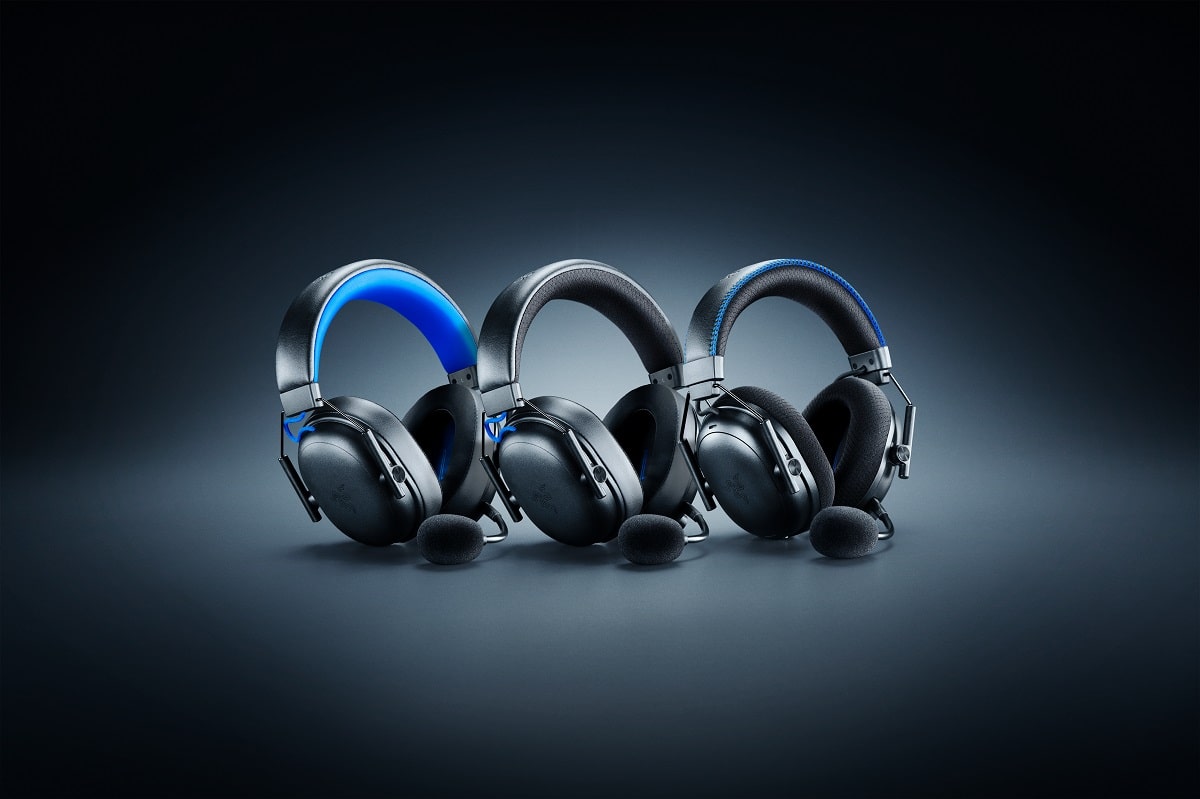
The PlayStation edition of Razer’s BlackShark V3 Pro aims to deliver tournament-grade performance to console players without compromising on comfort or versatility. It builds on Razer’s PC-focused esports heritage but adapts its design and connectivity for the PS5 environment effortlessly, supporting both Tempest 3D Audio and Razer’s own THX Spatial Audio on PC. With wireless performance tuned for ultra-low latency and an expanded range of connection options, it positions itself as a headset for those who take competitive play seriously, but also want a feature-rich companion for everyday use.
Build quality immediately leaves a strong impression. The combination of metal reinforcements and dense plastic joints gives the headset a robust frame, while the matte black finish feels premium yet understated – especially for a gaming headset. This is plus for anyone looking to use it outside of gaming, for instance when traveling. The FlowKnit memory-foam ear cushions merge leatherette isolation with breathable fabric, keeping the headset comfortable over long sessions despite its relatively heavy frame. The earcups swivel smoothly and create a natural fit around the ears, allowing for longer use without discomfort. For a product built with esports intensity in mind, the overall design strikes a surprisingly measured balance between endurance and style.
Once in-game, the BlackShark V3 Pro shows why it’s considered Razer’s flagship. The second-generation TriForce bio-cellulose drivers produce crisp, detailed audio with exceptional directional precision. In competitive titles, subtle cues such as footsteps or distant reloads are reproduced cleanly, helping players anticipate action before it’s visible on screen. On the PS5, the combination of the headset’s hardware drivers and the console’s Tempest 3D Audio technology adds impressive spatial depth, turning enclosed maps into convincingly layered soundscapes. The tuning leans toward clarity and positional accuracy rather than rich low-end warmth, which enhances performance in shooters and tactical games, though it can make music playback sound slightly clinical.

The wireless implementation sets a benchmark for responsiveness. Razer’s HyperSpeed Wireless Gen-2 connection delivers sub-10 ms latency, which translates into virtually instantaneous feedback when reacting to sound cues. The ability to pair simultaneously through both 2.4 GHz and Bluetooth is a practical inclusion, letting users stay connected to chat or mobile notifications while gaming. Battery life extends up to seventy hours under 2.4 GHz operation, ensuring multiple days of use before needing a recharge. The inclusion of USB-C and 3.5 mm wired options adds flexibility, although the reliance on a USB-A dongle for wireless connectivity feels slightly dated for a modern PlayStation accessory.
Active noise cancellation enhances focus during intense play sessions. The hybrid ANC system effectively suppresses low-frequency background hums and maintains a controlled environment for immersive gaming. Combined with the snug fit of the FlowKnit cushions, isolation is impressive without creating excessive pressure. The system doesn’t entirely eliminate higher-frequency noise or chatter, but for home and studio environments it performs beyond what most gaming headsets achieve. The blend of passive and active isolation contributes to the sense of calm concentration that competitive players look for, and makes the headset a good travel companion as well.
Communication is handled by the detachable HyperClear 12 mm microphone, which captures voices with warmth and precision. The unidirectional pickup pattern filters out surrounding noise effectively, allowing clear team coordination even in loud environments. The physical controls on the earcups – volume, ANC toggle, game-chat balance and EQ switching – are logically arranged and easy to adjust mid-match. The mic’s connection port feels a touch fragile when repeatedly attached or removed, but audio pickup quality and intelligibility remain a highlight of the overall package.
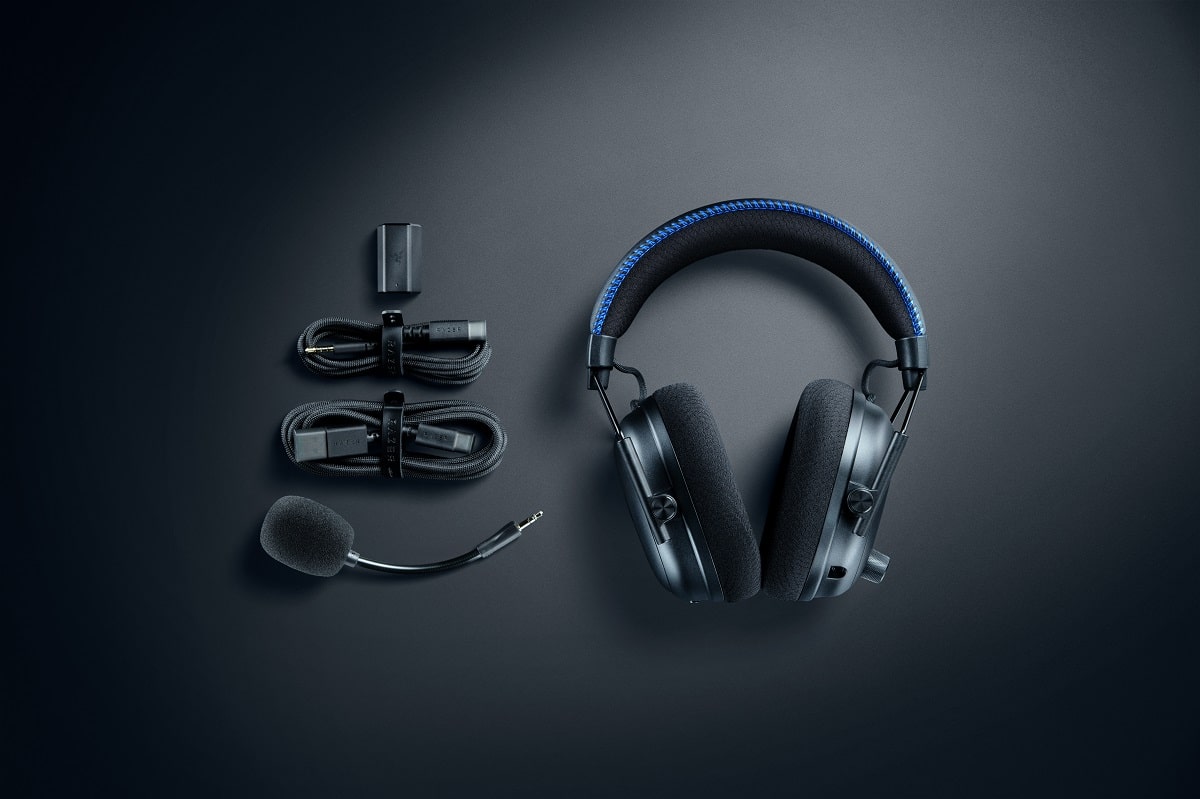
Ease of use on PlayStation is straightforward. The wireless dongle connects instantly, and settings such as ANC or EQ profiles can be cycled directly from the headset. For deeper customization or firmware updates, access to Razer Synapse on PC remains necessary, but out of the box the PlayStation model offers plug-and-play simplicity. Comfort remains consistent through extended sessions, though users with glasses or larger head sizes might notice increased clamping over time. Still, for most players the ergonomic design and balanced padding prevent fatigue even during long competitive runs.
The BlackShark V3 Pro for PlayStation ultimately combines precision engineering with gamer-focused practicality. Its soundstage and latency performance make it one of the most responsive wireless headsets available for Sony’s console, and its construction and comfort levels live up to its professional pedigree. Minor complaints about its weight, treble-heavy tuning and reliance on a legacy dongle do little to undermine what is otherwise a remarkably capable package. For players who prioritize performance, positional accuracy and noise isolation above all else, this is one of the best-equipped headsets currently available on PlayStation – and a worthy continuation of Razer’s BlackShark legacy.
 Press Play Media
One thought on “Razer BlackShark V3 Pro review (PS5)”