Recent console ports continue to blur the line between preservation, reinvention, and simple accessibility, with a wave of PS5 releases bringing everything from cult curiosities to tactical classics back into the spotlight. From the rhythm-infused twin-stick experimentation of Look Mum No Computer, to the politically charged mech warfare of Front Mission 3: Remake, and the cosy co-op puzzle-platforming of Jelly & Toast, these arrivals highlight just how varied the modern porting landscape is. Some aim to refine and modernise beloved foundations, others simply offer a new platform for discovery, but all reflect the ongoing push to give both old ideas and niche concepts fresh life on current hardware.
Look Mum No Computer review (PS5)
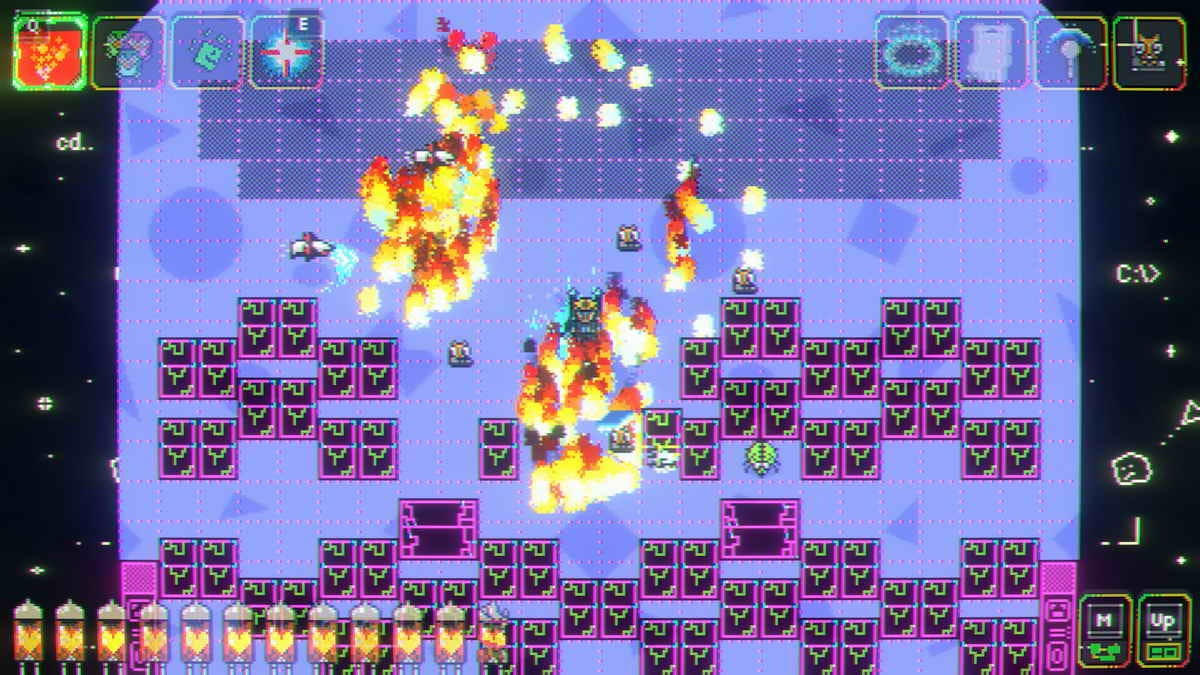
Look Mum No Computer lands on PS5 with a clear identity: a playful collision between twin-stick shooting and hands-on music creation that immediately sets it apart from more conventional action titles. Set within the eccentric pixel-art world of Soldersworth, the game sends players inside malfunctioning machines where combat and creativity intertwine. Collecting components to build synthesizer modules serves a dual purpose, shaping both your arsenal and the evolving soundtrack that pulses through each encounter. The way battles organically layer beats, tones, and melodies as modules activate gives the experience a rhythmic momentum that feels genuinely fresh, turning every skirmish into a dynamic audio experiment rather than simple arcade chaos.
That inventiveness, however, isn’t always matched by refinement. Movement and aiming can feel slightly rigid, which becomes noticeable during more frantic encounters where precision matters most. Tight corridors occasionally amplify these issues, leading to awkward collisions and moments where the flow of combat stutters. Enemy variety remains fairly limited across missions, and objectives often follow similar patterns, which can dull the initial excitement once the core loop settles in. While the shooting remains satisfying in short bursts, the lack of mechanical depth compared to genre standouts becomes more apparent over longer play sessions.
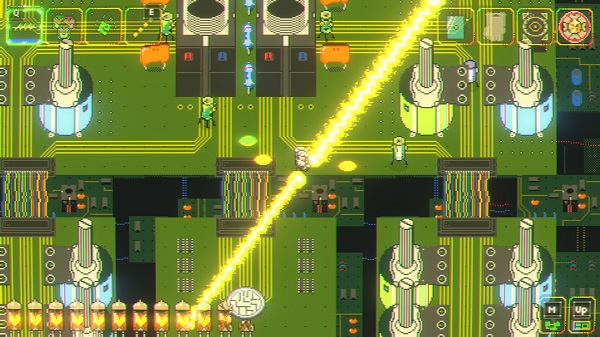
Narratively, the game leans heavily on charm and absurdity rather than a strong overarching story. The quirky inhabitants and strange machine interiors are packed with personality, and the pixel-art presentation embraces a rough-and-ready aesthetic that fits the DIY spirit of its musical roots. Still, progression eventually slows as upgrading modules requires repeated material farming, introducing a grind that interrupts the otherwise breezy arcade feel. This is compounded by a sharp difficulty spike near the end, where encounters – particularly the final boss – demand far more preparation and persistence than earlier sections suggest.
Where Look Mum No Computer ultimately leaves its strongest impression is through sound and experimentation. The soundtrack steadily grows richer as new modules unlock, transforming early minimal beats into layered electronic compositions that feel personal to each playthrough. For players who enjoy tinkering, optimizing loadouts, and hearing the immediate musical payoff of their choices, this interactive audio system is consistently rewarding. While repetition and balance issues prevent the game from fully capitalizing on its clever concept, its distinctive personality and creative ambition make it a standout curiosity in the twin-stick shooter space – imperfect, but undeniably expressive.
Front Mission 3: Remake review (PS5)
Front Mission 3: Remake on PS5 is a fascinating case of ambition and compromise. At its core lies one of the most enduring tactical RPG stories: geopolitical tension, mech warfare, and a branching narrative that still rewards multiple playthroughs. The remake leans into this legacy, giving players a clearer visual and performance uplift over the Switch release while retaining its late-’90s political intrigue and the dual routes that define Kazuki’s journey.
On the battlefield, the game’s grid-based tactical combat is faithful to the original’s design philosophy, with mech customization and part management still its strongest hooks. Wanzers feel distinctive when outfitted, and the depth in incremental tuning of bodies, weapons, and abilities remains a draw for strategy enthusiasts. Yet beneath these strengths, the pacing and tactical nuance can feel uneven; missions often enforce small arenas and reliance on RNG-leaning mechanics that dull what could be razor-sharp engagements. A “Fast Combat” option does accelerate battles, but it also strips out context that seasoned players want to see.
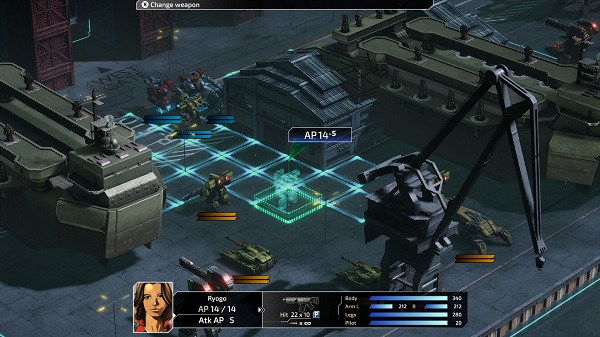
On PS5, several of the most criticized art assets from the Switch version have been reworked, and the old portraits were removed in favor of more coherent visuals. Still, the overall aesthetic is inconsistent: some mech models and environments look serviceable and well lit, while other redesigned assets lose the gritty industrial character that defined the original. Audio is similarly mixed – the reorchestrated score lands with character, but the absence of classic sound effects or weighty impacts in combat sometimes undercuts cinematic moments.
Ultimately, this PS5 release is both an improvement over its predecessor and a bittersweet reminder of what the original Front Mission 3 achieved. There’s a solid tactical engine here and a compelling narrative framework worth exploring, especially for newcomers or tactical RPG fans. But uneven pacing, occasional design oversights, and visuals that don’t consistently match the ambition of the underlying systems keep it from being the definitive version longtime fans might have hoped for. For all its frustrations, though, it remains a distinctive mech strategy experience worthy of a thoughtful playthrough – just perhaps not the polished rebirth some expected. Perhaps that’s what we can look forward to if Front Mission 4 and 5 get the remake treatment.
Jelly & Toast review (PS5)
Jelly & Toast’s culinary caper premise – two food-based heroes on a quest to reclaim stolen magical ingredients from rival cooks – sets a lighthearted tone that the PS5 version generally carries through its 50 levels of platforming and puzzles. There’s an earnest simplicity to how the narrative frames the adventure, leaning into whimsical interactions rather than a deep story arc, and the local co-op or solo flexibility feels well-suited to short bursts of play or casual couch sessions. This restraint in narrative ambition won’t satisfy players seeking a dramatic tale, but it does help maintain a consistent, unpretentious flavor throughout.
Visually, Jelly & Toast presents a palette of vibrant pixel art that’s charming and immediately appealing. Characters and environments have a handcrafted feel, and the audio complements this with upbeat yet unobtrusive music and sound design that reinforces the game’s cheery aesthetic. These presentation layers are polished, with smooth animations and menus that feel clean and intuitive. On the flip side, the visual style stays fairly consistent across the experience, which can dull its impact over long sessions – initial delight sometimes gives way to a sense of repetitiveness.
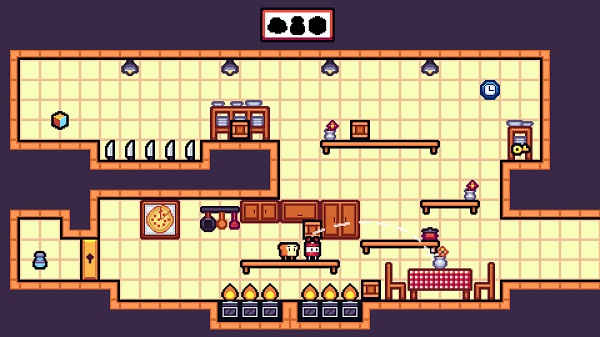
Mechanically, the game’s core – picking up, pushing, throwing and stacking objects (or even your co-op partner) to solve spatial puzzles – delivers moments of genuine satisfaction, especially when physics-based solutions click into place. The controls are simple and responsive, with character switching and object interaction mapped cleanly. However, not all is smooth sailing: in practice, some puzzle challenges hinge less on clever design and more on managing finicky physics interactions, where thrown boxes don’t behave as expected or get momentarily stuck. Such frustrations can interrupt flow and diminish the fun, particularly in the mid-to-late game where trial and error starts to dominate over thoughtful problem solving.
That tension – between delight and irritation – defines much of the experience. Jelly & Toast rarely overreaches, and at its best it’s a charming, thoughtful little puzzle-platformer with personality to spare; at its worst, occasional physics quirks and homogenous objectives introduce enough friction to sour extended play. For players drawn to cosy visuals and cooperative play, there’s genuine enjoyment here, but those seeking finely tuned mechanical consistency or deeper narrative engagement might find it less compelling.
 Press Play Media