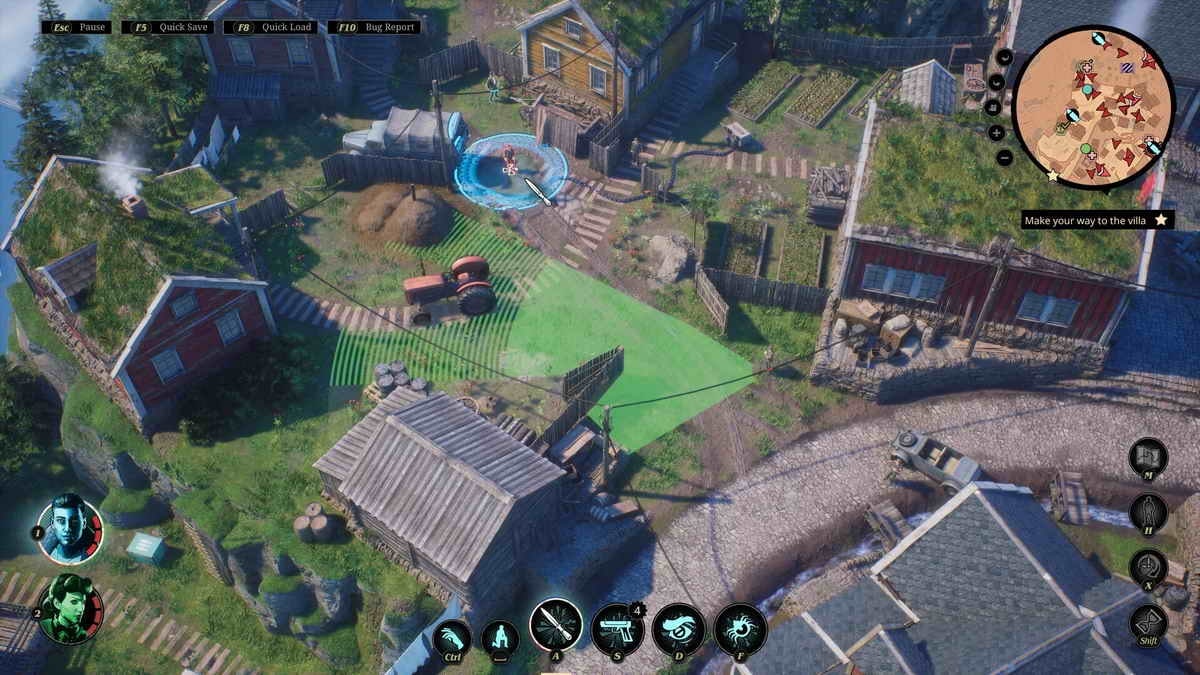
When we first looked at Sumerian Six, the game had just launched on PC and immediately caught our attention as a confident throwback to the golden era of real-time stealth tactics. Developed by Artificer and published by Devolver Digital, the game blended pulpy World War II storytelling with clever squad-based abilities and intricate level design that rewarded experimentation. Since then, the game has expanded beyond its original platform and is now available on consoles as well. Curious to see how the transition would work for a genre traditionally associated with mouse-and-keyboard play, we checked out the PlayStation 5 version to see how well the experience translates to a controller. If you enjoy games like Shadow Gambit and Desperados III, this one’s for you.
The premise of Sumerian Six is both intriguing and refreshingly original. You control the Enigma Squad, a group of scientists turned commandos, each equipped with unique skills that mirror their areas of expertise. As you’d expect, these aren’t your typical war heroes, but rather a team of intellectuals, including an exiled chemist and a psychoanalyst, fighting not just with guns, but with their wits and specialized abilities. The narrative is driven by the squad’s mission to thwart the plans of Hans Kammler, a former member who has defected to the Nazis and is using the mysterious substance Geiststoff to create a terrifying arsenal of occult weaponry.
The storyline in Sumerian Six is a wild ride through an alternate history where the lines between myth and reality blur. The game’s plot, filled with occult elements and Sumerian artifacts, adds a layer of depth to the usual WWII setting, making it feel fresh and engaging – a bit like an Indiana Jones story on steroids at times. The writing is strong, with each character in the squad having a distinct personality that shines through in both the dialogue and their in-game abilities. This narrative depth helps to keep players invested, even during some of the weaker gameplay moments.
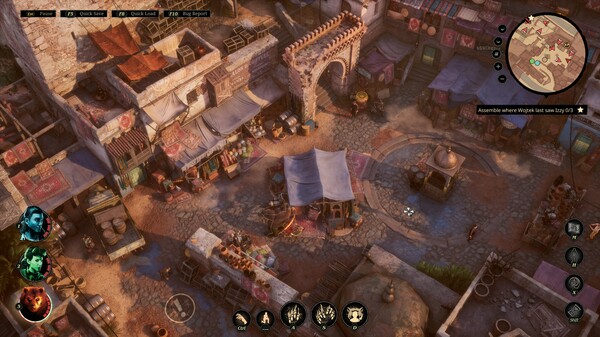
In terms of gameplay, Sumerian Six offers a mix of tactical stealth and real-time strategy. Players must carefully plan their moves, utilizing each squad member’s unique abilities to outmaneuver and eliminate enemies. The game encourages creative thinking, rewarding players who can effectively chain together abilities with multiple characters for maximum impact. However, the game’s difficulty curve can be steep, particularly in the later stages where precision and quick reflexes are required to survive – though it’s rewarding to find alternate solutions and you’ll find yourself tempted to play again once you’re done with it.
The controls are generally responsive, though there are moments where they feel slightly cumbersome, particularly during intense sequences that require rapid decision-making and switching between characters. The game’s interface is intuitive, making it easy manage your characters and their abilities, but the occasional lag in command response can sometimes disrupt the flow of gameplay.
Visually, Sumerian Six is striking, with a dark, moody aesthetic that perfectly complements its eerie alternate history setting. The environments are detailed and varied, taking players from Nazi strongholds to ancient ruins, each filled with atmospheric lighting and well crafted models. The character models are especially well-designed and fit the game’s overall tone. The audio design is another highlight, with a haunting score that ramps up the tension and sound effects that add weight and atmosphere, from the thud of a silenced takedown to the ominous hum of occult machinery around you.
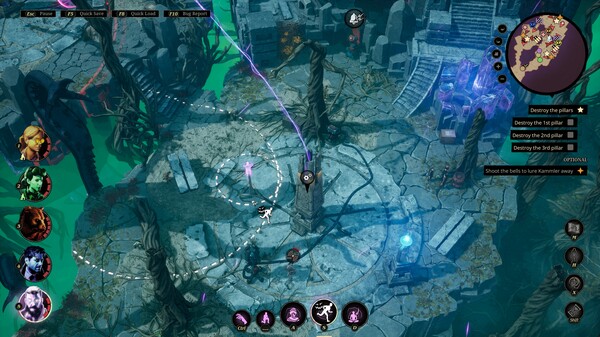
Despite its many strengths, Sumerian Six’ pacing can sometimes feel uneven, with sections of the game dragging on longer than necessary. The difficulty spikes can be frustrating, particularly for players who prefer a more gradual learning curve. Additionally, while the narrative is engaging, it occasionally leans too heavily on familiar tropes, which can make the story feel predictable in parts.
On consoles, the core experience remains largely unchanged, and the transition to a controller is handled surprisingly well. The interface has been adapted so that key tactical tools – such as highlighting enemy vision cones, controlling the free camera, and activating the planning mode that lets you queue simultaneous actions – are mapped to the controller in a way that quickly becomes second nature. While it can take a little time to learn which buttons trigger which tactical overlays, the port generally avoids making players fight the controls and keeps the focus on strategy rather than menu navigation. The game still thrives on careful planning and coordinated character abilities even when played from the couch, making it feel like a faithful conversion of the PC original rather than a compromised adaptation. Performance on modern consoles also appears stable, allowing the intricate maps and multi-character strategies to unfold smoothly while preserving the thoughtful pacing that defines the genre.
Overall, Sumerian Six is a compelling addition to the tactical stealth genre, offering a unique blend of history, mythology, and strategy. Its narrative-driven gameplay, combined with its rich atmosphere and strategic depth, makes it a must-play for fans of real-time tactics games. While it stumbles slightly in some areas, particularly with its difficulty spikes and pacing, the game’s creative premise and engaging characters more than make up for these shortcomings. For those looking to dive into a world where science meets the supernatural in a battle against one of history’s darkest regimes, Sumerian Six is well worth the journey.
Score: 8.0/10
 Press Play Media