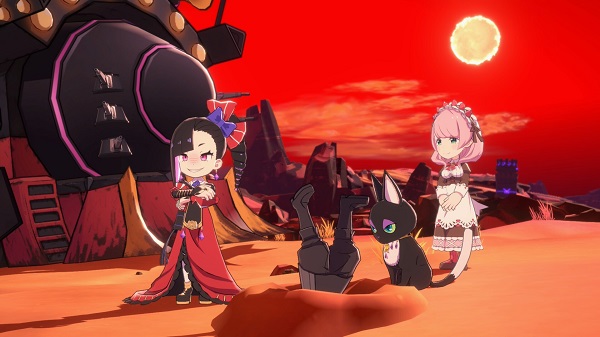
Etrange Overlord arrives as a characteristically eccentric project spearheaded by Disgaea creator Sohei Niikawa, developed by Gemdrops and published by NIS America. Out now on PlayStation 5, it blends action RPG sensibilities with musical storytelling and a deliberately chaotic gameplay loop. The premise sets the tone immediately: falsely executed noblewoman Étrange awakens in hell and decides that, rather than accept her fate, she’ll conquer it. It’s a setup that leans heavily into absurdity, and while its humor and theatrical presentation give it a distinct identity, the narrative’s erratic pacing and tonal swings can make it difficult to stay fully invested.
That sense of unpredictability carries over into the storytelling itself. Musical numbers, exaggerated character interactions, and a revolving cast of allies give the game a lively rhythm, but the structure can feel disjointed. Moments of genuine charm and humor are offset by stretches where the narrative loses focus, jumping between ideas without giving them enough time to develop. While Étrange herself is a strong central figure, supported by expressive character designs from Shinichiro Otsuka, the broader cast sometimes struggles to leave a lasting impression despite the game’s attempts to give them personality through dialogue and song.
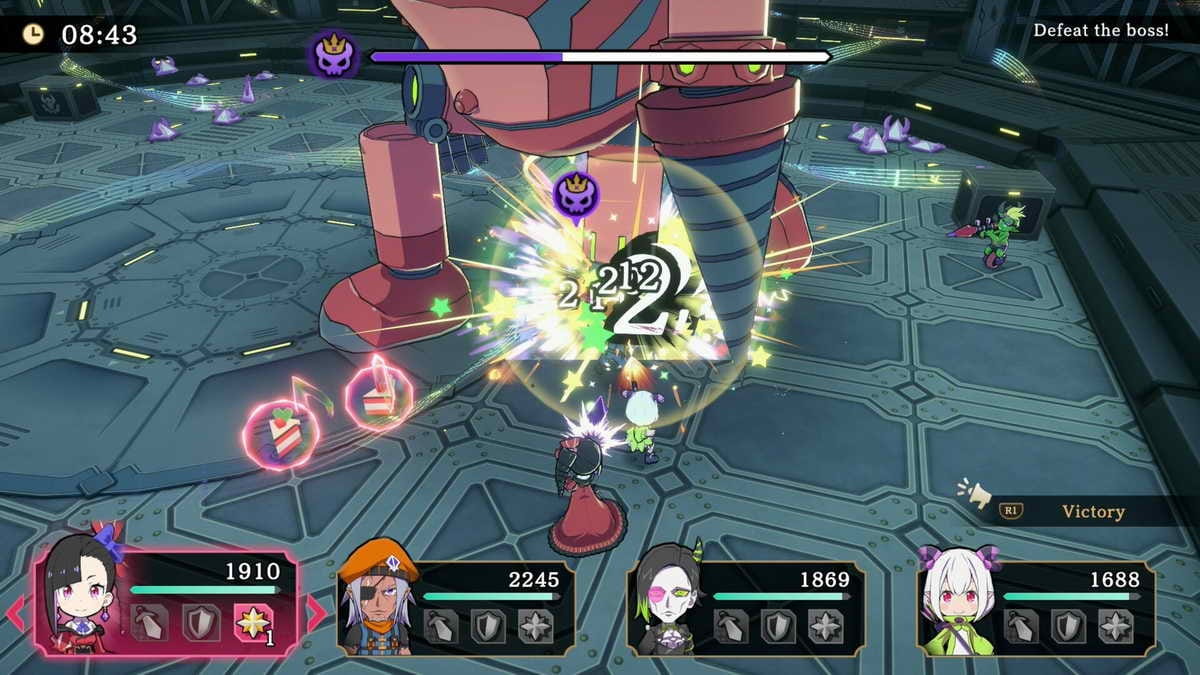
Gameplay is where Etrange Overlord makes its boldest attempt to stand out. The revolving lane mechanic, which constantly cycles items, buffs, and even characters around the battlefield, introduces a layer of spatial awareness that goes beyond standard action RPG design. It creates a dynamic flow where positioning and timing become critical, especially as encounters grow more chaotic. However, this same mechanic can feel overwhelming, particularly in the early hours when the game does a limited job of easing players into its systems. The result is a learning curve that feels steeper than necessary, occasionally bordering on frustration on your initial playthrough.
Combat itself is fast-paced and visually busy, combining melee attacks, ranged options, and character-switching into a constant stream of action. When everything clicks, there’s a satisfying sense of momentum as players weave through enemies while capitalizing on the rotating buffs. Yet the density of on-screen elements can also work against clarity, making it difficult to track threats or opportunities in more intense encounters. This is further compounded in multiplayer, where the added chaos of multiple players enhances the spectacle but can make coordination and readability even more challenging.
Controls generally hold up under the game’s demanding pace, though they’re not without issues. Movement and attacks feel responsive, but the complexity of managing multiple systems at once can lead to moments where inputs feel less precise and intuitive than intended. This is particularly noticeable when trying to react quickly to the revolving lane’s shifting elements. While not outright broken, the control scheme occasionally struggles to keep up with the ambition of the mechanics it supports.
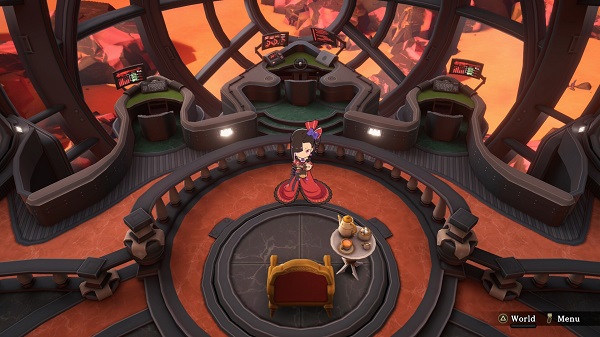
Visually, the game benefits greatly from its strong art direction. Otsuka’s character designs translate well into the game’s colorful, stylized environments, giving Etrange Overlord a distinct identity that aligns with its offbeat tone. Animations are lively, and the overall presentation reinforces the game’s theatrical flair. That said, occasional visual clutter can detract from the experience, especially during more chaotic battles where readability becomes an issue.
The audio design plays a major role in reinforcing the game’s personality. Musical segments and an energetic soundtrack help sell the game’s whimsical approach, and voice performances add to the charm of its cast. However, just like the narrative, the integration of music can feel uneven at times, with some transitions coming across as abrupt rather than seamless. Still, when it works, it adds a layer of memorability that sets the game apart from more conventional action RPGs.
Ultimately, Etrange Overlord is a game defined by its ambition and willingness to experiment. Its unique mechanics and bold presentation give it a distinct identity, but those same qualities also introduce inconsistencies in pacing, clarity, and overall cohesion. For players willing to embrace its chaos, there’s an undeniably creative experience here, but it’s one that demands patience to fully appreciate.
Score: 7.2/10
 Press Play Media