
Hello Neighbor VR: Search and Rescue, developed by Steel Wool Studios and published by tinyBuild, brings the Hello Neighbor franchise to the immersive world of virtual reality. With its premise and combination of horror and puzzle-solving elements, this VR adaptation offers an intriguing experience. However, it falls short in certain areas, making it a mixed bag of enjoyment and frustration.
In Hello Neighbor VR: Search and Rescue, players assume the role of one of five children on a mission to rescue their friend, who has been abducted by a mysterious and creepy neighbor (wouldn’t you say there’s way too many of those?). The game introduces multiple playable characters, each with their own key items and skills, allowing players to switch between them to outsmart the Neighbor. The core gameplay revolves around sneaking into the neighbor’s house, solving puzzles, and avoiding detection as you navigate through the creepy basement.
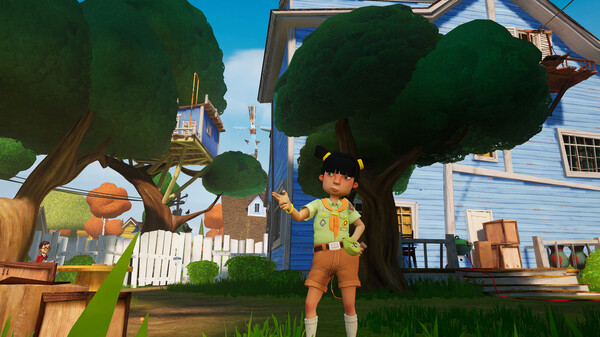
The non-linear exploration aspect of the game provides players with the freedom to approach the infiltration of Mr. Peterson’s house from different perspectives. By combining the unique abilities of each character, players can overcome challenging environmental obstacles and discover hidden mysteries, ultimately revealing new pathways in the house. The environmental puzzles in the game require creative solutions, often requiring players to use the perspectives of multiple characters in conjunction to progress.
The premise of Hello Neighbor VR: Search and Rescue is peculiar yet intriguing. As players delve into the weird and unsettling world of the Hello Neighbor universe, they uncover surreal and haunting revelations. The game manages to extend its narrative beyond the initial premise as well, adding a little bit of depth to the overall experience in a game that works quite well in VR due to the stealth mechanics involved.
Hello Neighbor VR: Search and Rescue struggles to deliver visually impressive graphics on the Quest 2 platform. The cartoonish art style is dampened by a lack of dynamic lighting and muddy textures, which can make important interactive objects blend with the scenery. The Quest 2 version suffers from visual shortcomings, hindering the overall experience and adding unnecessary frustration to an already challenging game.
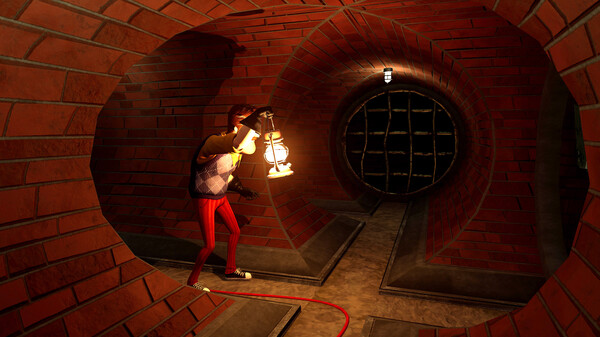
Audio design in stealth games plays a crucial role, but Hello Neighbor VR: Search and Rescue falls a bit short in this aspect. While spatial audio helps players identify the general direction of the Mr Peterson, it fails to provide accurate information on his vertical position. This limitation often requires players to rely on distractions and guesswork to determine the Neighbor’s location, which is immersion-breaking. The audio package, overall, is underwhelming, with minimal background music and limited character sounds.
Hello Neighbor VR: Search and Rescue offers a unique and intriguing VR experience with its combination of horror, puzzles, and stealth gameplay. While the game presents enjoyable moments when puzzles fall into place and progress is made, it suffers from various issues that hinder the overall experience. A few awkward mechanics, a relative lack of (fairly common) comfort options and visual shortcomings on the Quest version add frustration as well. There’s just enough to like here, but for something that’s such a natural fit for VR there’s too much unrealized potential.
Score: 6.4/10
 Press Play Media