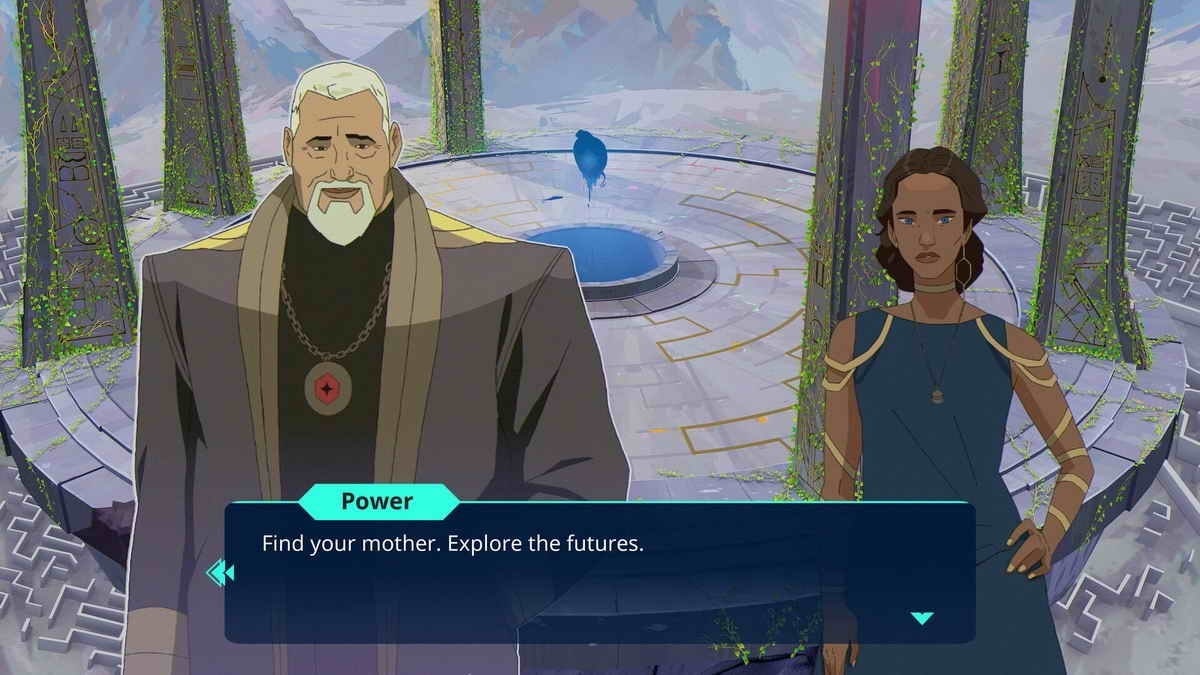
Moving away from their acclaimed work on franchises like Life Is Strange, developer DON’T NOD leans into the visual novel genre with Harmony: The Fall of Reverie. Drawing upon their expertise in choice-based narratives, DON’T NOD attempts to weave an intricate story set in a world where the fate of humanity hangs in the balance. While the game showcases beautiful visuals and an engaging premise, it doesn’t quite live up to the impactful choices seen in their earlier work, leading to some unexplored potential in terms of its world-building. We checked it out on a PlayStation 4.
The game introduces us to Polly, who returns to her hometown in search of her missing mother. As she delves into the mysteries surrounding her mother’s disappearance, she stumbles upon a magical necklace that transports her to Reverie—a fantastical realm inhabited by ‘personifications of human aspirations’, which is an interesting notion to explore. In Reverie, Polly takes on the role of Harmony, a goddess-like entity with the power to shape the destiny of both worlds. This sets the stage for a narrative-driven experience where every decision made as Polly or Harmony impacts the unfolding story.
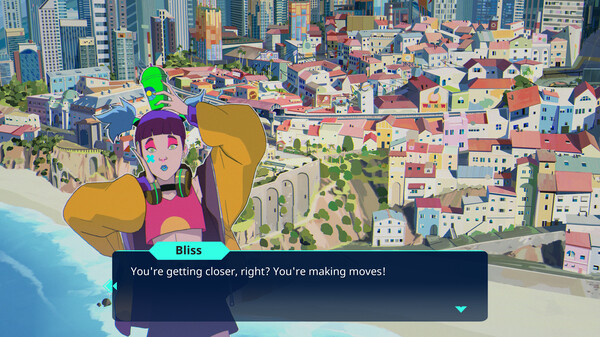
Visually, Harmony: The Fall of Reverie is a treat, boasting a bright and vibrant artistic direction that elevates it well above the usual static nature of visual novels. The Mediterranean cityscape comes to life with striking locales and well-designed characters, and the voice acting is solid, further immersing players in the game’s world. Add as atmosphere-rich soundtrack by award-winning composer Lena Raine into the mix, and Harmony: The Fall of Reverie is one of the most audiovisually engaging examples in its genre.
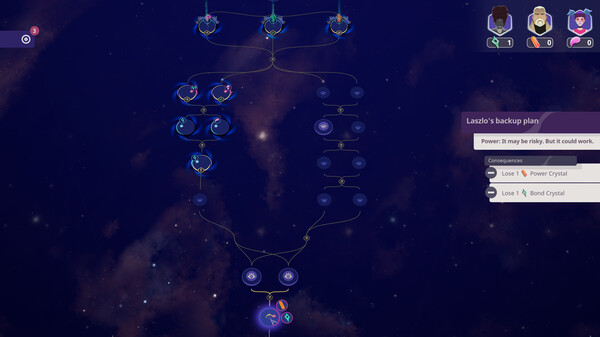
However, despite its visual and audio strengths, the game falls a little short in its execution of impactful choices. While the mechanics of foreseeing the future through a flow chart provide some guidance, they also create a sense of predetermined outcomes, diminishing the feeling of agency and genuine and impactful decision-making. The choices lack the emotional weight and consequence necessary to fully engage players in shaping the world and its characters. As a result, the story feels more like a linear path with occasional branching points, rather than an organic experience driven by heartfelt decisions.
Another potential drawback is the brevity of the game. While some visual novels tend to overstay their welcome with 20 or 30+ hour tales, Harmony: The Fall of Reverie clocks in at around eight hours, which is relatively short for the genre if you’re an avid fan of the format. While the brisk pace keeps the story moving, it leaves little room for fully fleshing out the world and its characters. The one-dimensional nature of the world-building further compounds this issue, though if a traditional visual novel experience is too daunting then this is a great intro.
Despite its flaws, Harmony: The Fall of Reverie manages to entertain with its intriguing premise and some entertaining characters. The story, although somewhat confusing at times, maintains a brisk momentum, preventing players from getting bored. However, the game falls a little short in delivering impactful choices that truly shape the narrative and fails to explore the potential of its world beyond its surface level – though we realize that is partly because of the standard-defining work done on the Life is Strange games.
In conclusion, Harmony: The Fall of Reverie is a visually stunning visual novel that presents a captivating premise and showcases beautiful art, but struggles at times to deliver meaningful choices and develop its world and characters to their fullest. Fans of DON’T NOD’s previous works will find enjoyment in this adventure, but might be left wanting more when they’re done with the game’s strong and mature narrative.
Score: 7.2/10
 Press Play Media
One thought on “Harmony: The Fall of Reverie review (PS5)”