
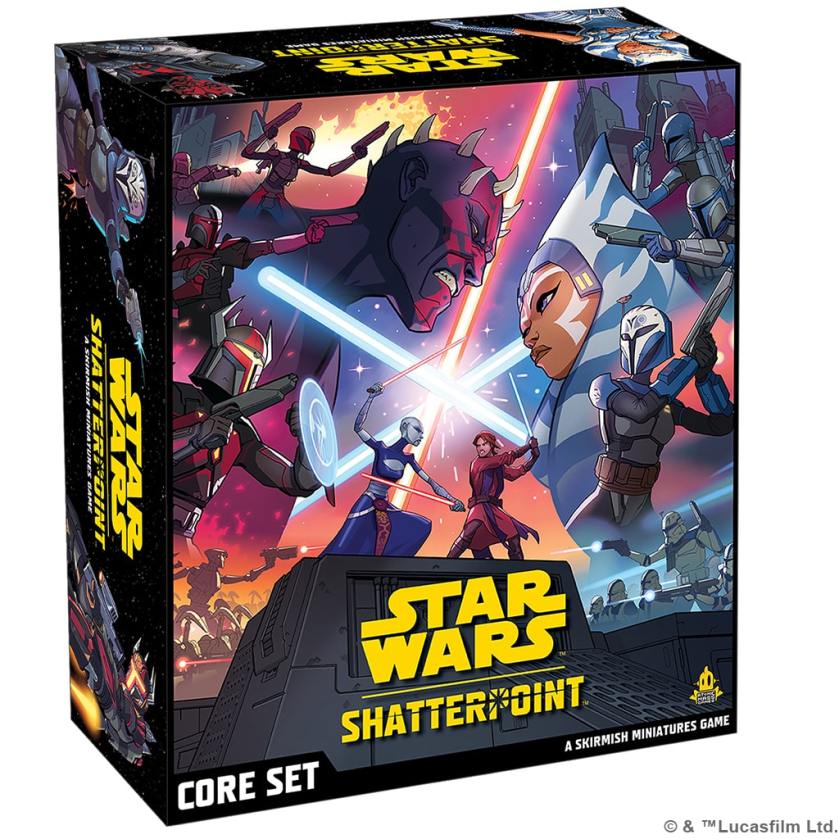
Star Wars: Shatterpoint, the latest addition to the Star Wars miniature games lineup by Asmodee and Atomic Mass Games, offers an immersive and character-focused skirmish experience set in the beloved Star Wars universe. With its distinctive Clone Wars aesthetic and innovative gameplay mechanics, Shatterpoint aims to carve out its own niche among the existing Star Wars tabletop games. In this review, we will explore the positives and negatives of Shatterpoint, discussing its core concept, gameplay mechanics, visuals, and miniature design.
Star Wars: Shatterpoint revolves around assembling squads of iconic Star Wars characters and engaging in thrilling battles to alter the fate of the galaxy. The game focuses on the Clone Wars era, allowing players to create unique strike teams composed of famous leaders and supporting characters. Players have the freedom to mix and match their favorite characters, forming personalized squads that add a thematic touch to the gameplay. The objective-based scenarios, where players vie for control of specific points on the map, create dynamic and evolving missions, adding depth to the strategic gameplay and immersing players in the Star Wars universe.
Shatterpoint introduces a range of interesting gameplay mechanics that set it apart from other skirmish wargames. Each player builds a squad and shuffles unit cards into an initiative deck. The turn-based gameplay involves drawing cards and activating the corresponding units for movement and combat. The inclusion of a shatterpoint card, which allows an additional activation per round, adds a tactical twist to the gameplay, enabling players to seize crucial opportunities. The game’s objective-based missions, where players race to hold strategic points on the map, create a sense of urgency and push players to make strategic decisions to outmaneuver their opponents. The use of Force points, which fuel special abilities and powerful effects, adds depth and variety to the gameplay, allowing players to unleash the full potential of their characters while of course also strengthening the connection to the Star Wars lore. The combat mechanics, while incorporating traditional attack and defense rolls, introduce a Combat Tree system that offers branching choices for attackers, adding strategic decision-making to combat encounters and enabling players to customize their approach while adding replay value for subsequent sessions as well.
Star Wars: Shatterpoint impresses with its high-quality miniatures and detailed terrain – the latter of which gets overlooked too often in games of this type as not everyone is looking to build their own terrain pieces. The miniatures, inspired by the Clone Wars series, capture the essence of the iconic characters, showcasing their distinct personalities and traits. Visually, they feel like a mix between a more lifelike design and the stylized aesthetic of the animated series, maintaining a strong connection to the Star Wars source materials players are familiar with.

While assembling the miniatures can be a bit challenging for some models, the end result is rewarding, especially when you’re pretty adept at painting them. The terrain included in the core set is substantial, offering a variety of buildings, towers, and walkways that contribute to an immersive tabletop experience. The terrain’s sturdy construction and attention to detail ensure a visually appealing and cohesive game board that enhances the overall gameplay experience. Furthermore, the terrain pieces can be easily integrated into other sci-fi skirmish games, expanding their usability beyond the confines of Shatterpoint.
Star Wars: Shatterpoint presents several strengths that contribute to its overall appeal. The game’s Clone Wars aesthetic immerses players in the Star Wars universe, capturing the essence of the animated series. The engaging gameplay mechanics, particularly the objective-based missions and Combat Tree system, provide strategic depth and variety, ensuring each battle feels distinct and rewarding. The high-quality miniature sculpts successfully capture the personalities of the iconic characters, while the substantial and well-crafted terrain pieces elevate the visual experience of the game. The downside of those? There’s a lot of it, and that means a lot of work to assemble and paint it. You can skip the latter, but an all-grey setup isn’t going to look nearly as exciting as what you see on the box.

There are a few other areas that could benefit from improvement. The assembly process for some miniatures, such as the droids, can be challenging and may require a bit of patience. The rulebook could also be clearer in certain sections, providing more detailed explanations and examples to ensure a smoother learning curve for new players. Additionally, some rules related to specific scenarios or vertical terrain could use further clarification to avoid confusion and/or arguments during gameplay.
Star Wars: Shatterpoint successfully carves out its own space in the rather crowded Star Wars tabletop gaming landscape, delivering a tactical skirmish experience with close ties to the source material. With its engaging gameplay mechanics, customizable squads, and immersive Clone Wars aesthetic, the game appeals to both Star Wars fans and skirmish wargame enthusiasts. While it may have a learning curve and some rulebook ambiguities, the game’s innovative combat system, well-designed miniatures, and impressive terrain make it a solid choice for those seeking an exciting Star Wars tabletop experience. Star Wars: Shatterpoint proves that it has the force to captivate players and bring the galaxy far, far away to life on the gaming table.
 Press Play Media