
Assassin’s Creed Mirage marks a return to the stealth-oriented roots of the series. While not without flaws, Mirage takes commendable strides towards recapturing the essence of its origins. In an era dominated by RPG-heavy entries, it reintroduces a focus on briskly paced missions and stealth-centric exploration. It may not be the most groundbreaking of titles, but it’s an Assassin’s Creed experience that’s much more accessible than the 60+ hour games that came before. We checked it out on a PlayStation 5.
Assassin’s Creed Mirage discards the XP and leveling system entirely, placing every enemy within striking distance of a well-timed hidden blade. Most environments offer numerous avenues for concealment, with the returning eagle scouting feature aiding in comprehensive situational assessment. It’s a breath of fresh air to weigh options based on dynamic elements again, rather than just going for full frontal combat. Strongholds, which range from high-security prisons to imposing fortresses, present engaging challenges, especially in terms of stealth. Guards are patrolling and cover each other, so you’ll need to strike carefully. Early on, confronting multiple adversaries demands a strategic approach, leveraging shadows, precise timing, and environmental elements for progress.
The narrative centers on Basim, a character whose origin story unfolds over the course of about 20 hours. During that time, his transformation from a young pickpocket to a vengeful assassin feels a bit expedited due to the shorter length, therefore lacking the depth of character development seen in earlier installments. While serviceable, Basim’s persona doesn’t exude the complexity or intrigue of past protagonists.
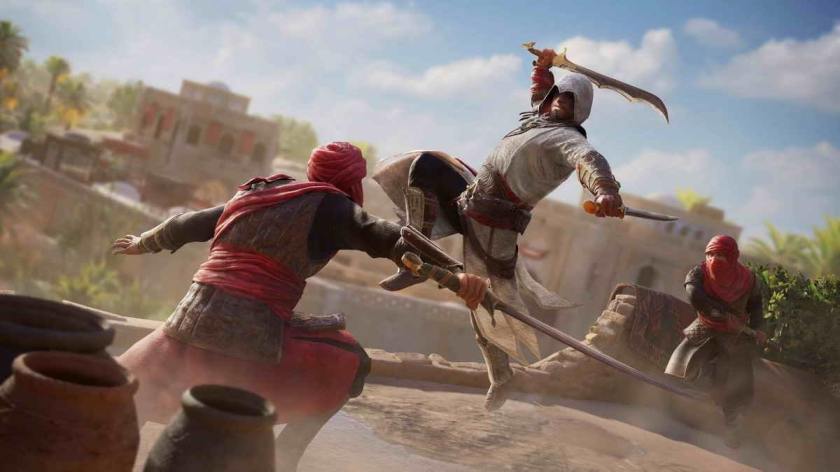
Despite its relative brevity and more linear story progression, Basim’s quest is less packed with narrative highlights than you’d expect. His pursuit of the villainous Order of the Ancients follows a somewhat conventional and predictable trajectory. The adversaries and their henchmen, though clearly “bad guy material”, lack the depth and nuance seen in previous antagonists – where more time was spent fleshing out the world and its characters. Basim’s allies also embody familiar archetypes, with few standing out as particularly memorable. In this sense, the shorter length of the adventure is definitely a double-edged sword.
One of Mirage’s standout features is the vibrant depiction of Baghdad and its environs. The distinct districts, from the bustling Round City to the dusty slums of Karkh, evoke a lived-in atmosphere reminiscent of earlier titles like Unity or Syndicate – though with more visual detail this time around. Streets teem with activity, providing ample opportunities for blending in or utilizing open homes for evasive maneuvers. The game’s notoriety system in particular demands resourceful evasion tactics. Clearing one’s name involves tasks like removing wanted posters and silencing town criers, adding a bit more depth to the evasion and stealth mechanics.
While Mirage’s real-world locales may be historically accurate, they may not boast the same awe-inspiring grandeur as iconic landmarks from previous titles. Nevertheless, the golden dunes and tropical oases exude a unique beauty, with ample alleys and nooks for completionists to explore. The game’s focus on a smaller region allows for more detailed world-building, and while some might miss the exploration aspect it’s great to see such a well-developed area.
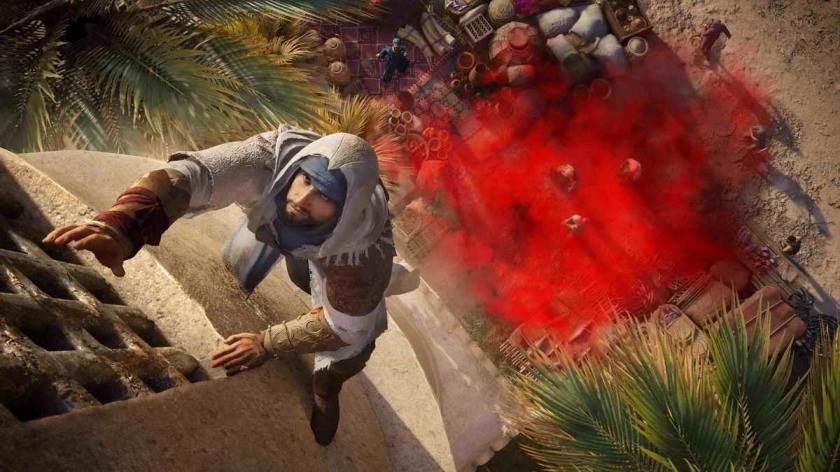
Mirage truly shines in its arsenal of tools, especially when you start enhancing your inventory through upgrades. On the mission front, infiltration missions offer a mix of familiar settings and innovative approaches. Bribing merchants or inciting riots among captive groups injects vitality into the world, brings this Assassin’s Creed game more in line with modern stealth-assassination games. Combat, which is more deliberate and slower-paced than the previous Assassin’s Creed entries, embraces a counter-focused approach. Engaging multiple foes requires careful dodging and countering, presenting a gratifying challenge when mastered. Enemy diversity is somewhat limited, but variations in weapon types add tactical nuances.
Mirage’s streamlined skill tree significantly impacts gameplay, with three distinct branches offering impactful abilities – and with the shorter campaign, also some replay value. Each skill enhances existing capabilities or introduces new ones, contributing to a personalized playstyle. The ability to respec points ensures flexibility in character building as well, letting you change up your gameplay style mid game.
In summary, Assassin’s Creed Mirage’s return to the series’ stealth-oriented origins is executed with purpose, resulting in a more focused and compact experience. The game forgoes the extensive but daunting richness in content of its predecessors, offering a refreshing departure from sprawling, sixty to eighty hour adventures. While the narrative and characters may lack a little depth as a consequence, the streamlined quest progression and brisk pace compensate for that. The depiction of Baghdad and its surroundings is a standout, evoking a vivid, lived-in atmosphere. Mirage is a highly recommended choice for players seeking a return to the franchise’s earlier, more stealth-focused experiences.
Score: 8.0/10
 Press Play Media