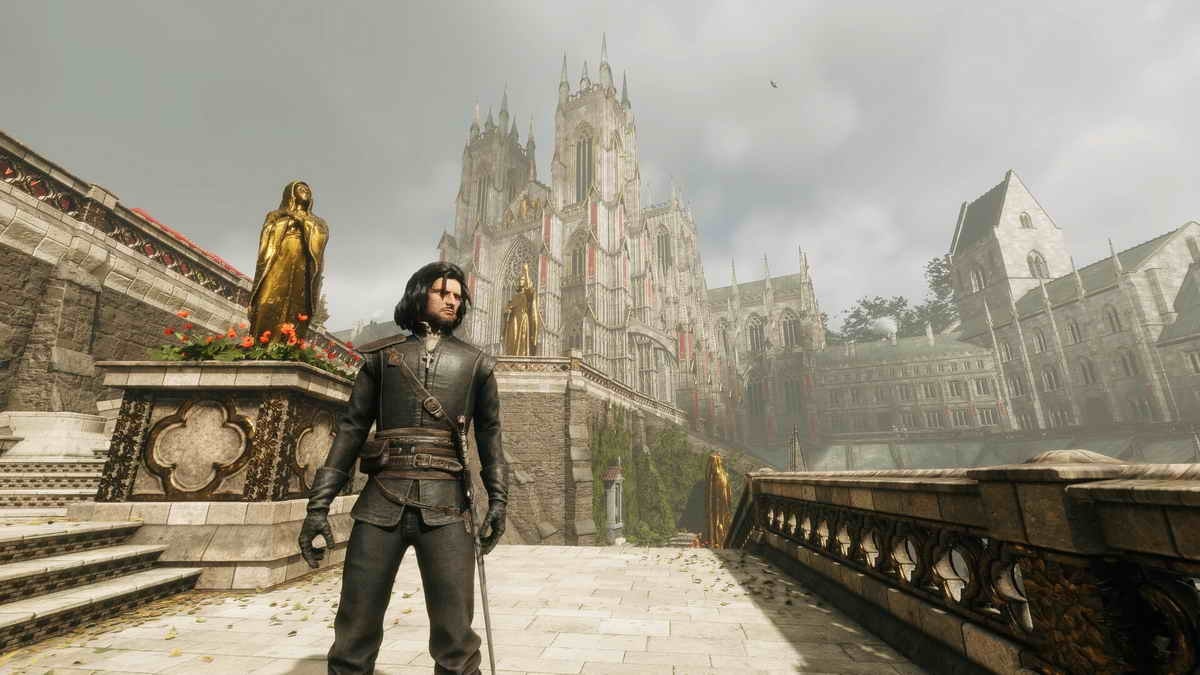
We first saw The Inquisitor during a demo session with Kalypso and developer The Dust last summer, where it stood out as a rather a-typical game for the publisher. A story-driven fantasy adventure that’s based on the books by Jacek Piekara, it’s quite a departure from the sim-like titles we were used to. But with an air of mystery and a medieval fantasy look and feel about the game, we were certainly interested in going hands on with it. Now that it’s out, that’s what we did – here are our thoughts on the PlayStation 5 version.
Set in the dark fantasy world of Koenigstein in 1533, The Inquisitor invites players to unravel a complex web of intrigue as the inquisitor Mordimer Madderdin. From the outset, the game presents a familiar yet enticing premise reminiscent of other successful titles in the genre – you’d be forgiven for thinking back to the first two Witcher games. The richly detailed city of Koenigstein is divided into distinct districts, each offering a unique atmosphere that adds depth to the overall narrative. However, while the game’s setting holds promise, other areas of the game leave a little to be desired.
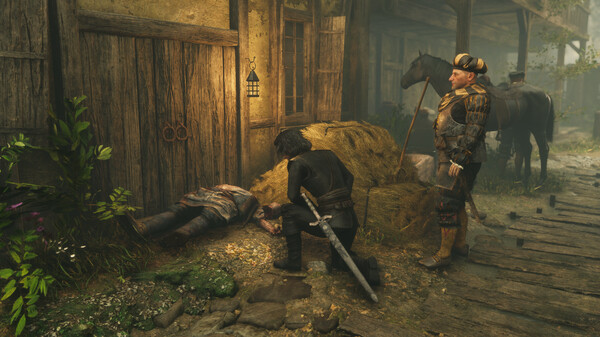
One of the most striking aspects of The Inquisitor is its visual design, which draws clear inspiration from acclaimed titles that came before it. The similarities are evident in both the game’s aesthetic and narrative themes, though The Inquisitor endeavors to carve out its own identity within the genre and successfully does that with some interesting narrative themes and a unique protagonist. Unfortunately, technical issues such as graphical glitches and a few character models that fail to impress detract a little from the immersive experience the game aims to deliver – and with a bit more polish the game world would have been more impactful.
In terms of gameplay, The Inquisitor offers a mix of combat, puzzles, and dialogue-driven interactions. But while these elements are staples of the genre, their implementation in this game often feels a little lackluster – making you think “I’ve seen this done better before”. Combat encounters, for example, suffer from poor balancing and a lack of challenge, undermining the sense of accomplishment that should accompany overcoming seemingly formidable foes. Similarly, puzzles, while present, tend to be simplistic and fail to engage players in meaningful ways. This ultimately makes unraveling the mysteries of Koenigstein feel less rewarding than it should
Dialogue choices, on the other hand, emerge as one of the game’s stronger features, offering players the opportunity to shape the narrative through their decisions. The consequences of these choices are palpable, influencing character relationships and story outcomes in significant ways – leaning into the source material with strong storytelling mechanics. However, this aspect is also marred by occasional bugs and inconsistencies, again leading us to think this one could have used a little more polish – which we hope it will receive post-launch.
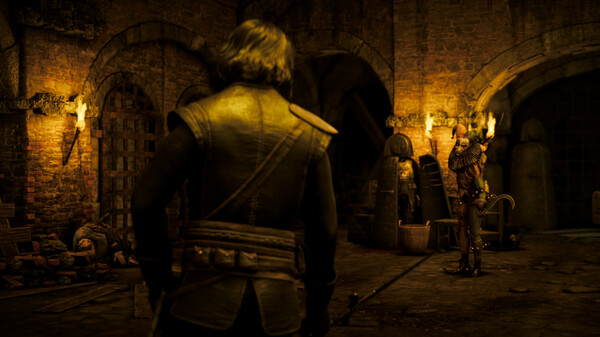
Perhaps the most ambitious aspect of The Inquisitor, however, is its incorporation of the Unworld—a mysterious fantasy realm that serves as a backdrop for the game’s investigation mechanics. While visually striking, the Unworld ultimately fails to deliver on its potential due to a lack of challenge and underdeveloped gameplay mechanics. Despite its promise as a central element of the game’s narrative, the Unworld feels like a missed opportunity rather than a compelling gameplay feature – which is a shame because we’ve seen Frogwares do some nice things with similar mechanics.
Ultimately, The Inquisitor falls short of its lofty aspirations, undermined by a lack of polish, gameplay mechanics that lack challenge, and a narrative that fails to fully capitalize on its initial intrigue. While there are moments of promise scattered throughout the experience, they are overshadowed by the game’s current shortcomings. As a result, The Inquisitor may appeal to fans of the mystery genre, but we’re hoping to see a version 2.0 of the game at some point.
Score: 6.5/10
 Press Play Media