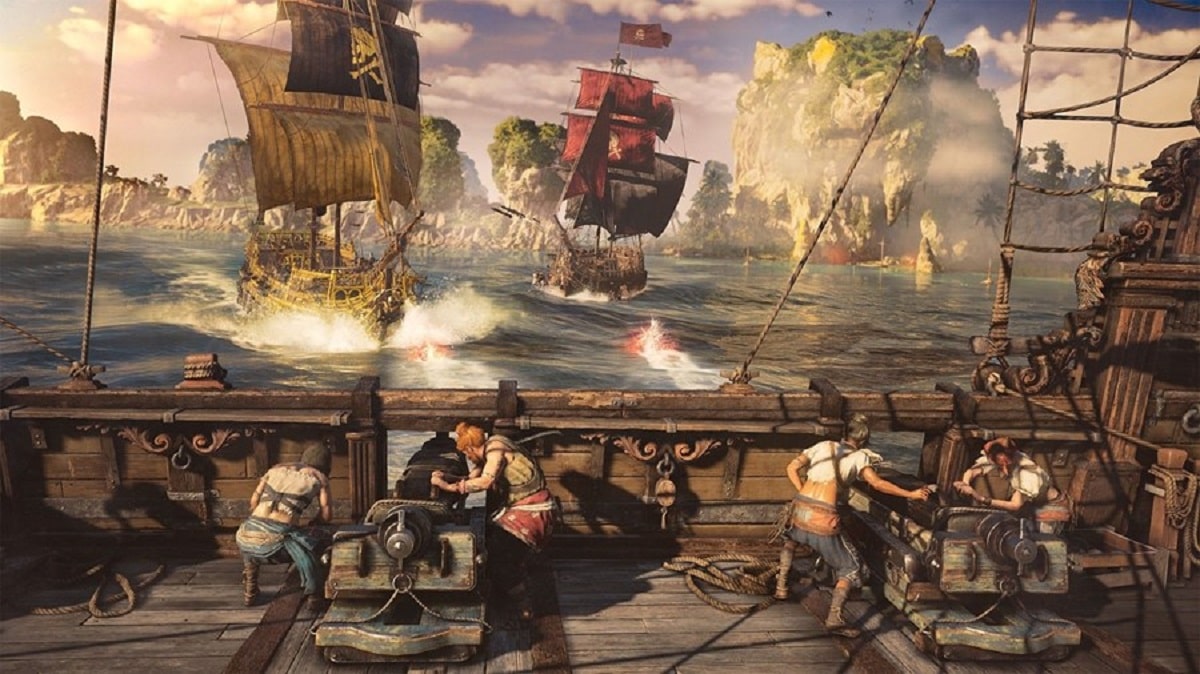
Skull and Bones hasn’t had the smoothest development process we’ve ever seen, encountering numerous delays that made people doubt whether or not it would be any good, is finally here. Perhaps surprisingly, it emerges as an addictive and vibrant piracy simulator that we had fun playing, though it also has a few rough edges. Developed by Ubisoft Singapore, the game showcases stunning visuals and runs smoothly on modern platforms, even during intense fleet battles – making it a joy to play and watch. Its seamless integration of swashbuckling action within a vibrant and interconnected world provides players with a remarkable degree of freedom in their gameplay approach. This gave us echoes of a certain Sid Meier classic, though there’s a different side to that as well….
Originally conceived as DLC for Assassin’s Creed IV: Black Flag way back in 2013, Skull and Bones has undergone a decade-long journey of development, evolving from its initial concept of compelling naval combat. Eventually drawing inspiration from more recent Assassin’s Creed titles like Valhalla, the game’s core gameplay loop now offers a more refined, diverse and reactive maritime experience, albeit one with a slow start. At first, players must navigate through relatively mundane ship management tasks and resource gathering before fully immersing themselves in full-on naval warfare and fleet management aspects. It’s a bit of a timesink and we imagine people will lose interest on that journey, but it also made us feel more invested once we got further into the game.

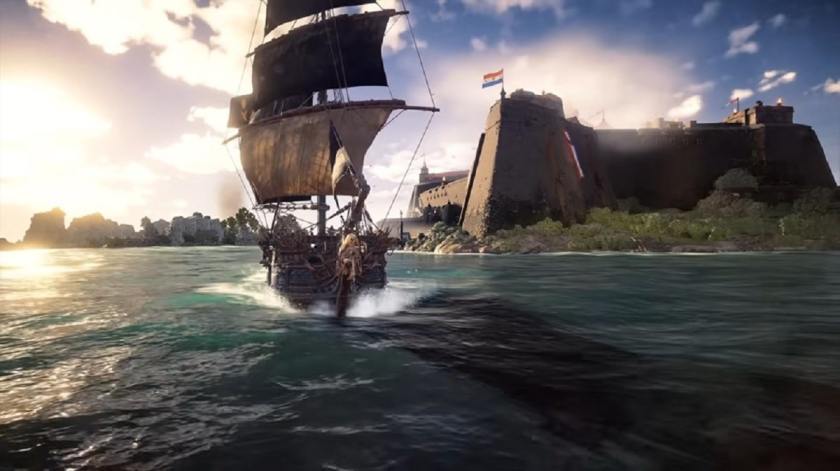
The standout feature of Skull and Bones lies in its exceptional sailing mechanics, which provide a deeply immersive experience enhanced by realistic weather effects and dynamic wave physics that are mesmerizing to look at. Despite starting with modest vessels, the progression system encourages players to work towards acquiring larger, more specialized ships, each with distinct roles and customizable configurations. The depth of combat mechanics, rooted in RPG elements, adds further complexity, requiring strategic decision-making in how to work with your ship’s loadout and weapon selection.
The game’s vast open world, spanning regions from Africa all the way to the West Indies, teems with diverse factions engaged in territorial conflicts and trade activities. Players are encouraged to explore this expansive setting through a variety of activities, engaging in plundering expeditions and dynamic missions while navigating the intricacies of the in-game economy. The user interface and map navigation tools streamline the experience, facilitating resource management and route planning for aspiring pirates without ever getting in the way of the action.
But despite its strengths, Skull and Bones is not without its flaws. It can start to feel rather grindy even after you get through the initial phase of the story, with gameplay revolving around repetitive tasks aimed at progression and resource acquisition. Part of that is the absence of a compelling narrative and a limited amount of gameplay variety, leading to a sense of monotony over extended play sessions. And to draw a comparison – Sid Meier’s Pirates! was great, but also not a game for long multi-hour gameplay sessions that are the norm today.
In conclusion, Skull and Bones delivers a captivating blend of explosive naval combat and immersive exploration set against the backdrop of a richly detailed 17th-century world. While its shortcomings in narrative depth and gameplay variety are evident, the game’s stunning visuals, engaging mechanics, and reactive gameplay make it a noteworthy addition to the pirate genre. Players seeking a unique and adrenaline-fueled maritime experience will find Skull and Bones well worth exploring, though we hope more content will get added post-launch – and that the wait won’t be as long this time.
Score: 7.0/10
 Press Play Media