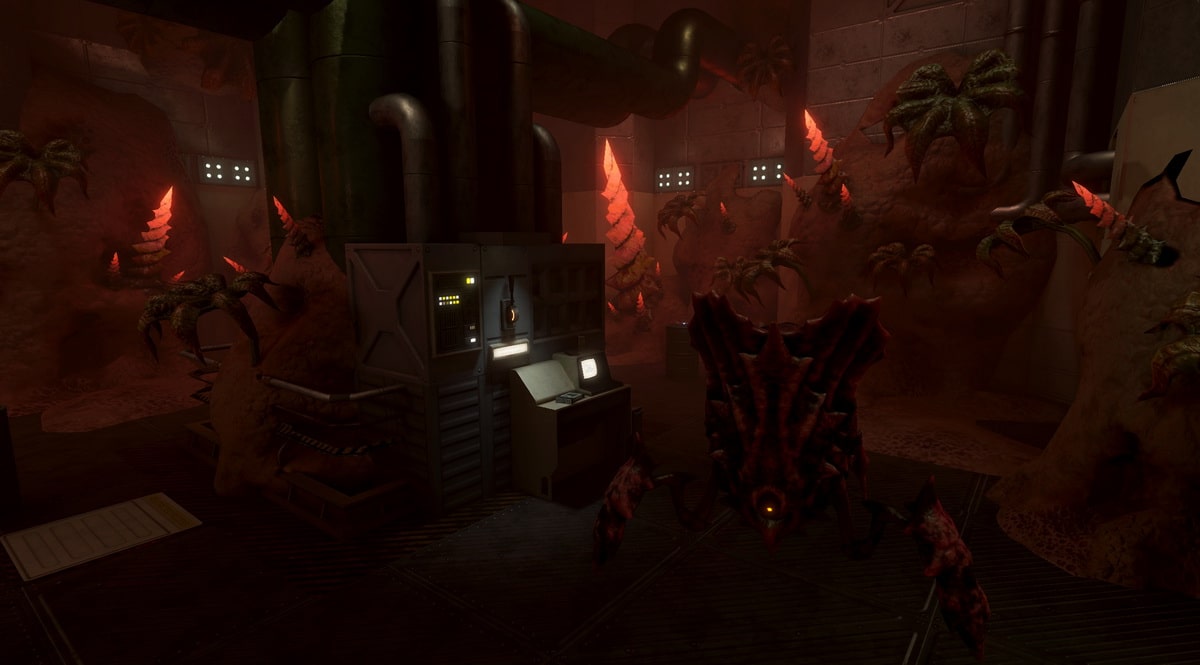
Back in October, we reviewed Bolverk VR’s sci-fi shooter Genotype on the Meta Quest. Since that time, the team at Bolverk has been hard at work improving the game – to the point where major updates have now been implemented. Time for a closer look at these, as we chatted to the team about and gain new insights into the game and the development process behind it. Talking to us are Jesper Halfter, the Lead Game Designer for Genotype, Rasmus Stouby from marketing and Lasse Tassing, Bolverk’s CTO.
What were your key takeaways from the initial reception of the game?
Rasmus: It’s actually really interesting. It wasn’t until after our launch date was set in stone that we learned about the Meta Quest 3 launch on October 10th, just two days prior to Genotype’s release day on October 12th. Genotype was built for the Meta Quest 2 goggles, and if we do say so ourselves, rather beautifully so. I genuinely believe, and testers have said so as well, that Genotype is up near Red Matter 2 when it comes to graphics quality. Few games are this pretty on the Meta Quest 2 platform. Well, the Meta Quest 3 launch really sucked the air out of the room for a few weeks. It was top of the agenda for anyone doing anything in the VR industry. Thus, Genotype kinda drowned in that commotion. Another severe consequence was that almost all of the top influencers and streamers we had promotion deals with were completely done with the Meta Quest 2 on day 1. We had to deliver a Meta Quest 3 update before they would showcase Genotype. Naturally, this takes time, even though the team delivered it as quickly as humanly possible. Finally, and this is almost unbelievable, the horrendous and heartbreaking terror attack by Hamas out of Gaza happened on October 7, and a short while later, Meta banned all advertising containing shooting and guns. That included Genotype, and we received much less support on Meta’s social media platforms than we had expected.
Thus, a good portion of our planned promotion was delayed like three weeks, which is pretty devastating. Finally, the Meta Quest 3 launch meant that one of our planned unique selling points, the outstanding high-fidelity graphics, was now being attributed to the hardware performance of the Meta Quest 3 rather than the brilliant work of our programmers. An “Exceptionally good-looking Quest 2 game” now became “another Quest 3 game.” There were also mistakes of our own volition, which meant that we came limping out of the starting box, but these were really some tough hands to play.
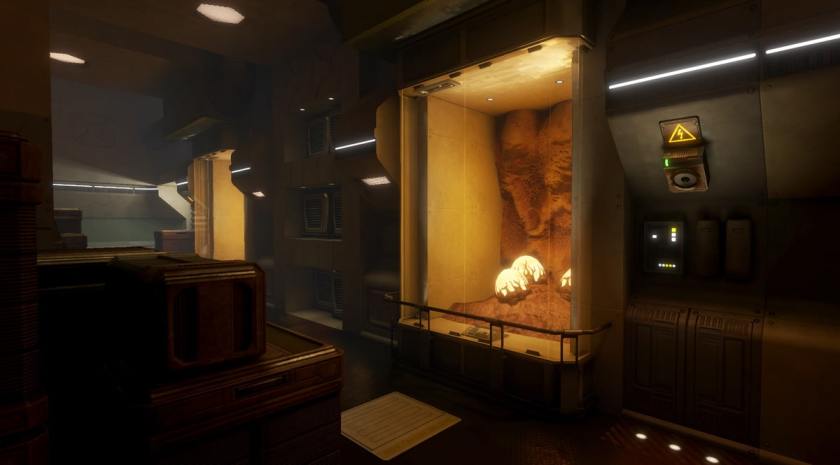
Initial player reactions to Genotype were actually pretty good, judging from feedback on the comment sections of the Meta Games Store, on YouTube, Reddit, and directly in our Discord and mailboxes. Players like it. It’s new with the Metroidvania take on an FPS in VR. The graphics are good, regardless of who gets the credit. The weapon system is rather unique, and there are multiple ways to level up, upgrade, and improve your character. Also, the stellar voice acting and the story written by an actual writer were received very well. Players connect with the universe quickly and are drawn in – just like we designed for.
Reviewer feedback was more critical. Genotype received praise for the above-mentioned things, particularly the Metroidvania elements, voice acting, and story. But all of them were lukewarm on the combat element of the game, which, of course, is important in an FPS game. So, we started working early on the recent combat update, where we really just took a deep breath and a fresh look at everything from creature’s defensive abilities and player weapons to the combat environment. The results are amazing, and we’ve managed to get new reviews on the game and combat is now considered a big plus rather than a detraction. We are super pleased with it. Genotype as a game is in a really good place right now, and we can see its effect on the Meta Store reviews and elsewhere. It’s all overwhelmingly positive.
How do the new abilities introduced with the GRAID Glove upgrade system enhance player experience and strategic choices within the game?
Jesper: Combining all the new hand creature weapon upgrades with the upgrade system for the GRAID Glove enables the player to assemble various “builds.” Understand, you can upgrade your creature weapons but also the glove that holds the creature weapons. The multiple combinations encourage different play styles and strengthen the replayability of Genotype.
The new abilities introduced with the GRAID Glove upgrade system allow the player to pick three out of nine abilities that significantly impact the combat dynamics. For example, at the first upgrade stage, the player picks an ability that is triggered whenever a hostile creature is killed. Players can pick a short damage multiplier buff, spawning a jolt of lightning that will bounce between nearby enemies and deal damage to them, or they can choose to cause an Area of Effect explosion around a carapace appearing on the genomass essence that enemies drop when they die.
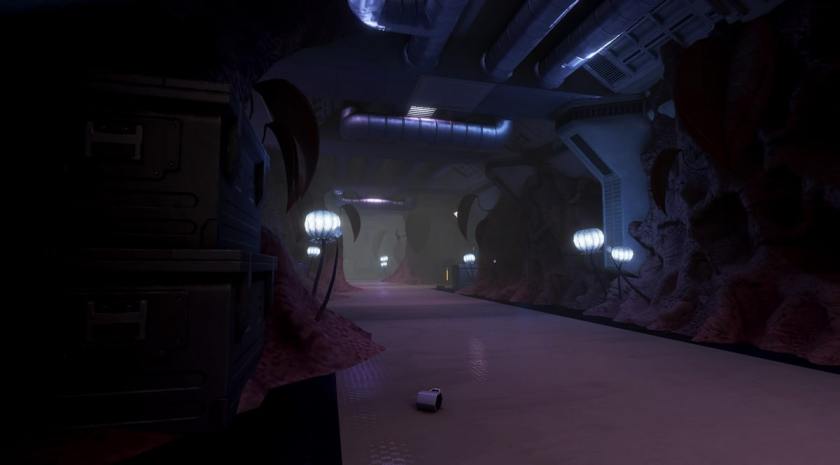
The second ability type is triggered whenever the player picks up genomass essence dropped by killed enemies. The player can choose between one that rejuvenates health, another that instantly reloads the player’s active hand creature or one that spawns a hatchling creature to run around and help the player by shooting at hostiles.
The third ability type can be seen as an ultimate that the player can trigger manually every 7 seconds. The choice stands between becoming invulnerable for a short period of time, allowing the player to tank incoming hits from enemies, spawning and shooting three explosive grenades, or creating a powerful shockwave that instantly damages all nearby creatures.
A favorite build of mine is if you upgrade the Swarmer to spawn helpers and also pick the GRAID Glove upgrade that spawns a hatchling every time you pick up genomass essence drops. In this build, the player will have a lot of assisting creatures that help distract enemies and allow the player to move more freely during combat.
Another fun build is to pick the discharge glove upgrade that spawns a jolt of chain lightning every time an enemy is killed, combined with the lightning gun upgrades for the Seeker hand creature. With this “build” the player will have lightning bouncing around all over whenever they engage in combat. It is most effective with many enemies within line of sight of each other.
A third setup that I personally also like a lot is to turn the Swarmer into a shotgun and go for the damage accumulation glove upgrade, along with health rejuvenation and the invulnerability ability. With this setup, you can deal a lot of damage up close in combat but also run the risk of taking a lot of damage, but that is where the health rejuvenation and invulnerability abilities come into play.
And that’s just the Seeker. There are five weapons creatures (and two utility creatures). The many possible combinations of glove upgrade abilities and hand creature upgrades enable the player to explore different builds and play styles, which we think is interesting and entertaining to explore.
What can you tell us about the introduction of new combat puzzles and rooms in this update?
Jesper: Our goal was to add engaging content, particularly in the later stages, where you’ve unlocked most of the tools, weapons, and upgrades and are motivated to search for new challenges.
These combat puzzles require you first to locate, then figure out how to enter a particular area, and then deal with a set of puzzle challenges in there and eventually engage in combat against a variety of the harder enemies the game offers. Of course, there’s a sweet reward at the end of each of them.
I might be spoiling a bit here, but I’d like to give an example of one of the combat puzzles. At one point, you must swim through a series of flooded hallways and rooms to shut down a pumping station for a nuclear reactor. On the way there, you encounter a locked door leading down a different path, requiring a specific Biopass to open. You find that Biopass at a later point and can return to the door to open it. You enter a flooded section and swim around, solving a puzzle involving levers and valves while having little oxygen. Once solved, you gain access to a sewer area consisting of a series of rooms. The challenge now is to open up a specific room containing stored goods, but this can only be done once the sewer basins have been flushed manually and the sewers control system has been brought online again. This challenge will have you fighting through overgrown catch basins and manually flushing them. Eventually, if successful, you will be able to open the door to the special room, find your reward, and open up a shortcut back to the main area.
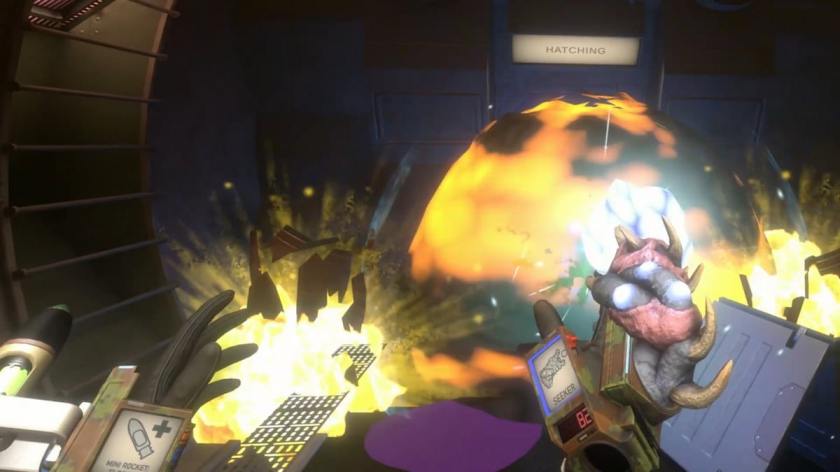
We think the several new challenges like this make for rewarding additions to the player’s journey through the facility.
What were some of the challenges faced during the environment updates, and how were they addressed to ensure improved gameplay and visual aesthetics?
Jesper: From a design standpoint, we had to ensure that when we stitched new rooms into the existing layouts and made changes to rooms or areas, it made sense with the player’s level of progression in the game and did not run the risk of causing too much confusion. The changes had to be a net positive.
In most cases, we did a lot of work with rooms that were made early on in the project. We decided to improve the visuals by adding more details, tweaking the lighting, or rethinking the room’s layout and content. There were rooms where combat wasn’t able to become varied to the degree we wanted. In other rooms, the combat simply didn’t feel right, and we would reconsider having combat there or reworking the room.
Later on, we would have a lot more content in the game, a sharper identity and vision for the experience, and more time having played the game. This helped inform decisions for improving each of the rooms and areas at large. In other rooms, we added details or small touches, making the setting more believable and in line with the research facility setting. With other rooms, we decided that the fundamental design didn’t match the bar of quality or didn’t fit well with the surrounding rooms in the area, and as a result, we would more or less rework the whole thing from scratch.
In some rooms, we simply moved props and made minor adjustments to the layout to allow for better combat. In other cases, we decided to take a whole section of an area and give it a stronger identity to make it more memorable for the player. For example, in one area, we decided to make it more overgrown and set up special lighting to make it stand out. In another area, we had two sections that you couldn’t distinguish from each other by looking at screenshots, so we decided to color code the hallways in one of them and make the other look more like serious struggles took place there.
The result is that these sections are easier to distinguish from one another and more memorable. I would say that this task of making places distinct and stand out from each other was one of the larger ones in terms of updates to the environments. It makes the journey through the facility more memorable as a whole and gives a feeling that the player is going through a lot of different places.
Can you explain the decision-making process behind incorporating kitchen items in the Crew Quarters?
Jesper: Detailing the environments in the game was ongoing throughout the latter half of development. Perhaps the topic of the kitchen prop items is a good case for talking about the decision-making process.
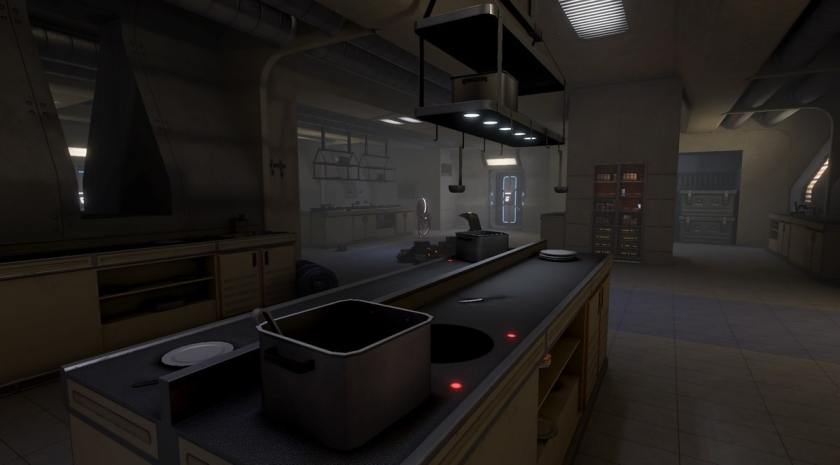
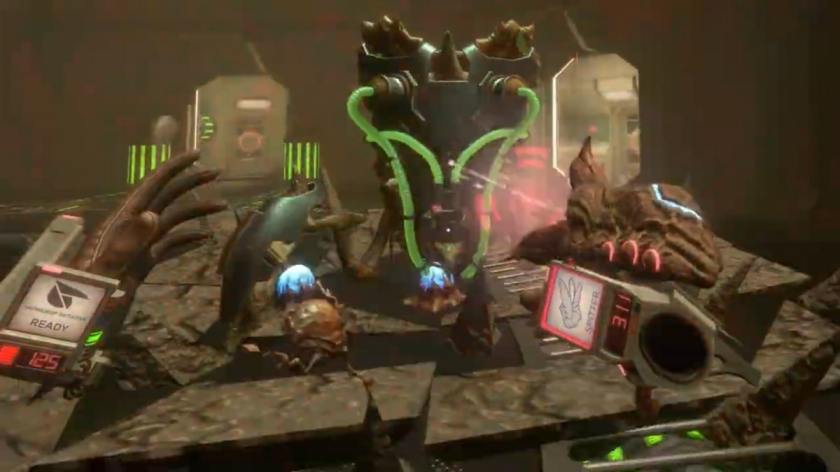
Someone at the office would play the game, arrive at the kitchen, and notice that it was a bit odd that the kitchen did not have any pots and pans, knives, and forks. The point would be brought up in a casual conversation over lunch or at one of the status meetings, and someone would jump on the task of creating some kitchen props while another would place them into the environment once they were ready. I guess that paints a picture that decisions such as these were oftentimes made “organically” by playing the game and encountering things that could be better.
There was a distinction between the super important decisions that would require a certain level of expertise, time, and effort and then decisions that appeared like low-hanging fruit. I’d say that adding kitchen prop items was in the latter category. Decisions like “What should the interaction for saving the game be like?” or “What would be cool upgrades for that hand creature?” were more likely to be the ones that we would discuss at formal meetings.
In terms of decisions, there was always a balance between how we had to prioritize what was necessary and how much time we had available and from whom. Adding a new mechanic that could enable us to make a ton more content could be great, so long as we were comfortable that we had the time to actually make that content, iterate on it, and, in the end, have it be worth the effort. Discussions around decisions that would impact the core mechanics, for example, would often involve the majority of the core team, while decisions about what props would be appropriate for a particular room were often made without involving more than one other person or anyone at all.
Are more updates planned for the future?
Lasse: We’re currently focused on expanding our game’s reach by launching on Rift, Steam, Pico, and PlayStation platforms. This expansion not only allows us to introduce our game to a wider audience but also enables us to gather invaluable feedback and new ideas for improvements. We’re excited about the possibilities this brings and are keen on continuing to evolve the game. The enthusiasm and support from our community on these new platforms will be instrumental in shaping the future of our updates and developments.
 Press Play Media
One thought on “Developer interview: Genotype”