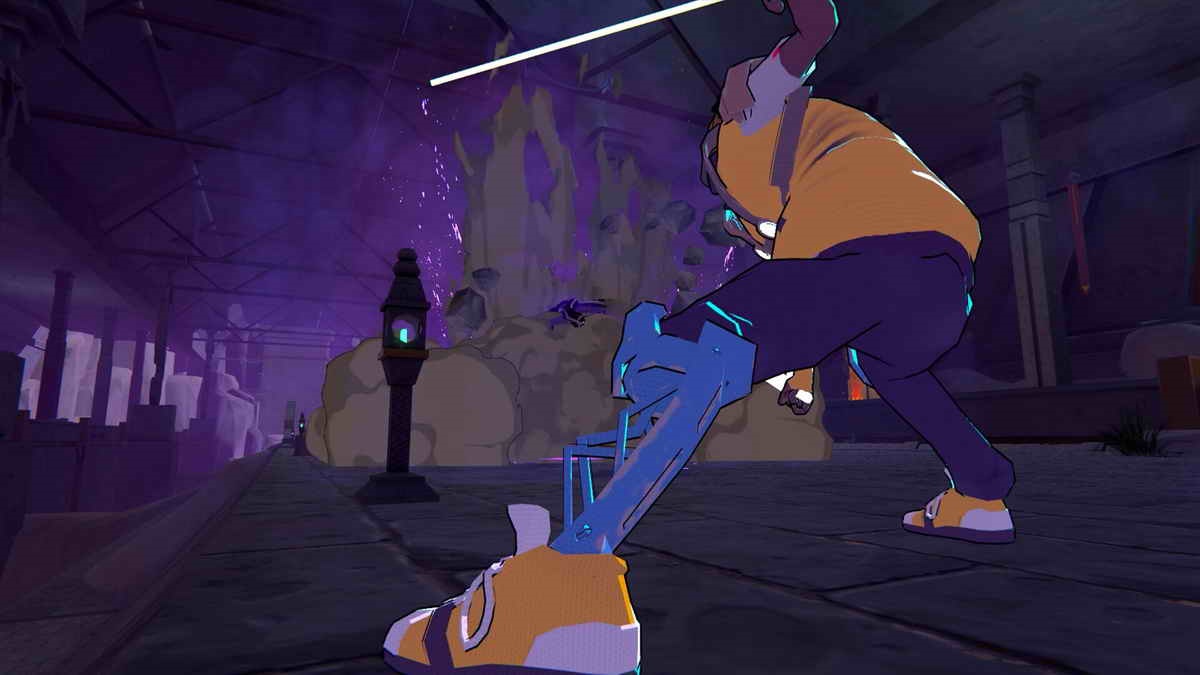
When it launched back in 2021, Aerial_Knight’s Never Yield was received as an audiovisually striking title with a message that resonated as it embraced the developer’s own heritage as a black developer. Now, Neil Jones (Aerial_Knight) is getting ready to launch his follow-up, We Never Yield, and we caught up with him to discuss his game development journey and what we can expect from the upcoming game.
Can you share a bit about your journey into game development?
Game development was a long and challenging journey for me, spanning almost 10 years. Despite facing numerous obstacles and setbacks, I persevered and eventually found my footing by creating my own games. I discovered that people resonated with my unique style and authenticity, which is reflected in the games I make.
As for what inspired me to start creating my own games, I believe everyone has a desire to bring their imagination to life. Making games requires dedication, commitment, and the ability to handle multiple aspects of development solo. However, with a team, budget, and time, the possibilities are endless.
Game development is a long process that incorporates all forms of media. To succeed, you need to be a versatile creative with knowledge in music, art, 2D and 3D design, cinematography, and both classic and modern gaming mechanics. Ultimately, I make games because it’s an incredibly rewarding and cool experience.
As an independent black developer, what are some unique challenges you’ve faced in the gaming industry?
One of the unique challenges I face is finding people who share my vision for the games I want to create. I was fortunate to work with BetaJester, a team based in London, who understood my vision for the game and allowed me to lead the way in terms of style and culture. It’s difficult to find people in the game industry who can truly understand and trust a vision that’s deeply rooted in a specific culture.
Another challenge is marketing. Some developers shy away from discussing the race and culture of their characters to avoid online harassment. However, I’ve seen that even games that avoid these topics still face the same amount of harassment. So, I’ve decided to speak openly about the characters, their culture, and my own experiences, as trolls will still target us online regardless. By being authentic and true to my vision, I hope to create a game that resonates with players who appreciate honesty and cultural representation.
How do you see your role and impact in showcasing underrepresented segments in gaming through your work?
As a developer from an underrepresented community, I try to stay focused on being helpful and creating cool things. I often find that drama and online debates surrounding game development don’t reflect reality, and most of these conversations are started by people outside of the industry. My goal is simple: I want people to appreciate what I do and why I do it.
What means the most to me is when schools and parents reach out because their children have shown an interest in game development and have been inspired by my work. They share my creations and interviews with their kids, showing them that someone who looks like them can succeed in this field. This is incredibly meaningful to me, as I never had a role model who looked like me to look up to and say, ‘Hey, that’s a game developer, and they’re just like me!’ It’s a privilege to be that example for others, and I’m grateful for the opportunity to inspire the next generation of developers
Can you walk us through the creative process of developing the Afro-futuristic aesthetic in your games?
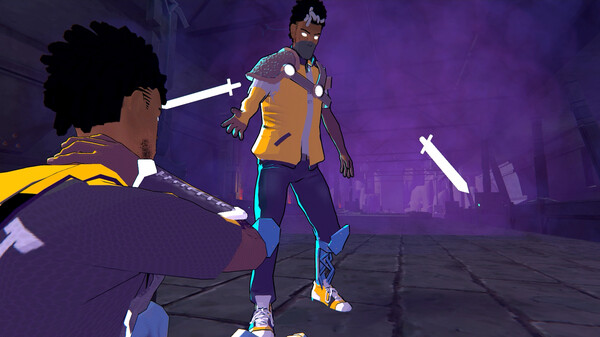
When I worked on the first game, my goal was to push the timeline slightly into the future to create a futuristic feel with unique enemies and environments. However, my next game delves deeper into the magical aspects, and honestly, I’m not sure if it fits the typical Afro-futuristic aesthetic. To me, it feels more like an Afro-medieval aesthetic, as the two characters are transported to a hidden kingdom where they were born and must uncover what happened to their former home.
In developing this game, I aimed to create something distinct by telling a story in a medieval setting, where black characters are often excluded. I wondered what a kingdom built by black people, with only black characters, would look like during that time period. I explored their hierarchy, incorporated modern elements, and considered how they might interact with the world. For instance, I thought including a motorcycle in this medieval kingdom would be interesting, and I enjoyed creating reasons for its existence. While I won’t delve too deeply into the story, I find it fun to imagine a world where these elements coexist simply because they do.
What can we expect from We Never Yield and how will it build upon and differ from your previous game?
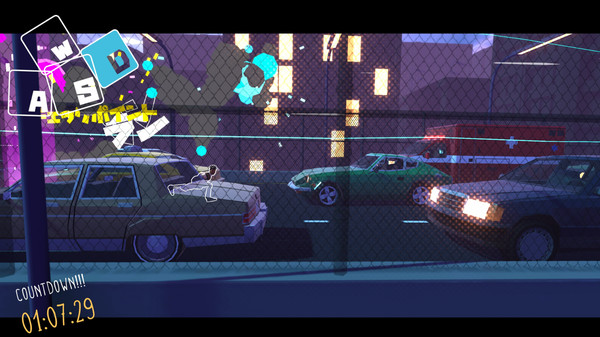
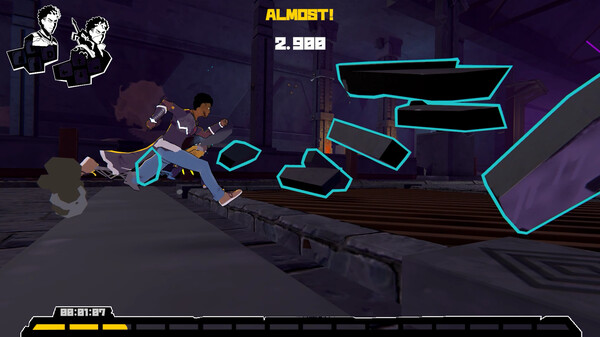
I’m really excited to see how far I’ve come with the second game. I took all the feedback from the first game and addressed the core issues, which has made a huge difference in terms of design, animation, and overall development. One of the biggest additions is the co-op feature, which allows players to team up and control characters together. We’ve also added new modes and gameplay mechanics to make the game more enjoyable and challenging.
For example, we’ve introduced a power meter that players can use to smash through obstacles or gain a speed boost. I’ve also added even more challenge levels for experienced players, as well as a scoring system that rewards players based on their performance. And, of course, made sure that the game is fun and comfortable to play, whether players are playing alone or with a friend.
What advice would you give to other underrepresented developers?
I often tell people that I hate giving advice, because everyone’s journey is so unique and weird in its own way. You really have to forge your own path. I don’t recommend following in my footsteps, because it took me 10 years to find my footing and figure out what I should be doing. And let’s be real, it’s been a lot of failures along the way. What worked for me might work for a few people, but it’s not a formula for success that applies to everyone.
My advice? Don’t listen to anyone who gives advice unless they’re walking the same path as you and know exactly what you’re going through. Otherwise, you need to figure it out on your own. Ask a hundred developers how they got into the game industry, and you’ll get a hundred different stories. Trying to copy someone else’s journey is often a waste of time.
The best way to succeed is to find what you enjoy doing and just do it. The job and the money will come as you get better. But you also need to show people what you’re doing – post about your work, talk to people about it, go to events, try to connect and collaborate with others. In the end, things will work out.
Looking ahead, what do you hope to see change in the gaming industry, particularly regarding diversity and representation?
The game industry’s future is easy to predict by looking at the past. It’s similar to the story of movies but with a faster and more dramatic pace. The addition of black characters to games is a prime example of this. Despite the internet’s hateful and loud voices opposing creativity that doesn’t cater to specific groups, I believe the industry will continue to move forward in a positive direction. Time will always be kind to games and developers who strive to be more inclusive and welcoming to a broader range of gamers, including those who have been historically marginalized.
 Press Play Media