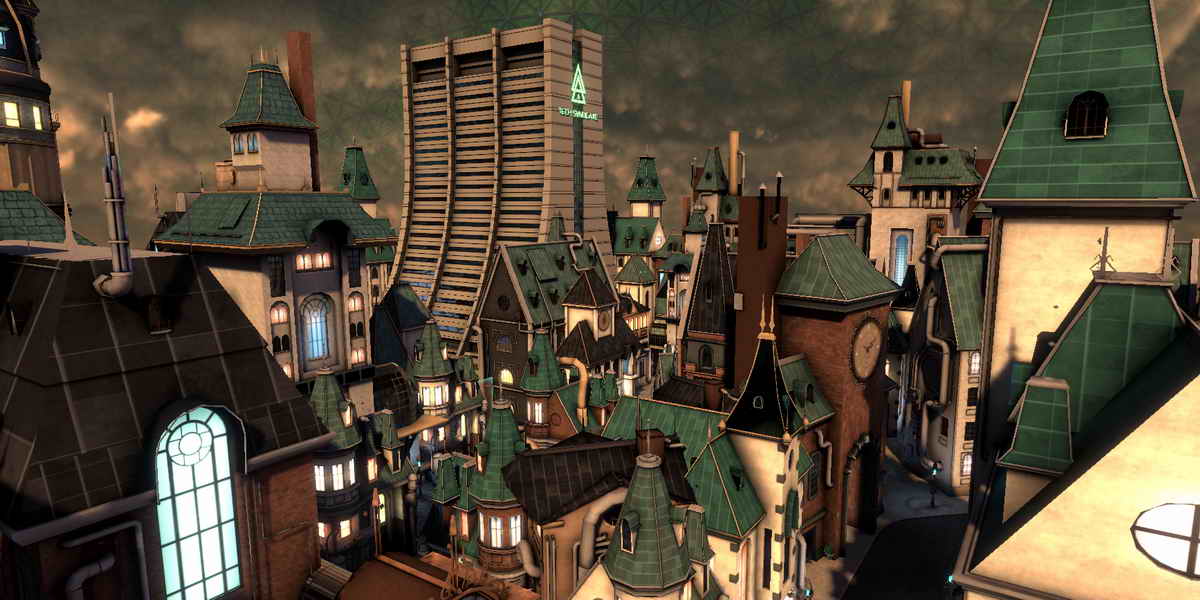
Terra Alia: A Multilingual Adventure, developed by 30 Parallel Inc., takes a rather unique approach – combining language learning with an immersive RPG experience. Having previously been released in a flat screen format, it’s now been brought to life in VR on the Meta Quest. In the game, the developers promise an enchanting world where technology, magic, and language all intertwine for an educational journey… but is ‘educational’ also fun? Here’s our review?
From the moment you step into Terra Alia’s academy, you’ll be guided by a character called Professor Esperanto. The game’s narrative is well done, and managed to lure you in with a blend of mystery and educational purpose. You are tasked with unraveling secrets and puzzles to find your missing mentor, all while navigating a world filled with diverse characters and magical creatures. The story, while engaging and fun, can feel scattered, with some quests feeling more like filler than substantial parts of the main narrative – but that didn’t stop us from enjoying the Professor Layton games either.
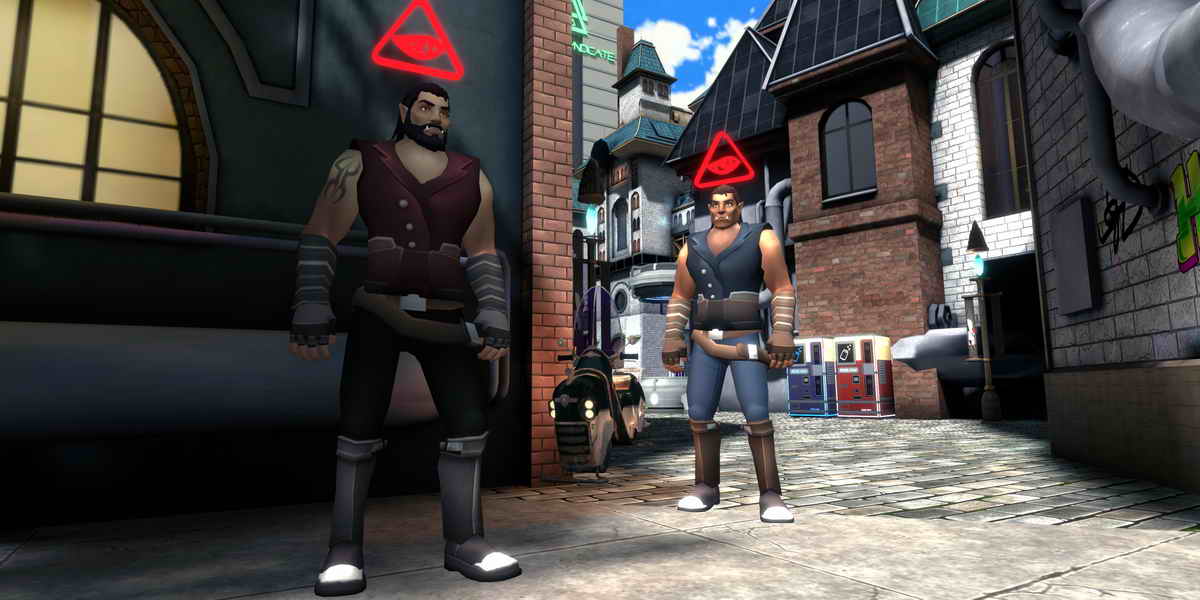
The core gameplay mechanics revolve around learning new words and languages through interactive quests and puzzles. Terra Alia supports ten languages, offering players the chance to dive into English, Spanish, Italian, French, German, Russian, Japanese, Korean, Chinese, and Brazilian Portuguese. This educational aspect is cleverly woven into the game, requiring players to use newly learned words to unlock magical items and progress through the story. However, the transition from tutorial to the main game can be jarring, as there’s an abrupt increase in difficulty once you get past the tutorial.
In VR, Terra Alia shines with its immersive environments and interactive elements. The visuals are quite detailed on the Quest, making the magical academy and its surroundings fun to explore. The sense that you’re actually there is enhanced by the game’s intuitive controls, although the VR conversion isn’t without its flaws. We had some small motion tracking issues, but still felt that this is a significant improvement over the flat-screen original, offering an even more engaging and almost literally hands-on learning experience.
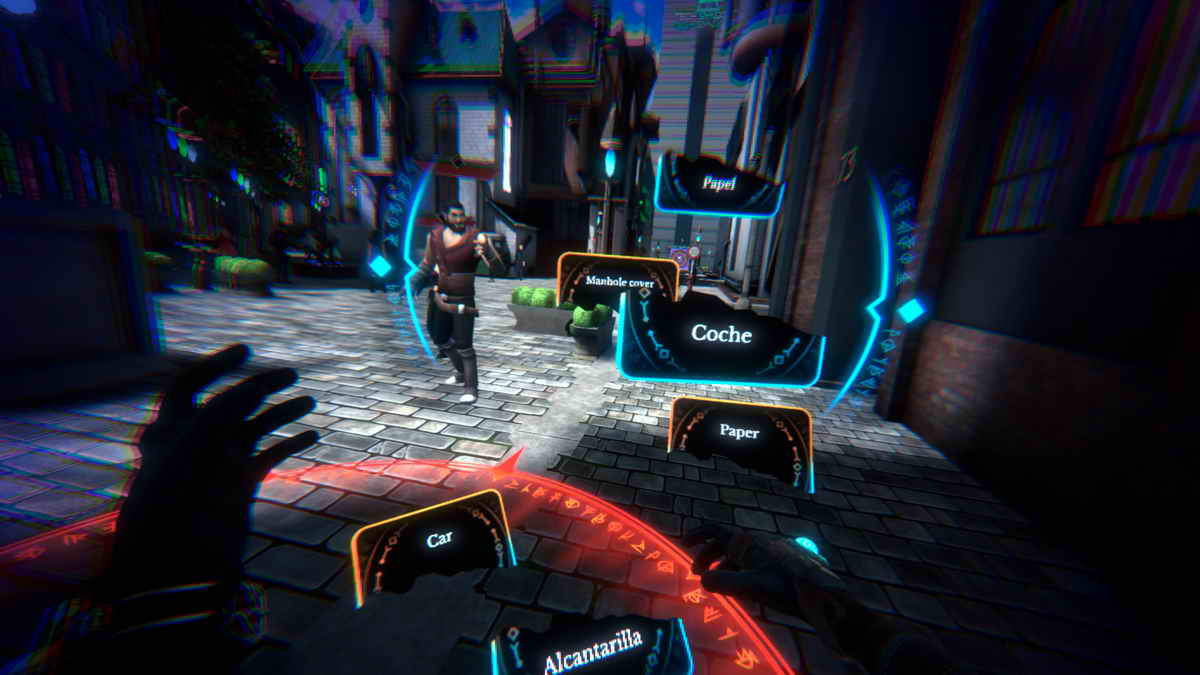
Perhaps surprisingly, there’s a dynamic combat system in Terra Alia, based on language proficiency. Players engage in battles where they must quickly recall and pronounce words correctly to cast spells and defeat enemies. This mechanic adds a layer of excitement and urgency to the learning process, making it both challenging and rewarding. It can sometimes feel overwhelming, especially for those who are still improving their language skills, but it’s rewarding when it comes together. Terra Alia also includes a multiplayer mode, allowing up to four friends to engage in 2 vs 2 matches. Although we weren’t able to test the feature, it adds a social element to the learning experience.
Visually, Terra Alia’s art style is reminiscent of a storybook, with a charming design that appeals to all ages and fits well with the language learning theme. The audio complements the visuals well, featuring a soothing soundtrack and effective use of voice acting to bring characters to life. This all helps to immerse players in the game world, although some voice recognition issues during language exercises can be frustrating.
In conclusion, Terra Alia on Meta Quest is an ambitious and creative attempt to blend language learning with immersive RPG gameplay. Its vibrant world, engaging story, and innovative educational mechanics make it a unique addition to the VR library. For those willing to overlook its imperfections, Terra Alia offers a rewarding and memorable journey into the realms of fantasy and language learning.
Score: 7.2/10
 Press Play Media