
Deathbound, developed by Trialforge Studio and published by Tate Multimedia, is a brand new and ambitious take on the increasingly crowded soulslike genre. Set in the grim and haunting world of Ziêminal, it blends traditional dark fantasy elements with interesting party-based mechanics. This twist makes it stand out, while maintaining the genre’s knack for challenging and deep combat mechanics.
The game’s premise is a captivating one. You are thrust into a world where faith and science are at odds, and your survival hinges on forging bonds with fallen warriors. These warriors, or “essences,” as the game calls them, are not just mere allies but integral parts of your gameplay experience. The heart and soul of Deathbound’s gameplay lies in its party system, which allows you to switch between up to four characters mid-combat. Each character brings their unique skills and combat techniques to the table, and mastering the individual styles and when to switch between them is crucial for overcoming the game’s relentless combat.

This seamless switching between characters and styles is the area where Deathbound shines. The combat feels fluid and dynamic, offering a level of strategy that goes beyond the typical “dodge and strike” routine seen in many soulslike games. By aligning characters from opposing factions (which includes the likes of the Church of Death and the Cult of Life) you can create powerful synergies or, conversely, induce conflicts that have significant effects on combat. This adds a layer of depth and replayability to the game, as experimenting with different combinations leads to very different experiences.
However, the system is rough around the edges. Having a party system in a soulslike game is innovative, but can feel overwhelming, as managing multiple characters at once comes with a serious learning curve if you want to make the most of it. The talent trees for each character are expansive, and the sheer number of options and the fact that you have to balance your choices between multiple characters can make it difficult to find synergies, particularly in the early stages of the game. This might deter those who prefer a more straightforward combat approach, and requires players to be somewhat persistent.
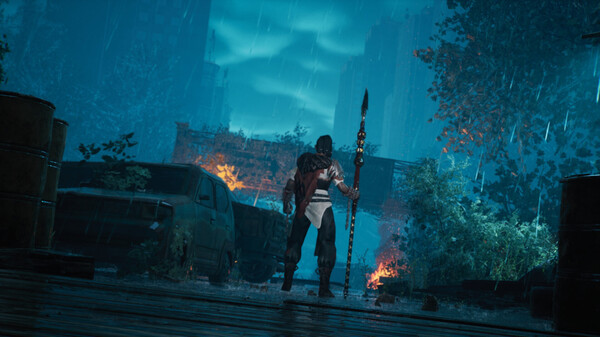
Visually, Deathbound unfortunately is a mixed bag, looking gorgeous in places but rough in others. The world of Ziêminal is richly detailed, with its blend of medieval and technological elements creating a setting that feels both familiar and alien. The city of Akratya, with its brutalist architecture and oppressive atmosphere, serves as a fitting backdrop for the game’s dark themes. However, the game’s visuals also lack polish in places, with occasional texture pop-ins and some rough character models detracting from the overall experience.
The game’s audio design, on the other hand, is excellent. The soundtrack perfectly complements the game’s atmosphere, and the sound effects are equally impressive, from the clashing of swords to the casting of spells. The voice acting could have been better, but never detracts from the experience either.
One reason why some of the rough edges are a shame is that world-building in Deathbound is really good. The lore of Ziêminal is rich and well-crafted, with the city of Akratya serving as a focal point for the game’s narrative. As you explore, you’ll uncover the remnants of a once-great civilization, now crumbling under the weight of a grand crusade. The themes of faith versus science are woven throughout the game, providing a thought-provoking backdrop to your journey. As per the norm in the genre, things can sometimes feel a little fragmented, but there’s a great foundation here that we’d love to see more of.
In conclusion, Deathbound is an ambitious entry into the soulslike genre, with its blend of party-based combat, deep lore, and a (for the most part) beautifully realized world. While it may not be perfect, with some rough edges in its visuals and a learning curve that may intimidate newcomers, it’s a game that rewards patience and experimentation. For those willing to dive into its depths, Deathbound offers a challenging and richly rewarding experience that sets it apart from its peers – and we hope this isn’t the last we’ll see of this fantasy world.
Score: 7.1/10
 Press Play Media