
Outright Games recently released Matchbox Driving Adventures, and in addition to reviewing the game we also caught up with senior production Rudy Lamy to dive into the development of the game. Here’s what we found out.
The Matchbox name is typically associated with vehicles more so than tracks – which considerations went into designing the locations you drive around in?
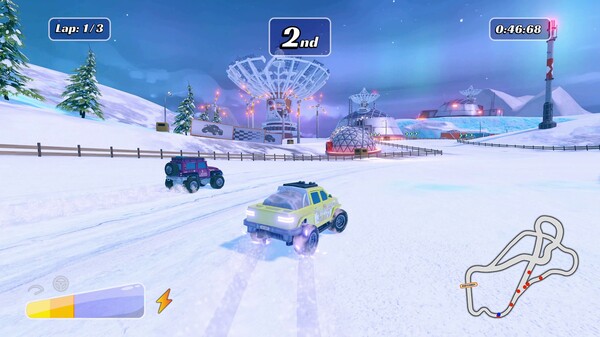
From the beginning of the project we knew we wanted to craft locations that could really bring out the “Adventure” and work with the unique aspects of each vehicle. We have sections for off-roading, snow, mountains, and beach terrain. We also really wanted to lean into the “land-air-sea” elements of Matchbox to showcase the versatility of the vehicles of the brand.
Building our city with the Airport, Harbor and Construction Site, in addition to the clean urban environment, allowed us to show that Adventures are all around in our daily lives as well. This let us have missions for the Flametamer fire truck, an ambulance, mail truck, etc., in addition to driving more exotic vehicles like the Whiplash on nicely paved roads.
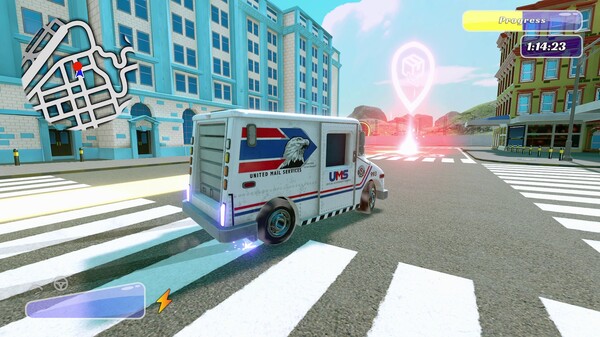
The small “Drive to” sections between the missions in Adventure Mode also offer a nice playable transition between the different biomes – we really wanted to include this so players get to feel a road trip vibe, and feel like they are personally making their way to new locations, not just selecting from a list.
What can you share about the creative process involved in bringing Matchbox vehicles to life in this game?
We are lucky to have collaborated closely with Mattel’s brand and vehicle teams to create authentic, playable versions of some of their original vehicles. We had many iterations, but focused on details like tires, wheel bases, and even the decals and color options of each car we were selecting to feature. And it goes beyond the visuals: we wanted to have each vehicle feel authentic, so we had to tweak and test the physics, weight, acceleration and even the front/rear or all-wheel drive capabilities of each vehicle. You may not realize it at first, but each vehicle has its own driving feel, and it adds a layer of complexity to the different missions and competitions – players should try out different vehicles on multiple playthroughs to see how they can get faster depending on the objective.
Matchbox has been around for over 70 years. How are you translating the Matchbox ‘feel’ towards a video game that can be played by young and old?
It is a privilege to work with such a legacy brand and be given the creative support to adapt Matchbox for a modern audience. While designing the game, we knew we needed to highlight the core of Matchbox: authentic vehicles, serving authentic purposes. There is a roleplaying element in taking vehicles through exhilarating real-life situations, and we knew we had to build around that.
We also took care to build in assist features for younger and older audiences – we have a lane assist feature to keep players in the center of the road, and auto-accelerate, which is essentially “Cruise Control” allowing players to focus on their maneuvers and reaching their objectives.
These can be toggled on/off at any point, and really lets all players engage with the experience how they want to. Some players can use it to learn the basic mechanics, while others can use it to practice advanced skills and learn the routes and particularities of each vehicle. This is like a real driving experience. This also plays out in our variety of vehicles – since they look and drive differently, we hope everyone can find a favorite!
 Press Play Media