
With the scary season in full swing, horror movie powerhouse Blumhouse is venturing into gaming with Fear the Spotlight, developed by Cozy Game Pals. It offers a nostalgic yet eerie homage to 90s survival horror, combining the tense atmosphere of those classic games with a narrative centered on uncovering a dark mystery in the haunted Sunnyside High. Players take on the role of Vivian, who, following a séance gone wrong, is plunged into a nightmarish version of her school while trying to find her friend Amy and avoid a terrifying creature lurking in the shadows.
The narrative premise is one of the game’s standout elements, with a story that pays tribute to horror classics and films by blending supernatural thrills with a mystery about a decades-old tragedy. The focus on uncovering the school’s sinister past adds depth to the gameplay, making exploration feel purposeful. However, while the story does capture the unsettling atmosphere of 90s teen horror, some of its plot points feel predictable, and the game doesn’t always take full advantage of the opportunities to dive deeper into its characters, leaving some elements of the narrative underdeveloped.
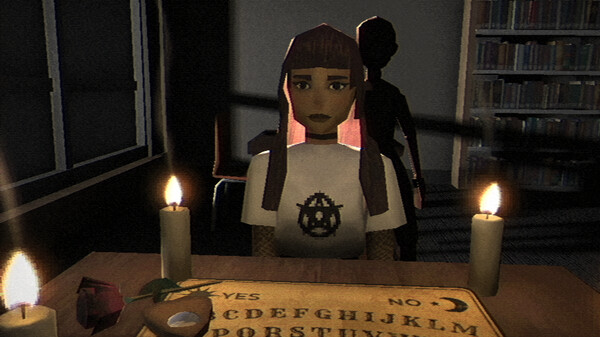
Gameplay-wise, Fear the Spotlight offers a mix of stealth, puzzle-solving, and exploration, all of which are of course fairly standard fare for the genre. Players must navigate dark hallways, avoid detection by the monster, and solve puzzles that evoke memories of classic survival horror games. While the stealth mechanics contribute to the tension, they can also be frustrating at times due to their simplicity and occasional clunky controls. The puzzles, on the other hand, are a highlight, often striking a nice balance between being challenging and intuitive, even if genre veterans might find them a little too familiar.
One area where Fear the Spotlight shines is in its atmosphere. The developers have done an excellent job of creating a creepy, dread-filled setting that keeps you on edge as you explore Sunnyside High. The dark, foreboding hallways, paired with the retro art style and clever use of lighting, are effectively unsettling. The flashlight, your primary tool, helps build tension as it only partially illuminates the surroundings, making each corner feel like it could hide a threat. However, the game’s retro aesthetic, while charming for fans of 90s games, might not appeal to players who expect a more polished visual experience, especially on a platform like the PlayStation 5.
The audio design is another critical component that enhances the game’s atmosphere. The sparse use of music, combined with unnerving sound effects like the echo of footsteps or the creak of a door, keeps players on edge. The tense moments of silence, punctuated by sudden noises, do a lot to create a constant sense of dread. However, there are times when the audio feels too minimal and needs more ambient noise, and certain sequences could have benefitted from a more dynamic soundtrack to heighten the tension further.

The controls in Fear the Spotlight are generally functional, but they can feel a bit unrefined at times, particularly when it comes to maneuvering in tight spaces or interacting with objects. There’s a slight delay in responsiveness that can detract from the immersion, especially when you’re trying to hide from the monster or solve a puzzle quickly. These issues aren’t game-breaking and even ‘retro’ in a way, but they can add an extra layer of frustration during more tense moments.
Ultimately, Fear the Spotlight is a game that succeeds in capturing the essence of classic 90s horror, with its nostalgic visuals, atmospheric audio design, and a story that keeps you engaged, even if it doesn’t break new ground. Fans of old-school survival horror will appreciate its throwback feel, but for others, the lack of polish in the controls and occasional narrative shortcomings might hold it back from being a standout in the genre. Nonetheless, it’s a solid first title from Blumhouse Games, and for those seeking a short, creepy adventure, Fear the Spotlight offers enough thrills to warrant a playthrough.
Score: 8.0/10
 Press Play Media