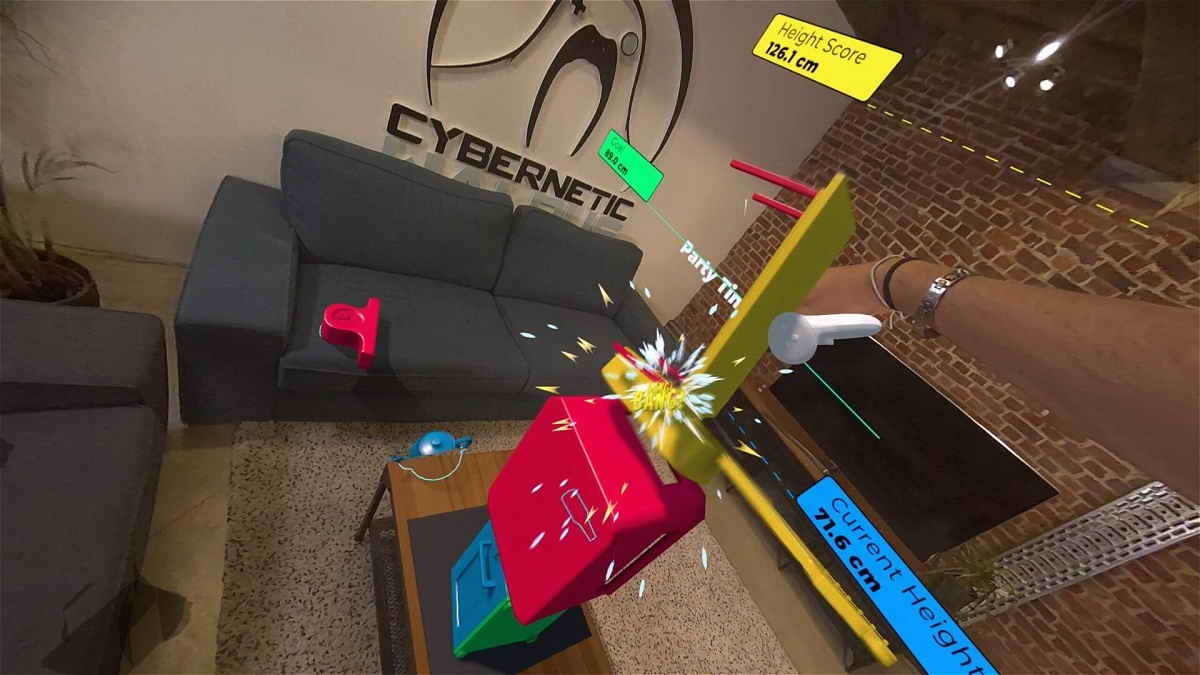
Does It Stack? brings a playful twist to VR, challenging players to stack and balance a wide assortment of odd objects in ways that are as entertaining as they are challenging. Published by Cybernetic Walrus, this stacking simulation, available on the Meta Quest, captures a unique blend of humor and skill that stands out in the VR space, asking players not only “Can I stack this?” but also “How?” as they attempt to create towers with an assortment of whimsical items in a multitude of ways.
The game’s appeal lies largely in its simple yet surprisingly intricate mechanics. Players stack everything from toy cars to bicycles, often discovering how these objects respond in unexpected ways. The interaction mechanics feel intuitive in VR, allowing for fairly precise placement, yet the game’s physics-based unpredictability adds a layer of chaos as well. This is amplified by a unique rule where matching colors cause objects to explode upon contact, which injects a tension that keeps players on edge. The balance between skill and humor is well-crafted, though the explosion mechanic can be frustrating, as it often adds unexpected setbacks during critical stacking moments.

One standout feature in Does It Stack? is the option to play in augmented reality (AR) as well as virtual reality, letting players choose to either immerse themselves fully in VR or to integrate digital elements into their real-world surroundings through AR (on the Quest 3). This flexibility allows for a more versatile experience, particularly in local co-op, where friends in the same room can work together to tackle puzzles. Co-op mode is especially enjoyable, as stacking becomes a team effort, often leading to comical moments and inevitable collapses. But while the multiplayer adds a fun social element, occasional syncing issues in can disrupt the flow, which can be frustrating during otherwise fluid gameplay.
Beyond the main stacking challenges, the game includes a sandbox mode where players can experiment freely with unlocked items and see just how high they can stack without the constraints of levels or color rules. The sandbox mode’s freedom is perfect for those who enjoy creative, open-ended play, though it lacks a bit of the structure that makes the main game so engaging. Meanwhile, the daily challenge mode offers an added layer of replayability, providing players with new stacking challenges each day. This is especially motivating for players who enjoy competition, as they can aim to beat friends’ scores and even share their towering achievements. In addition, levels can also be replayed with different objectives, adding even more replay value.
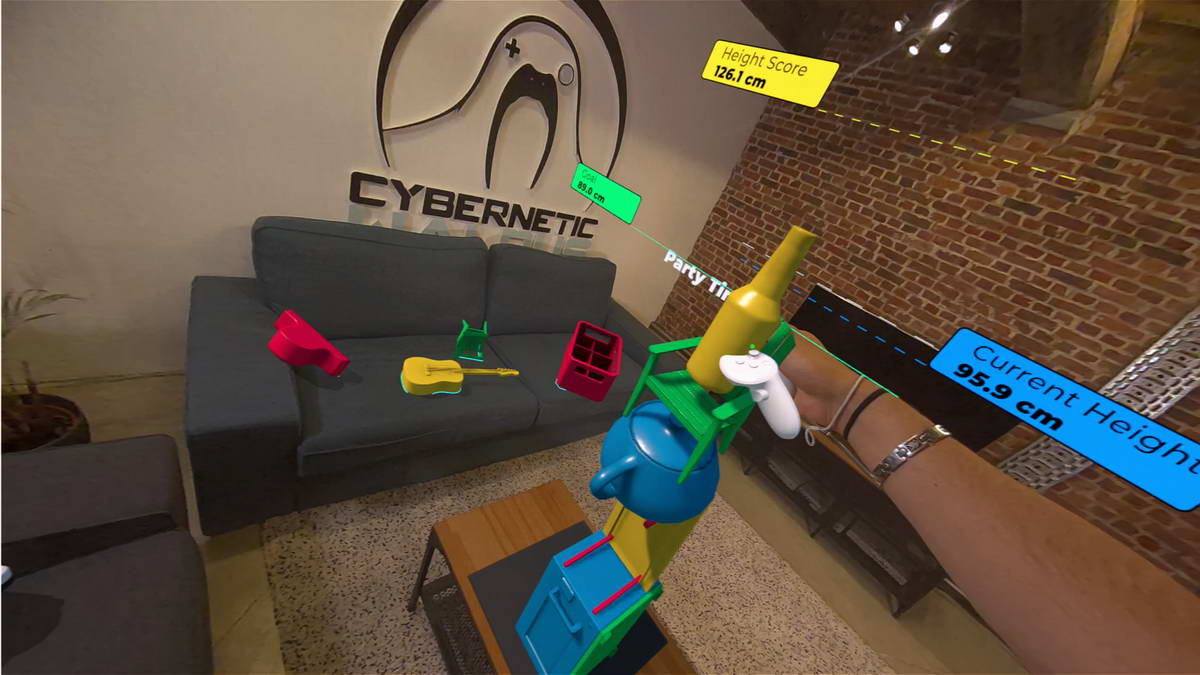
Visually, Does It Stack? leans into a playful art style that doesn’t strive for realism but instead opts for bright colors and whimsical object design that enhances the game’s lighthearted tone. Each level’s environment is basic but serves as a functional backdrop, keeping the focus on the silly items and the precarious balancing they require. The audio design matches this playful style with upbeat music and sound effects that amplify the quirky feel of each collapse and explosion. However, while the visuals fit the game’s tone, some players might feel that a greater variety of environments would add to the appeal, as the static backgrounds can feel repetitive over time.
Overall, Does It Stack? succeeds in bringing a fun and engaging stacking experience to VR, combining a clever concept with a solid VR interface that feels satisfying to play. Though some mechanics may occasionally frustrate, particularly for those seeking precise control, the game’s charm and humor make it easy to forgive its quirks. For fans of VR looking for something lighthearted and different, Does It Stack? offers a refreshing break from more intense VR experiences, inviting players to test both their skills and their sense of humor in an imaginative stacking playground.
Score: 7.7/10
 Press Play Media