
The cinematic platformer Hannah is a surreal journey through a retro-inspired world that blurs the lines between reality, memory, and fear. Developed by Spaceboy and published by QUByte Interactive, the game uses an interesting narrative approach to immerse players in a landscape where memories transform into obstacles and fears become tangible threats. Playing as a little girl called Hannah, you’ll engage in platforming, puzzle-solving, and stealth, creating an experience that’s both nostalgic and experimental. But while Hannah brings inventive concepts to the table, it’s also a mixed experience that leaves room for polish in a few areas.
The game’s narrative is one of its standout elements, pulling players into a twisted, dream-like world that evokes the atmosphere of 80s horror. The storyline is vague, leaving much to interpretation, yet this open-ended approach also complements the surreal setting where memories blend with nightmares. However, this can be a double-edged sword, as the lack of clear narrative direction may leave some players feeling lost or disconnected. Rather than guiding players through a linear storyline, Hannah drops them into an environment full of symbolic imagery, relying on visual storytelling to convey its themes. For fans of abstract storytelling, however, this approach provides a refreshing departure from more conventional game narratives.

Gameplay in Hannah is diverse, blending platforming with stealth mechanics and gadget assembly. Hannah’s ability to swing, slide, and climb gives players plenty of opportunities to explore their surroundings. This variety can be engaging, though the controls sometimes lack the precision needed to make these mechanics truly shine. Moments that require precise timing, such as rope swinging or carefully avoiding enemies, can feel frustrating due to occasionally clunky controls, which disrupts the otherwise fluid experience. The puzzles, while creatively designed, are also a mixed bag; some are satisfying to solve, while others feel more like roadblocks due to unclear clues or convoluted mechanics.
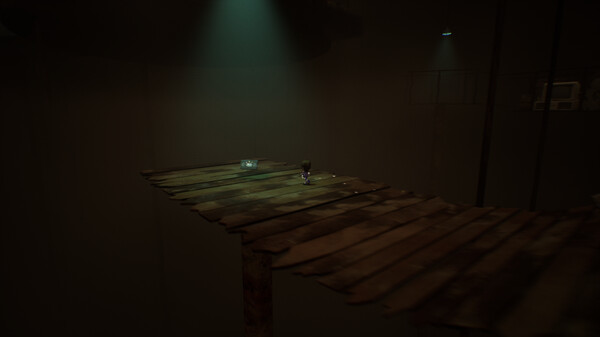
Visually, Hannah captures an atmospheric, retro-futuristic vibe that’s enhanced by its use of Unreal Engine. The high-resolution textures and detailed 3D models make the environments intriguing, filled with vibrant colors that contrast sharply with darker, more ominous spaces. Particle effects, custom shaders, and volumetric lighting add depth to the game’s surreal aesthetic, enveloping players in a hauntingly beautiful landscape that feels like a blend of 80s nostalgia and fever-dream abstraction.
The audio in Hannah is another strong suit, with an original soundtrack that complements the retro theme. The synth-heavy music echoes classic 80s soundscapes while adding a unique touch of suspense and mystery. The sound effects, though less prominent, contribute to the overall ambiance, helping to ground players in the game’s surreal world. However, it’s worth noting that certain sound effects can become repetitive, and the audio mix could benefit from more dynamic range to prevent moments of overbearing background noise.
Overall, Hannah stands out as an ambitious indie game with a bold artistic vision. Its surreal story and nostalgic design capture the eerie essence of 80s horror and synthwave aesthetics, drawing players into a world where memories and fears merge. While it has plenty of charm, the game’s clunky controls and vague storytelling may leave some players frustrated or disengaged. For those who enjoy experimental titles with a retro flair, Hannah offers a memorable journey, but it falls short of its full potential due to technical limitations and design choices that sometimes hinder its engaging premise.
Score: 6.7/10
 Press Play Media