
VED, developed by Karaclan and published by Fulqrum Publishing, delivers an interesting blend of narrative-driven role-playing and unique gameplay mechanics. Set against the backdrop of Micropolis and its mysterious interconnected worlds, it weaves a story full of intrigue and impactful choices, inviting players to step into a realm where every decision carries weight. With its hand-drawn visuals and eclectic soundtrack, the PlayStation 5 version offers an experience that is audiovisually striking, but how does it play?
At its core, VED follows Cyrus, a young adventurer whose discovery of teleportation magic propels him into a journey filled with moral dilemmas, disputes between factions, and self-discovery. The branching narrative gives the player meaningful agency, with irreversible choices and multiple endings ensuring that each playthrough feels distinct. However, while the story’s ambitious scope is commendable, its pacing occasionally falters, with some stretches of the story feeling more like filler than essential developments – something that is especially felt on a subsequent playthrough, where it feels like the writing should have been stronger.
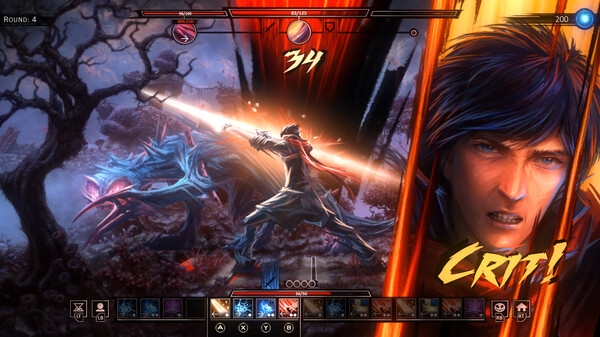
The gameplay is an intriguing mix of traditional turn-based combat and innovative mechanics. The ability to teleport during battles introduces fresh tactical possibilities, rewarding players who can think strategically about positioning. The inclusion of rogue-lite elements, like interactive events that bestow blessings or curses, adds an element of unpredictability to the experience. The village-building mechanic is another noteworthy aspect, allowing players to unlock new skills and spells by expanding their base. However, the learning curve can be steep, and some mechanics, like faction interactions, might feel underexplored in the long run for players hoping for more depth.
Visually, VED is a real treat. The hand-drawn art style is consistently gorgeous, with environments and character designs that draw from diverse cultural inspirations. The attention to detail helps immerse players in the magical dual worlds of the game, even if the game occasionally suffers from minor graphical hiccups, such as frame rate drops in more populated areas. The soundtrack is equally noteworthy, blending genres like symphonic and folk to create a unique auditory identity for the game. While some tracks stand out more than others, the overall sound design enhances the immersive atmosphere – though so-so voice acting doesn’t help.
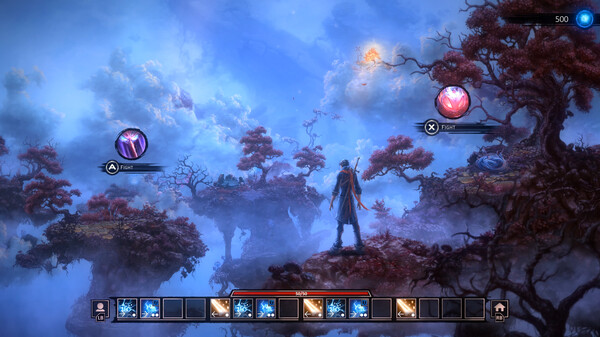
The controls are generally responsive and intuitive, whether you’re exploring the environments, engaging in combat, or managing your village. However, there are moments when navigation feels cumbersome, particularly during transitions between the two worlds, which can disrupt the flow of exploration.
In the end, VED is a unique RPG that stands out thanks to its inventive gameplay systems and stunning presentation. While its narrative ambitions exceed its execution, the blend of turn-based combat, teleportation mechanics, and village-building offers an interesting experience for fans of the genre. The combination of a rich visual aesthetic, a dynamic soundtrack, and meaningful player choices makes VED a memorable journey, even if some aspects – and the writing in particular – could definitely benefit from refinement.
Score: 6.6/10
 Press Play Media