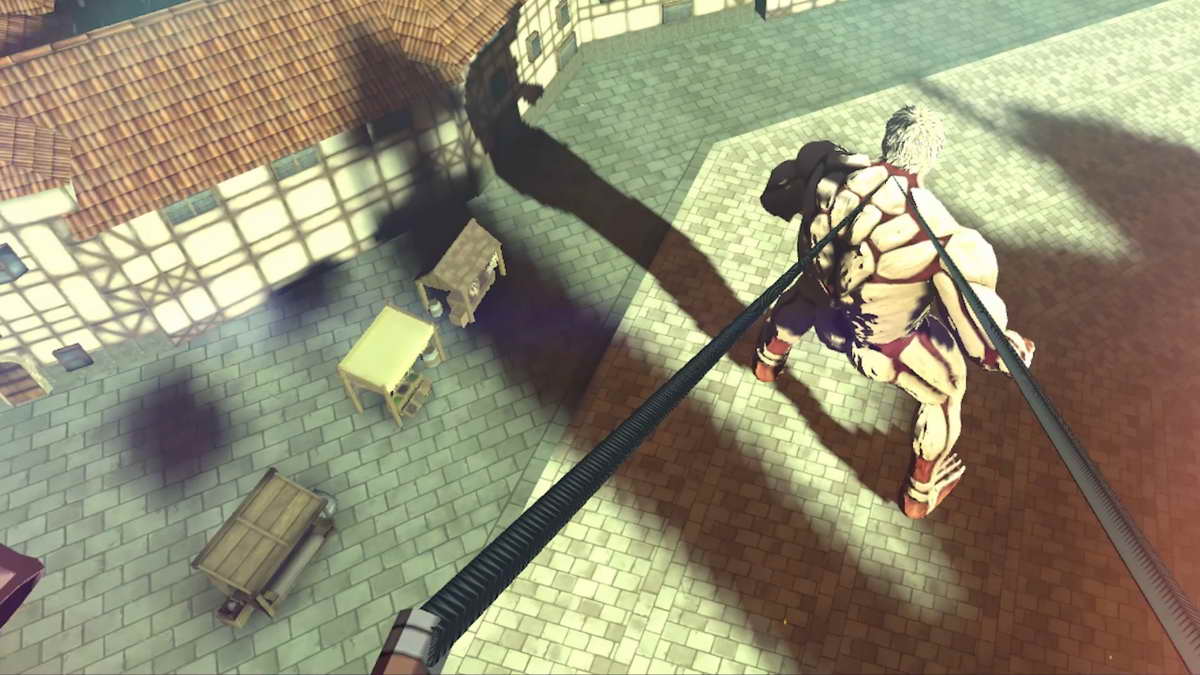
Attack on Titan VR: Unbreakable brings the iconic anime and manga franchise to life in virtual reality, offering fans a chance to step into the shoes of a Scout Regiment recruit battling the monstrous Titans. Developed by UNIVRS, this first-person action-adventure platformer leverages VR to immerse players in the high-flying chaos of using Omni-Directional Mobility Gear (ODM) while fending off deadly enemies. It delivers moments of breathtaking action and franchise authenticity, but also stumbles in a few areas – here’s a closer look.
The game’s narrative draws players into the struggle between humanity and the Titans, setting the stage with a tutorial that introduces players to ODM Gear and the world’s lore for those who aren’t already invested in the source material. As a member of the Scout Regiment, you’re tasked with defending walled cities against increasingly challenging waves of Titans. While the story itself doesn’t break new ground, it does a commendable job of immersing players in the Attack on Titan universe. Character interactions and mission objectives capture the anime’s sense of urgency, though (perhaps not surprisingly) the plot lacks the depth of the original source material.

Gameplay mechanics are the heart of Unbreakable, and the ODM Gear is the clear highlight. Zipping through the air with the gear feels exhilarating, especially when executed with precision during combat. The thrill of grappling onto buildings, evading attacks, and striking Titans’ weak points captures the essence of the anime’s fast-paced action. However, mastering these mechanics comes with a steep learning curve, and VR novices may find the controls unintuitive at first. While rewarding once mastered, occasional tracking issues and the complexity of certain maneuvers can disrupt the experience.
Combat offers a mix of strategy and chaos, as players can choose from distinct weapon types, each with its strengths and weaknesses. Balancing different tools for different combat scenarios adds depth to the gameplay, but some weapons feel underpowered compared to others. Engaging Titans remains tense and satisfying, though enemy AI occasionally feels predictable, diminishing the sense of danger once you’ve figured things out. Additionally, the missions themselves can become repetitive over time, relying heavily on wave-based objectives that lack variety.
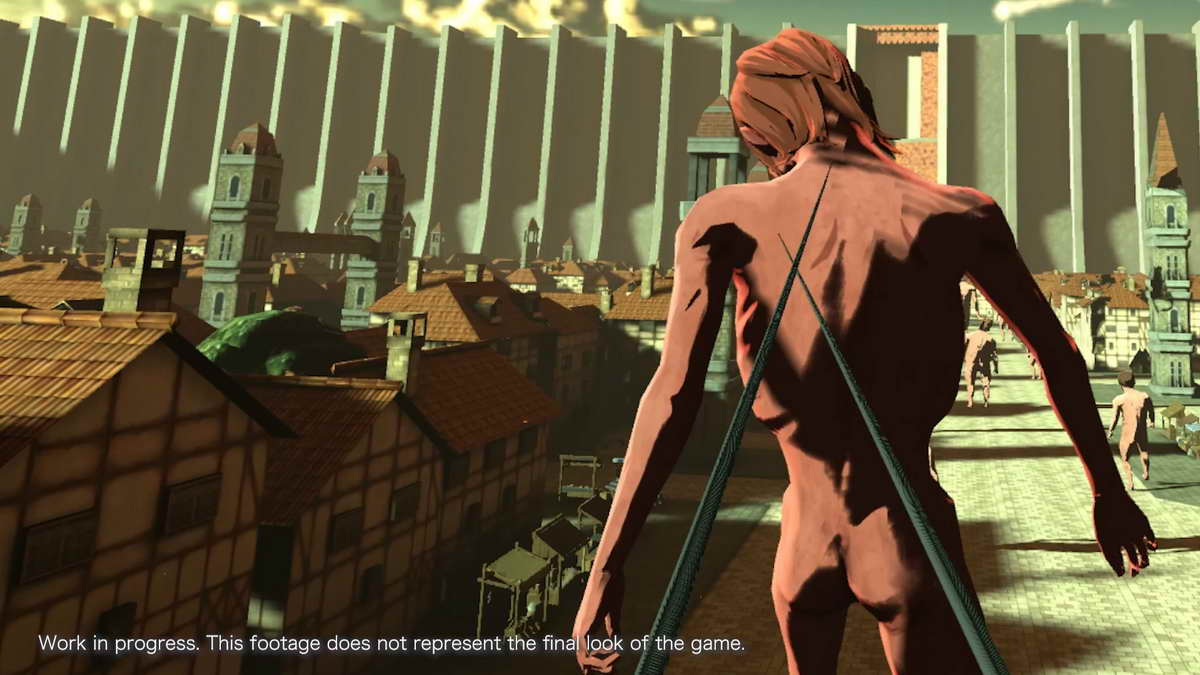
Visually, the game does an excellent job of recreating the world of Attack on Titan. The environments are faithful to the anime, and the Titans themselves are suitably intimidating in their size and detail. While the graphics are effective in VR and provide a good sense of scale, they don’t quite reach the level of polish seen in non-VR adaptations of the series, with occasional texture pop-ins and inconsistent lighting. The audio design, on the other hand, is a standout feature. From the soundtrack to the bone-chilling roars of the Titans, the game’s soundscape amplifies the sense of immersion.
Despite its strengths, Attack on Titan VR: Unbreakable doesn’t entirely avoid the pitfalls common to VR adaptations. The demanding nature of the gameplay mechanics can lead to motion sickness for some players, and the game’s lack of accessibility options makes it less welcoming for newcomers to VR. Additionally, while fans of the franchise may appreciate the game’s authenticity, those unfamiliar with Attack on Titan may find the narrative and character development lacking context.
Ultimately, Attack on Titan VR: Unbreakable delivers a unique VR experience that captures the thrill of soaring through the skies and battling Titans. Fans of the franchise will likely enjoy the opportunity to engage with the world in such an immersive way, but the game’s uneven pacing, steep learning curve, and technical limitations hold it back from being a must-play for all. For those willing to persevere through its flaws, however, it’s a worthwhile addition to the Attack on Titan universe – and a great experience for fans of the IP.
Score: 7.0/10
 Press Play Media