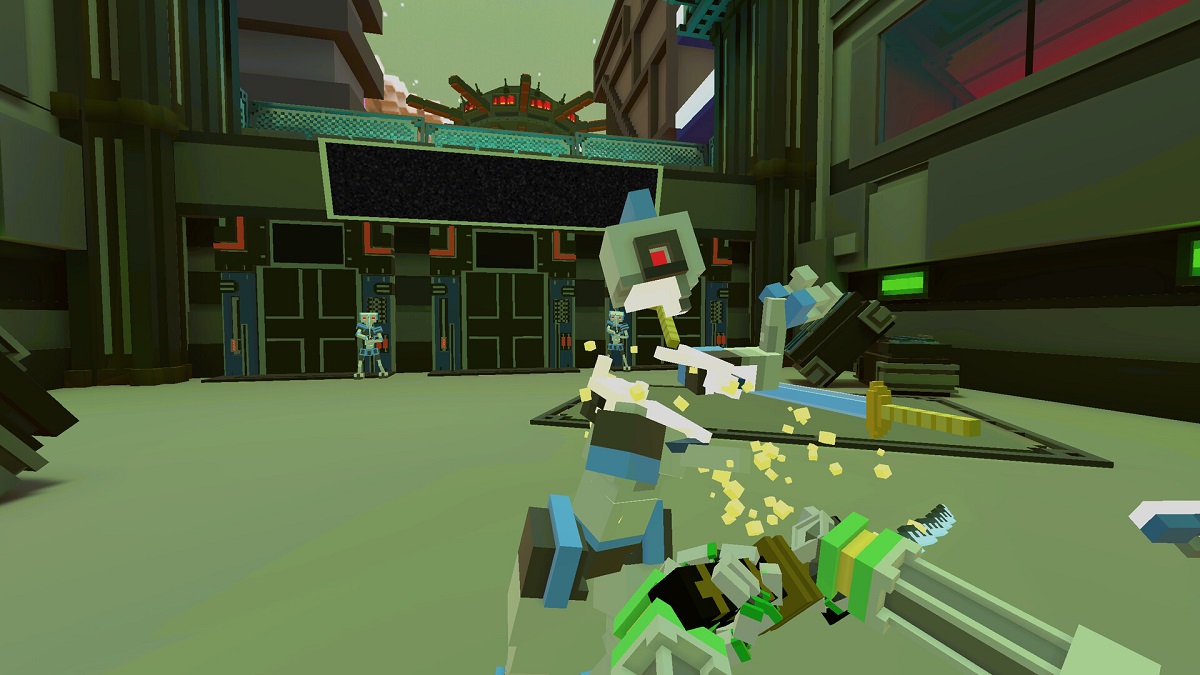
Clone Drone in the Hyperdome by Doborog Games return with its voxel-based action in virtual reality, offering players the chance to engage in frenetic combat as a gladiatorial robot on the Meta Quest. This adaptation blends roguelike elements with dynamic combat mechanics, but while its innovative design shines in many areas, the game’s approach to narrative depth and certain gameplay aspects leaves room for improvement.
The premise of the game thrusts you into the role of Blink, a robot looprunner competing in the Crashloop – a gladiatorial tournament set in the titular Hyperdome. Each run offers an opportunity to learn about the rivalries and relationships between other looprunners, which adds a layer of intrigue to the game. The inclusion of story-driven elements like alliances and rivalries is a surprising but welcome twist in an otherwise chaotic setup. That said, the narrative elements can sometimes feel superficial, as the focus of the gameplay remains squarely on the action.
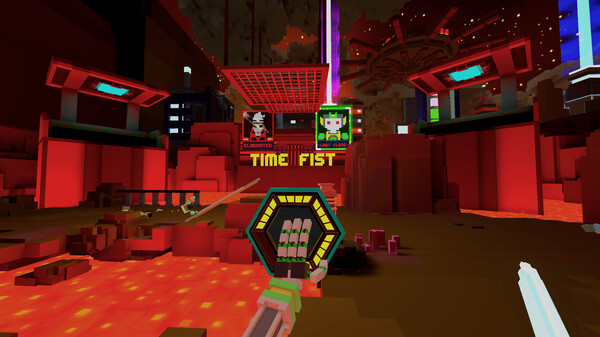
At its core, the gameplay thrives on its combat mechanics. Armed with a variety of weapons, including laser swords, axes, and spears, players can experiment with fighting styles to suit their preferences. The ability to equip and upgrade Turbofists, which grant special abilities like shuriken launches and zombie summons, adds depth to the combat system. These upgrades, earned by defeating other looprunners, create a satisfying loop of risk and reward. However, certain upgrades feel like they outshine others, making balance across runs an issue.
The roguelike nature of the game ensures replayability, with procedurally generated challenges and the ever-present threat of permadeath keeping players on their toes. The difficulty curve is fair but steep, which can be both a draw and a deterrent depending on your tolerance for high-stakes gameplay. The Hyperdome arenas themselves are visually striking, though their design occasionally prioritizes spectacle over strategic gameplay opportunities. Lava pools, turrets, and enemy swarms create chaotic yet exhilarating combat scenarios, and we imagine this game would be great with a spectator mode.
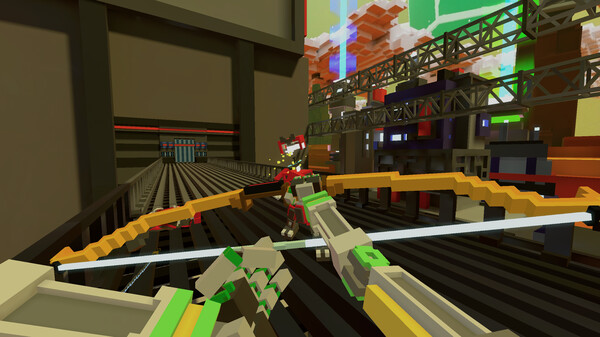
In VR, the controls are responsive and intuitive for melee combat, allowing for precise strikes and satisfying interactions with enemy robots. However, ranged attacks using the Turbofists can occasionally feel less fluid, detracting from the immersion. The game’s focus on motion-based controls demands physical engagement, which is both a highlight and a potential limitation for extended play sessions.
Visually, Clone Drone in the Hyperdome takes full advantage of its voxel aesthetic to create a world that feels playful yet brutal. Limbs fly off with every well-placed strike, and the destruction mechanics are endlessly satisfying. However, the simplicity of the voxel design may not appeal to those looking for hyper-realistic VR experiences. On the audio front, the game features a lively soundtrack that complements the action, though the sound effects and voiceovers can occasionally veer into repetitive territory.
Ultimately, Clone Drone in the Hyperdome delivers a unique and action-packed experience that stands out in the VR space. Its combination of roguelike mechanics, fast-paced combat, and voxel destruction makes for a compelling package, even if certain aspects, such as narrative depth and balance, could use more refinement. For fans of chaotic VR action and those who enjoy honing their skills in challenging arenas, the Hyperdome offers destructive fun.
Score: 7.5/10
 Press Play Media