
As we get ready to turn the page on 2024 and head towards 2025, we look at some of the games that we expect will leave a mark in the months to come. One of these is Dying Light: The Beast, which we first saw in action during Gamescom. We got in touch with Tymon Smektala, the Dying Light Franchise Director at Techland, to learn more – here’s our exclusive interview on this highly anticipated new title.
How did your experience from developing previous Dying Light games influence your approach to creating Dying Light: The Beast?
Our journey through the development of Dying Light and Dying Light 2: Stay Human – all 10 years of it! – gave us invaluable insight into what resonates with players. With Dying Light: The Beast, we’ve taken the lessons we’ve learned – both the successes and the challenges – and pushed them further to craft a more refined experience.
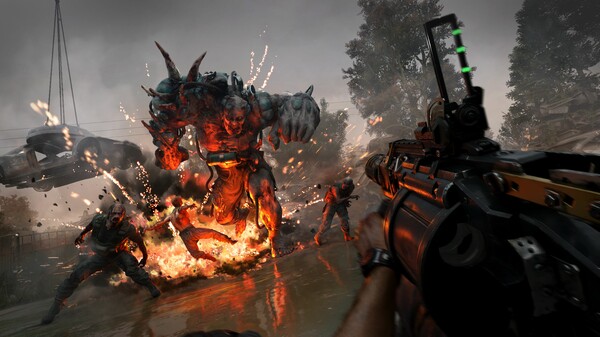
One major evolution was finding the right balance between survival tension and player empowerment. In Dying Light 1, the fear of nighttime was a defining feature, but as the game progressed, players became almost invincible, reducing that sense of dread. With Dying Light 2: Stay Human, we leaned more into RPG elements, which some fans loved, but others felt it diluted the survival horror roots. For Dying Light: The Beast, we’ve focused on restoring that primal survival feel while layering in new mechanics, like Kyle’s beast-like powers, to enhance gameplay without undermining the core tension. It really gives you that survival-feel that players loved about the first game, but then – when you get to unleash your inner beast – there’s this super empowering, super cool moment of release, of feeling overpowered, of cracking zombies in half and feeling really good about it.
Another critical takeaway from previous games was the importance of environmental storytelling. We learned that players love exploring spaces that feel lived-in and discovering stories through the world itself. This influenced how we approached Castor Woods, trying to create every location in a way that tells a story – whether it’s a dilapidated farmhouse or an abandoned factory overtaken by nature.
On a more technical level, the experience we gained from implementing parkour and melee combat allowed us to refine these systems further. I think it’s fair to say that Dying Light: The Beast offers Dying Light gameplay at its most evolved; it’s basically a double espresso shot, the essence of everything good we did before.
The open world of Castor Woods offers diverse traversal options. What unique challenges did you encounter when designing this environment to support both parkour and vehicular movement?
Designing Castor Woods was a challenge in every sense because it diverges from the urban sprawl players are familiar with in Dying Light. Instead of rooftops and dense cityscapes, we had to create a more rural environment while preserving the series’ signature parkour… and layering in vehicular movement as well.
The biggest hurdle was integrating parkour into natural settings like forests and valleys. Trees, cliffs, and scattered structures don’t lend themselves to fluid movement in the same way as tightly packed city buildings. To address this, we designed areas that encourage players to use parkour creatively. Structures like abandoned tourist sites, rock formations, and fallen trees become traversal tools, turning even nature into a playable element. Almost every building, every structure in the game requires you to use some form of parkour related movement – climb over there, shimmy here, find the way through the rooftop window, that kind of thing. At the same time we have areas where parkour feels more natural and can be chained in longer sequences of moves – the tourist town, the industrial park – and there we spent time to find as many connections between pieces of geometry as possible, to give players the chance to truly showcase their skills.
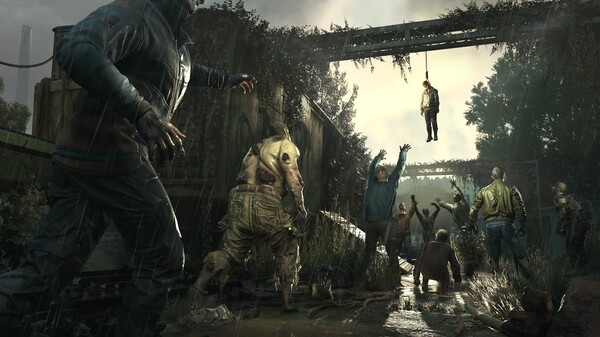
Vehicles brought their own set of challenges. The paths needed to feel open enough for fast-paced driving while still being treacherous and immersive. We added muddy trails, uneven terrain, and dense fog to make driving a strategic part of survival. Balancing this with parkour was key – we didn’t want one to overshadow the other, so the environment had to lend well to both.
What makes Castor Woods unique is how alive it feels. From the way weather changes the landscape to how zombies react differently in open fields versus confined interiors, every element is designed to make players feel like they’re navigating a dynamic, dangerous world, hand crafted by our level designers and level artists.
How does the dynamic between daytime exploration and nighttime survival evolve in The Beast, and what new surprises should players expect after sundown?
Day and night have always been pillars of the Dying Light experience, but with Dying Light: The Beast, we’ve taken this dynamic to a new level. Daytime exploration still provides opportunities to scavenge, craft, and prepare, but as always – the daylight isn’t entirely safe. With Castor Woods’ open spaces, you’re never far from danger, and the forests can feel eerily quiet – until they’re not.
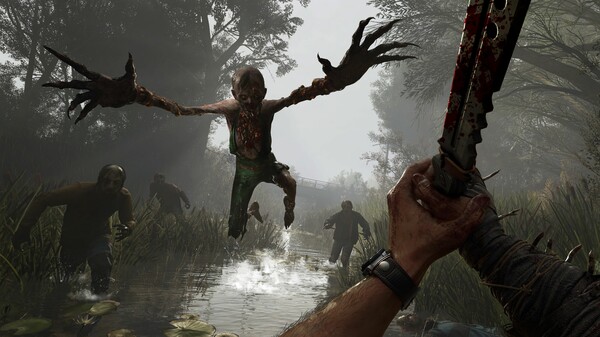
Nighttime, however, is where things truly evolve. The darkness brings out not only the deadlier Volatiles (we’ll be tweaking their visuals and behaviors a little) but also new threats connected to the type of environment the game takes place in. For example zombies are more unpredictable at night, as they’re spawned outside of player FOV, using trees and other obstacles the environment provides. Fog can obscure your vision, making it harder to distinguish between a tree in the distance and a zombie lurking nearby.
The intensity of night in Dying Light: The Beast is designed to keep players on edge, even as they grow stronger. For players it’s not just about avoiding danger; it’s about outsmarting it, using the tools at your disposal and adapting to those ever-changing conditions.
Returning to Kyle Crane as the protagonist adds continuity for long-time fans. Without giving too much away, how has Kyle’s character changed or grown in the 13 years since we last saw him?
Kyle Crane has undergone a profound transformation, and his journey reflects the trauma and challenges he’s faced during his 13 years of captivity. When we first met Kyle in Dying Light, he was a capable but somewhat reluctant hero – someone thrown into a situation far larger than himself. Now, in Dying Light: The Beast, Kyle is older, more hardened, and deeply scarred by what he’s endured.
His time as a test subject for brutal experiments has left him physically altered, giving him new abilities that feel both like a gift and a curse. These beast-like powers allow him to fight with devastating force, but they also serve as a reminder of his loss of control during those dark years. Kyle’s focus is now razor-sharp: he’s driven by revenge, but beneath that, there’s a lingering question of what it means to still be human after everything he’s been through.
We hope long-time fans will see this version of Kyle as a continuation of the character they loved – a man who’s been deeply affected by his past but hasn’t lost the core of what makes him a hero. His evolution is central to the narrative, and players will see it reflected in how he interacts with the world, his allies, and his enemies. It’s important to make sure that it’s a continuation – it’s the same bad ass you loved in the first game, changed, grown, matured… but still a real bad ass the world needs right now.
How did you ensure that the game’s visual style conveys both natural beauty and post-apocalyptic horror, and what techniques did you use to achieve this balance?
Striking the balance between natural beauty and post-apocalyptic horror was one of our primary visual goals for Dying Light: The Beast. Castor Woods is a place of haunting beauty – a valley teeming with lush forests, rolling hills, and abandoned structures overtaken by nature. Basically one of the first spoken lines by Kyle in this game expresses his amazement by how beautiful everything around him seems. At the same time, it’s a world teetering on the edge of despair, focused on zombie survival.
To achieve this combination, we used a combination of advanced lighting and environmental storytelling. The way sunlight filters through the trees during the day creates a false sense of peace, while the shadows stretch and shift ominously as night approaches. At night, the world transforms, with flickering lanterns and glowing fog creating an oppressive atmosphere.

Our team also worked on making the post-apocalyptic elements feel grounded. Abandoned homes are filled with signs of lives abruptly ended – half-finished meals, scattered toys, and personal notes that hint at the tragedy of the outbreak. Meanwhile, the overgrowth and decay give the sense that nature is reclaiming what humanity has lost.
Technologically, we leveraged improvements in our physics engine to make the world feel alive. Grass sways in the wind, rain pools in muddy roads, that kind of stuff. It’s also important to note that weather effects aren’t just visuals – there’re subtle, yet logical and impactful gameplay mechanics connected to the weather.
Given that previews and community discussions have begun since the game was announced during Gamescom, how has early feedback shaped or reaffirmed your vision for The Beast?
The response from fans and the media since Gamescom has been incredibly encouraging, and it’s helped reaffirm many of the choices we’ve made. Players are excited about Kyle Crane’s return, and the emphasis on survival horror seems to resonate strongly with long-time fans of the series. To put it in nice words I’d say that this feedback has reinforced our commitment to delivering a game that balances nostalgia with innovation.
One area where feedback has already influenced our decisions is vehicle handling. While we initially focused on third-person driving, many players voiced a preference for first-person driving to maintain immersion. Listening to the community, we’ve added FPP driving, which has made vehicles feel more in line with the “immersive” pillar of each Dying Light experience.
We’ve also received questions and theories about Kyle’s beast-like powers and their narrative implications, which tells us we’re on the right track in crafting a story that sparks curiosity and engagement. Fans are already speculating about the themes and mysteries in Dying Light: The Beast and it’s a hopeful indicator that the story will connect with them on an emotional level.
Early feedback is invaluable, and we’re continuing to listen closely as we refine the game. We’re in the process of wrapping up the production so this is exactly what’s going to happen now – playtests, playtests, playtests, just to make sure that we’re ready and the whole experience is polished. We’re really excited for players to dive into Dying Light: The Beast but we know we need to do this right.
 Press Play Media