
Dreamcore by Montraluz and Tlön Industries is an atmosphere-rich journey into the surreal, offering players a chance to explore hauntingly familiar yet alien landscapes. Drawing heavily from the aesthetics of liminal spaces and the eerie nostalgia of “found footage,” the game carves a niche for itself within the psychological exploration genre that’s been popular especially on PC for a while now. And while its visual and thematic ambition is evident, its gameplay choices may not resonate with everyone – we checked it out on a PS5.
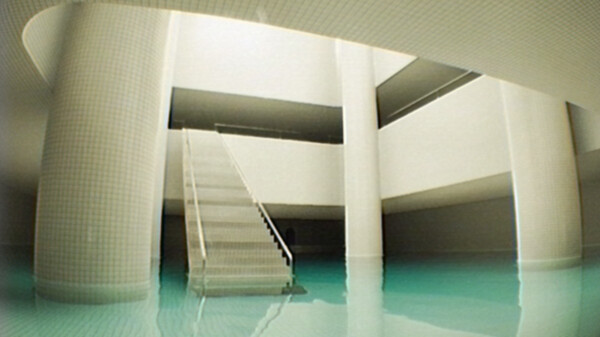
At its core, Dreamcore is an experience that thrives on its unsettling environments. The liminal spaces, like Dreampools, are beautifully crafted and full of atmosphere. The Unreal Engine 5-powered visuals bring these otherwise hauntingly empty locations to life, from shimmering waterlogged corridors to the uncanny calm of suburban streets. The VHS-inspired visual effects amplify the sense of unease, making players feel like they are wandering through an enigmatic, otherworldly dreamscape.

The game’s lack of traditional elements of dread-filled games, such as monsters or jumpscares, sets it apart from its more horror-inspired peers. Instead, tension builds through stillness, environmental storytelling, and subtle visual cues. However, this more abstract approach won’t suit every player. The absence of conventional objectives and reliance on exploration means the pacing can feel meandering, with some players finding the navigation through sprawling labyrinths frustrating rather than engaging.
Gameplay focuses on unraveling the mysteries of each Level, with no set paths and puzzles embedded within the environments. The Dreampools’ reflective corridors and the seemingly endless streets of Eternal Suburbia are evocative, but the lack of clear guidance often leads to moments of disorientation. While this ambiguity is likely intentional, adding to the surreal atmosphere, it occasionally becomes more frustrating than immersive. A more intuitive way of nudging players toward progress could have mitigated some of the game’s more tedious moments.
Controls are functional but feel somewhat basic, which aligns with the stripped-down design philosophy. While simplicity is often an asset in atmospheric titles, Dreamcore’s mechanics occasionally fail to make the most of the tense environments because of it. A greater variety of interactive elements or mechanics could have deepened the sense of discovery and engagement by letting players immerse themselves in the world more.
One of the game’s stronger features is its sound design. From the hum of fluorescent lights to distant, unidentifiable echoes, the audio effectively complements the visuals, further immersing players in its unsettling world. The music, while sparse, heightens key moments and contributes to the sense of unease that permeates the experience as well.
While Dreamcore offers an evocative and visually arresting journey, its appeal lies in its atmosphere rather than its gameplay. Fans of the liminal space aesthetic and non-linear exploration will find much to admire here. However, those seeking structured objectives or a more dynamic gameplay loop may find the experience lacking. As new content gets added, there’s potential for the game to refine its approach and expand its appeal, but for now, Dreamcore remains an intriguing yet divisive title.
Score: 7.0/10
 Press Play Media