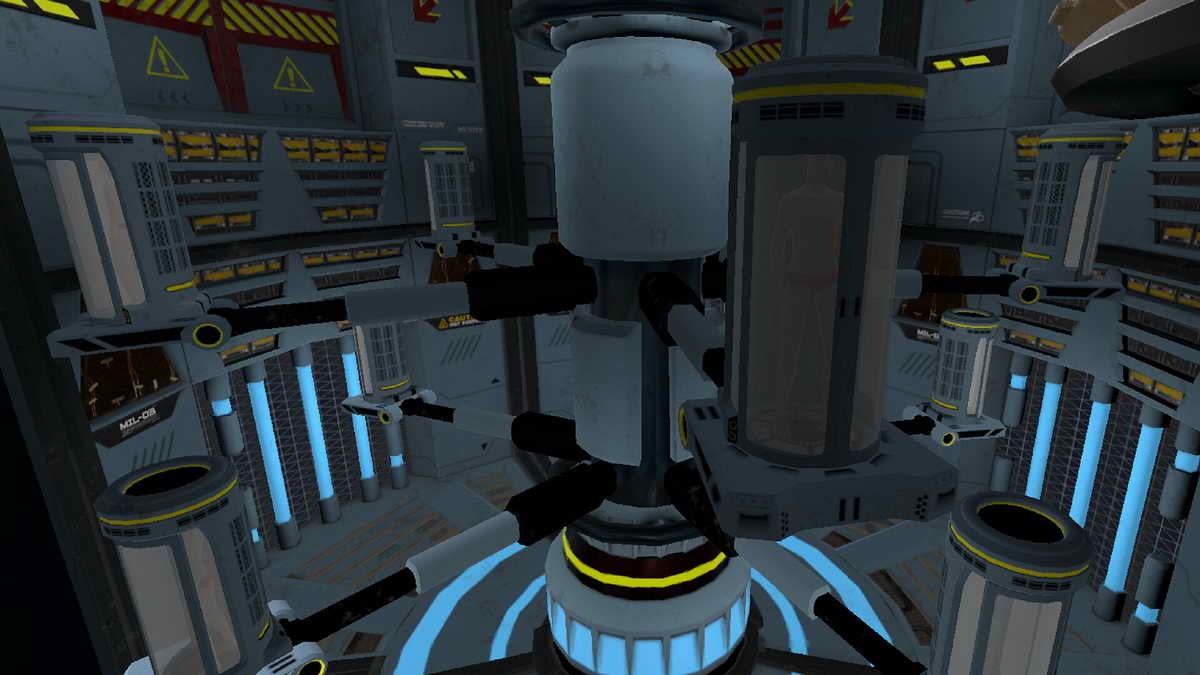
Exit Condition One presents an intriguing take on the VR escape room genre, offering a blend of sci-fi storytelling and puzzle-solving mechanics. The premise finds you awakening in a cryogenic storage facility, where a helpful robot guides you through a series of stages designed to restore a malfunctioning portal. While the narrative is simple and lacks deep complexity, it provides a solid framework for connecting the various puzzles. The inclusion of a chatty robot companion does help maintain engagement, though the storytelling feels more like a setup for the gameplay rather than a focus of the experience.
The game’s real strength lies in its physicality, as it is built for room-scale VR, allowing players to move freely within their play area. This feature, combined with a dynamic physics system, makes interactions feel intuitive and immersive, from climbing to manually manipulating objects. For players who lack the ideal play space, the game offers alternative movement modes, ensuring accessibility across different setups. Despite the benefits, the physical space requirements can still be limiting for some users, making the game more suited for those with larger rooms. Additionally, the puzzles themselves vary in quality, with some clever moments, such as controlling drones or engaging with mini-games, and others that feel tedious and overly simplistic. While the puzzles do encourage experimentation, many of the recurring mechanics – such as rewiring circuits and rotating dials – lack the depth seen in other top-tier VR escape room experiences.

Visually, Exit Condition One isn’t a standout, with its textures and animations often appearing underwhelming. The environments, though varied – from small rooms to expansive cathedral-like spaces – are well-designed in terms of spatial layout but suffer from outdated visuals. The audio design, while functional, doesn’t elevate the atmosphere as much as it could, with repetitive sound cues detracting from the immersive experience. On a positive note, the well-implemented hint system ensures that players don’t feel completely lost, although some may find the puzzles, especially in the later stages, a bit too difficult or frustrating without further guidance.
While the gameplay offers a fair amount of variety with challenges like climbing and rhythm-based mini-games, these additions can sometimes feel like filler rather than integral parts of the escape room experience. For those who are accustomed to more polished VR puzzle games, the technical roughness – such as inconsistent item interactions and occasional bugs – might detract from the overall enjoyment. However, the creativity behind some of the puzzles and the freedom of room-scale movement certainly make Exit Condition One an interesting option for VR puzzle enthusiasts.

Ultimately, Exit Condition One offers an enjoyable experience for fans of escape rooms and puzzle-solving, particularly those who appreciate the physicality that VR can bring. While it doesn’t quite reach the heights of the genre’s best offerings, it stands out due to its engaging narrative, variety of puzzles, and innovative movement mechanics. Its flaws, including repetitive puzzle design and a lack of visual polish, may turn away some players, but for those seeking a budget-friendly VR escape room experience, it’s an intriguing option that offers moments of both satisfaction and frustration.
Score: 7.0/10
 Press Play Media