
With Gimmick! 2, Girlfriend From Hell and Squab, we’re checking out three games that were previously released on other platforms. Fans of platformer games are in for an especially big treat in this port roundup – here are the reviews.
Gimmick! 2 review (PS5)
More than 30 years after its predecessor that’s a bit of a cult-classic, Gimmick! 2 delivers a challenging yet rewarding platforming experience that stays true to its roots while introducing modern refinements and polish. Developed by Bitwave Games, this sequel brings back the unique physics-based mechanics of the original, centered around protagonist Yumetaro’s bouncing star, which serves as both a weapon and a traversal tool. While the learning curve remains steeper than you’d imagine based on the cute visuals, an assisted mode makes the experience more approachable without removing the core challenge. After a successful launch on the Switch, it’s out now for the PS5 as well.
At the heart of Gimmick! 2 is its momentum-driven gameplay, where precision is key. The game’s physics system ensures that mastering Yumetaro’s star opens up creative movement options, from clearing hazards to reaching hidden areas. While this mechanic is engaging, it also demands patience and skill, making it a tough but fair experience for platformer enthusiasts. The six worlds offer varied level design, filled with secrets to uncover, though enemy variety could be more diverse. Frequent checkpoints and infinite continues help mitigate frustration, ensuring that determination is rewarded rather than punished.
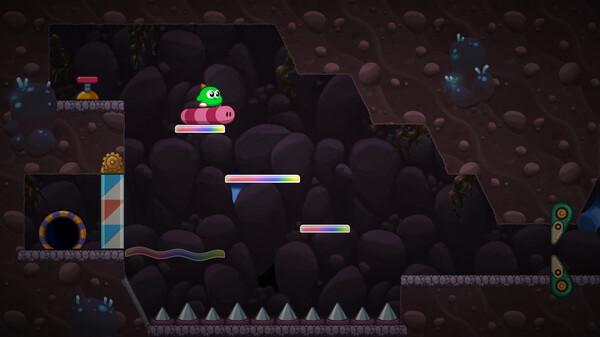
Visually, Gimmick! 2 trades in the original’s pixelated charm for a vibrant, hand-drawn art style. While some purists may miss the 8-bit aesthetic, the new presentation is colorful and polished, maintaining the whimsical spirit and 2D flair of the series. The soundtrack, composed by industry veteran David Wise, blends new compositions with rearranged classics, though the audio mixing can feel inconsistent in some areas, leading to moments of unexpected quiet in between upbeat melodies.
Despite its strengths, the game isn’t without flaws. The difficulty, while balanced for fans of skill-based platformers, may deter newcomers, even with the assisted mode. Additionally, the narrative remains minimalistic, recycling the simple premise of rescuing a kidnapped girl without expanding on the world or characters. Given the long gap between entries, some additional storytelling elements could have helped flesh out its universe or provide a bit more backstory.
Overall, Gimmick! 2 is a well-crafted sequel that respects the legacy of the original while introducing thoughtful updates. It offers a satisfying blend of challenge and creativity, making it a great choice for retro platforming fans and speedrunners. While its high difficulty and limited enemy variety may not appeal to everyone, those willing to invest the time to master its mechanics will find an immensely rewarding experience with colorful visuals and outstanding music.
Girlfriend From Hell review (PS5)
Girlfriend From Hell brings a mischievous take on puzzle gaming to PlayStation 5, following its initial PC release. Developed by That Guy’s Games and published by Sometimes You, this title puts players in the shoes of Miya, a woman scorned who decides to take revenge on her gaming-obsessed boyfriend, Haruto. The setup is reminiscent of slapstick comedies, where the goal is to lay traps around the house and make Haruto’s life a living nightmare.
The core gameplay revolves around finding and using objects to create pranks, from scattering marbles on the floor to sabotaging furniture. While the premise sounds amusing, the execution is rigid – each level has specific solutions, leaving little room for creativity. You’re given hints about what to do, but with no real flexibility in setting up pranks, the experience can feel more like following a checklist than playing a dynamic puzzle game. To add pressure, each level has a strict time limit, meaning mistakes can lead to frustration rather than fun.
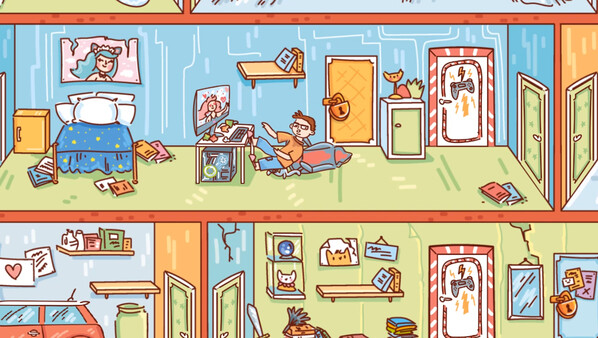
While the game’s cartoonish visual style is serviceable, it doesn’t stand out. Character animations can be humorous, but they lack polish, and lengthy loading times dampen the pacing. The presentation is further hampered by an awkwardly designed intro sequence that doesn’t do much to immerse players in the story. The humor itself is hit or miss – some gags land well, while others, particularly those involving toilet humor, feel more juvenile than clever.
One of the game’s biggest drawbacks is its control scheme. Originally designed for PC, the console adaptation struggles with clunky mechanics. Navigating the environment and selecting objects feels cumbersome due to an odd mix of analog stick and button inputs. Given the time-sensitive nature of the game, these imprecise controls can be a serious hindrance, making an already rigid experience even more frustrating.
Despite its issues, Girlfriend From Hell does have moments of amusement, particularly for players who enjoy lighthearted, chaotic gameplay and visual comedy. However, its lack of player freedom, frustrating mechanics, and inconsistent humor make it difficult to recommend beyond a quick, budget-friendly diversion. While the concept has potential, this version doesn’t quite deliver on it, making it more of a fleeting curiosity than a must-play experience.
Squab review (PS5)
Precision platformers often walk a fine line between accessibility and challenge, and Squab leans towards the former. This pigeon-led adventure keeps things simple, with gameplay centered entirely around jumping and dashing. There are no power-ups or evolving abilities, only environmental mechanics that introduce small twists along the way, such as bouncy bubbles and falling stones. With a total of 60 single-screen levels, most of which can be cleared in a matter of seconds, the game moves at a brisk pace but ultimately lacks the depth to keep players engaged for long.
The level design is tightly crafted, making Squab feel polished despite its simplicity. However, the difficulty remains on the lower side, making it a good fit for newcomers to the genre while leaving veteran players wanting more. Checkpoints in select levels further reduce the challenge, though a post-game mode introduces harder stages that demand completion in a single sitting. These later challenges showcase the potential for more engaging platforming but are too brief to elevate the overall experience.

Visually, Squab embraces a bright, colorful aesthetic that matches its lighthearted premise, though it doesn’t stand out in a crowded genre. The controls are responsive, which is crucial for a precision platformer, and they contribute to the game’s enjoyable flow. That said, the mechanics could have used more room to develop, as many ideas feel underutilized before the next level moves on to something else. A leaderboard or additional incentives for replayability could have added more longevity to the experience as well.
At its budget-friendly price, Squab is a solid pick for players looking for a short and enjoyable platforming experience without the usual punishing difficulty. It offers a smooth and fair challenge that never veers into frustration, making it an accessible and entertaining entry into the genre. However, its ease of play and limited content mean it won’t leave a lasting impression beyond its brief runtime.
 Press Play Media