
The Legend of Heroes: Trails through Daybreak II picks up directly after the events of its predecessor, continuing the journey of Van Arkride in the Republic of Calvard. The game’s narrative draws players into a web of intrigue as Van investigates a string of grisly murders, with a powerful new force emerging to threaten the relative peace that Calvard had briefly enjoyed. As the protagonist grapples with his own connection to the events and the mysterious “crimson beast,” players are thrust into a political landscape, where factions battle for control, and law-abiding citizens struggle to maintain order. The game weaves a dense, dialogue-heavy story that demands attention, delivering moments of high drama interspersed with slow-building exposition. However, its somewhat verbose nature and reliance on long cutscenes may be challenging for newcomers who haven’t played the first entry in the saga. For those already familiar with the franchise, the narrative will feel more rewarding, though some may find its intricacies overwhelming. We checked it out on a PlayStation 5.
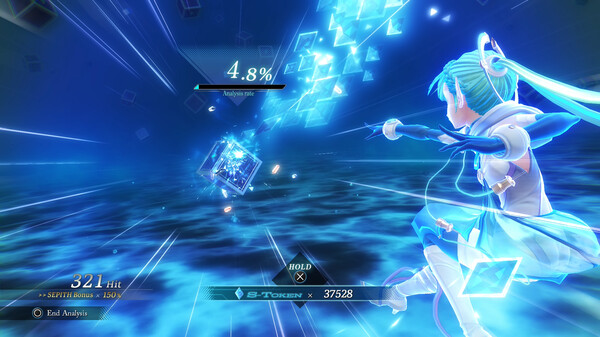
The gameplay evolves with notable refinements but sticks closely to the hybrid battle system introduced earlier. The combat system offers both real-time action and turn-based mechanics, with real-time combat becoming more prevalent over time, relegating the turn-based system to certain boss fights and scripted events. This shift marks a significant move towards an action-RPG framework, which makes the title more accessible but potentially less satisfying for those who enjoyed the strategic depth of earlier Trails games. The addition of EX Chains and Cross Charge systems enhances the action combat, allowing for fast-paced and tactical combos. EX Chains, in particular, let characters coordinate devastating simultaneous attacks, while the Cross Charge mechanic lets players quickly switch characters mid-battle for a power boost. While these additions spice up combat, it comes at the cost of some of the tactical variety that made the series’ battle mechanics so compelling.
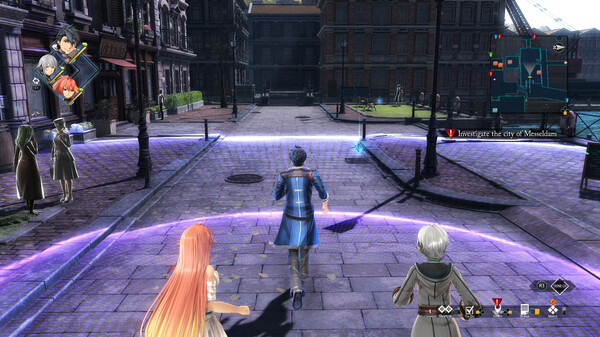
On the exploration side, the game offers players the freedom to tackle chapters in an order of their choosing, which adds a layer of flexibility to the pacing and narrative progression. Each chapter has its own distinct cast of characters and tasks, with some chapters presenting unique missions that require players to use the specific skills of the party members involved. This structure helps break up the potential monotony, but it does lead to a fragmented storytelling experience, as players may not always experience events in the intended order. So while this is a clever design decision, it can also detract from the emotional weight of key moments, as the narrative may lose some of its buildup when chapters are played out of sequence.
Graphically, Trails through Daybreak II doesn’t push the envelope. The visuals remain largely unchanged compared to the previous game, sticking with the established art style of the series, which is rich in detail but somewhat limited in technical execution. While the environments are immersive, the game doesn’t showcase significant improvements over the first entry, especially given the advancements in gaming hardware. The audio, however, continues to shine, with a soundtrack that complements the game’s emotional beats, alongside a solid English voice cast that rivals the Japanese voice acting in quality. The music, in particular, stands out as one of the series’ strongest elements, further enhancing the immersive experience.
A new feature, the Marchen Garten dungeon, adds an interesting layer to the gameplay, offering procedural generation for grinding and experimenting with party compositions. This dungeon’s appeal lies in its variety and the opportunity for players to refine their team strategy outside of the main story. The addition of new mini-games, including a card game and a basketball mode, also provides some light-hearted diversion from the core gameplay. While these extras are enjoyable, they don’t feel as substantial as the main narrative or the combat, and some players may prefer a deeper exploration of the world rather than these optional activities. The game also includes a number of side activities like fishing and cooking, continuing the series’ trend of offering extra content for those who want to explore every facet of the world.
Overall, Trails through Daybreak II is a solid continuation of the Trails series, offering refined mechanics and a compelling, albeit slow-paced, narrative. The shift towards more action-oriented combat, while making the game more accessible to newcomers, may alienate long-time fans of the series who appreciated the strategic depth of earlier entries. While the game succeeds in enriching the lore and world-building, its verbose storytelling and the occasionally fragmented pacing might test the patience of players. However, those who enjoyed the first game will find Trails through Daybreak II a satisfying continuation, even if it doesn’t fully recapture the magic of its predecessor. As it stands, the game lays a solid foundation for future entries in the series, but its success will depend on how Nihon Falcom continues to balance action and strategy in upcoming installments.
Score: 8.0/10
 Press Play Media