Cabernet brings players into a world of decadence and moral dilemmas, blending narrative-driven role-playing with the dark allure of vampirism. Set in an Eastern European-inspired society of the 19th century, the game follows Liza, a newly turned vampire struggling with the balance between humanity and monstrous instincts. The choices made throughout her journey shape both her fate and the world around her, making every interaction a test of ethics, persuasion, and survival. As with most vampire stories, the setting is rich with political intrigue and class struggles, adding weight to the decisions at hand.
At its core, Cabernet revolves around social interactions and strategic planning. Players must determine how to spend each night – studying, hunting, or mingling with high society – while keeping track of their dwindling humanity. The game introduces unique mechanics, such as analyzing a potential victim’s personality and vulnerabilities before luring them to a secluded spot. Knowledge in areas like art, literature, and science plays a crucial role in manipulating others, reinforcing the idea that power in this world isn’t just simply about fangs and bloodlust.

The role-playing depth is impressive, with multiple dialogue paths that allow players to mold Liza’s identity. Whether she becomes a ruthless predator or a conflicted soul desperate to hold on to her past self and humanity depends on the choices made. However, while the game excels at branching narratives, some interactions can feel formulaic, with a few NPCs lacking the depth of the more prominent characters. Still, the moral dilemmas are engaging, offering a refreshing take on the vampire genre beyond the usual tropes of endless hunger and violence.
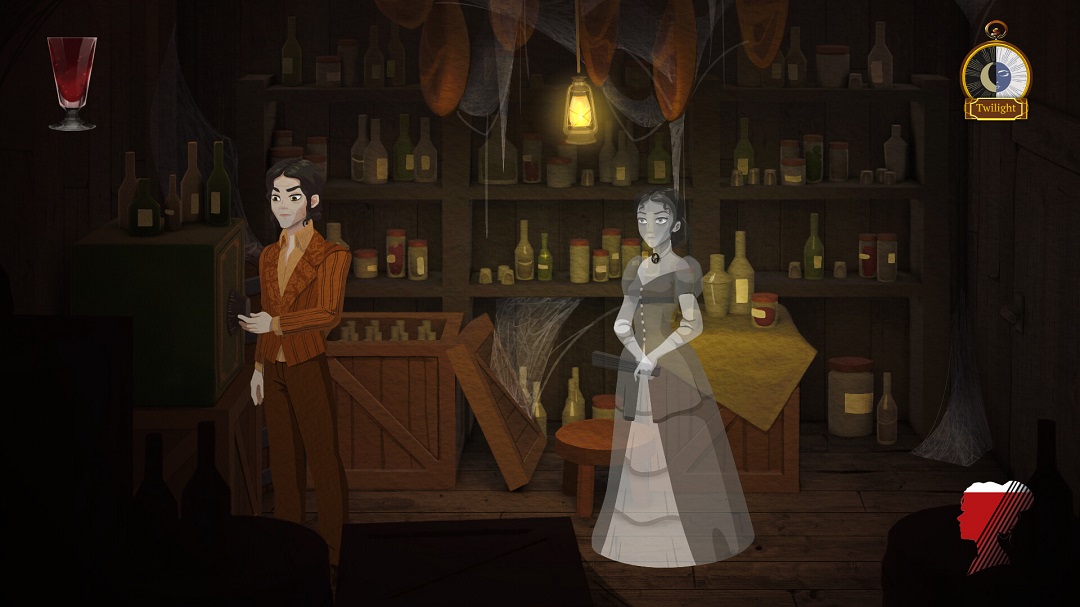
Visually, Cabernet is striking, with hand-drawn environments that evoke a gothic, melancholic atmosphere. The character designs stand out, with a distinct art style that makes each interaction feel engaging. Animations are somewhat limited, but the game compensates with evocative lighting and color choices that enhance the eerie, dreamlike quality of Liza’s world. The audio design is equally effective, with an orchestral soundtrack that shifts between somber and sinister, complemented by immersive ambient sounds that bring the setting to life.

While Cabernet offers a compelling role-playing experience, the pacing might not be for everyone. The slow-burn narrative and dialogue-heavy approach demand patience, and players looking for action-packed sequences might find the gameplay too methodical. Additionally, while the game provides different paths to explore, some choices lead to similar outcomes, slightly diminishing the weight of certain decisions. That said, the game’s strengths lie in its world-building and character-driven storytelling, making it a memorable experience for those who enjoy deep, narrative-focused adventures.
In the end, Cabernet stands out as a thought-provoking take on vampire mythology, emphasizing morality and social dynamics over violence and anger. With its richly detailed world, intricate decision-making, and atmospheric presentation, it successfully immerses players in a world of blood-soaked elegance. Despite some pacing issues and occasional character inconsistencies, it remains a strong entry in the narrative RPG genre. For those drawn to the darker corners of storytelling, Cabernet offers an experience worth sinking your teeth into.
Score: 7.9/10
 Press Play Media