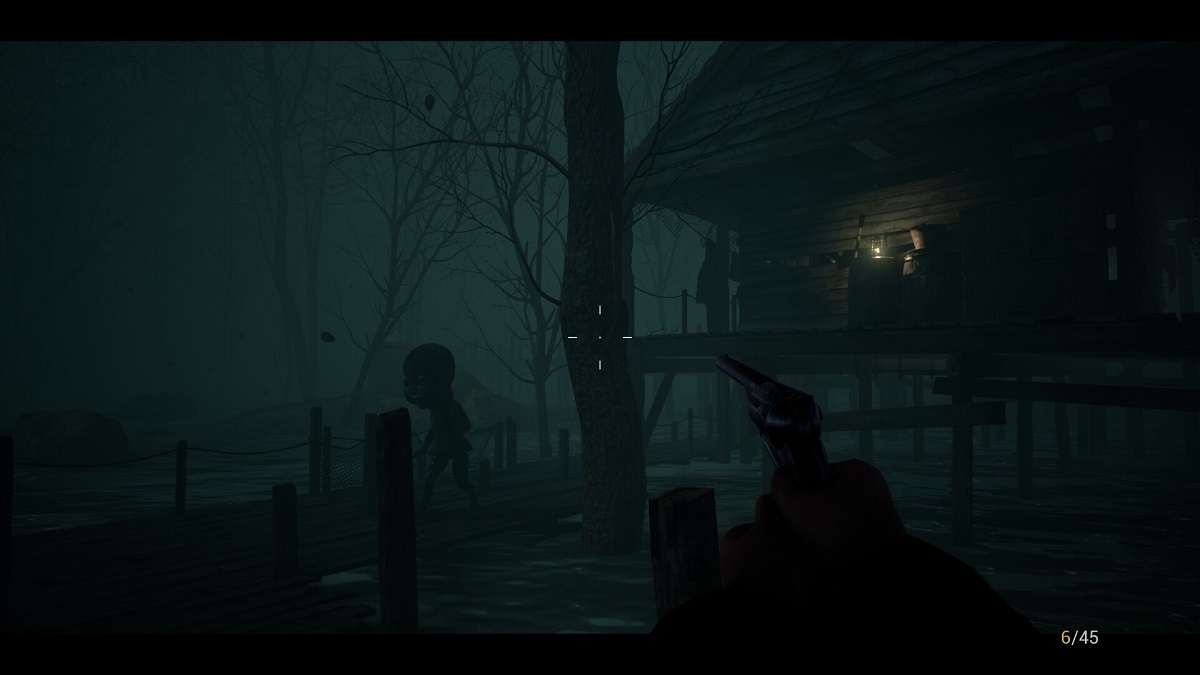
Dollhouse: Behind the Broken Mirror aims to deliver a psychological horror experience, placing players in the fragmented mind of Eliza de Moor, a once-renowned singer grappling with amnesia. Under the guidance of the somewhat mysterious Dr. Stern, Eliza embarks on a journey through the decaying remnants of her past, transitioning between reality and haunting hallucinations. The narrative’s premise is intriguing, offering a blend of mystery and suspense as players piece together Eliza’s forgotten memories. However, the execution falters, with the story often unfolding through heavy exposition rather than immersive storytelling, which can diminish the impact of the game’s twists and turns.
The game’s core mechanics combine puzzle-solving with elements of (survival) horror and linear exploration. Regrettably, these components often feel disjointed. Puzzles are inconsistent in design and integration, with some lacking clear instructions or relevance to the overarching narrative – making them feel random. This inconsistency can lead to frustration, as players may find themselves relying on trial and error rather than logical deduction. Moreover, the absence of a cohesive connection between puzzles results in a fragmented gameplay experience.
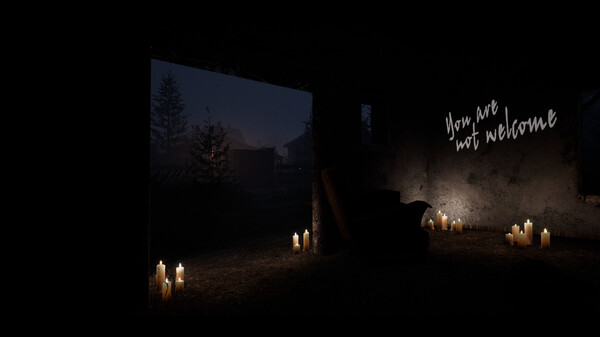
Combat and enemy encounters further contribute to the game’s shortcomings. The enemy AI is notably underdeveloped, with adversaries displaying predictable and easily exploitable behaviors. This lack of challenge, combined with clunky and dated combat mechanics, undermines the tension essential for a compelling horror experience. Additionally, the game’s pacing suffers due to objectives being presented without adequate context, leading to a sense of aimlessness during exploration.
Visually, Dollhouse: Behind the Broken Mirror offers moments of excellent atmospheric design, particularly through effective lighting that enhances the eerie environment. Certain doll designs succeed in evoking unease, contributing to the game’s horror elements. However, these visual strengths are overshadowed by technical issues at launch, including visual glitches and camera problems, which detract from the overall immersion.

In terms of audio, the game delivers a mixed experience. While the sound design effectively amplifies the unsettling atmosphere, with ambient noises and whispers adding to the sense of dread, the voice acting is inconsistent. Dr. Stern’s portrayal stands out as strong, yet other performances lack the same impact, resulting in a disparity that affects the narrative delivery.
In summary, Dollhouse: Behind the Broken Mirror presents an intriguing concept that is ultimately hindered by its execution. The disjointed puzzles, lackluster enemy encounters, technical issues, and uneven storytelling prevent the game from fully realizing its potential as a psychological horror experience. While there are glimpses of atmospheric design and moments of effective horror, as well as an interesting premise, they are insufficient to overcome the game’s broader shortcomings.
Score: 6.3/10
 Press Play Media