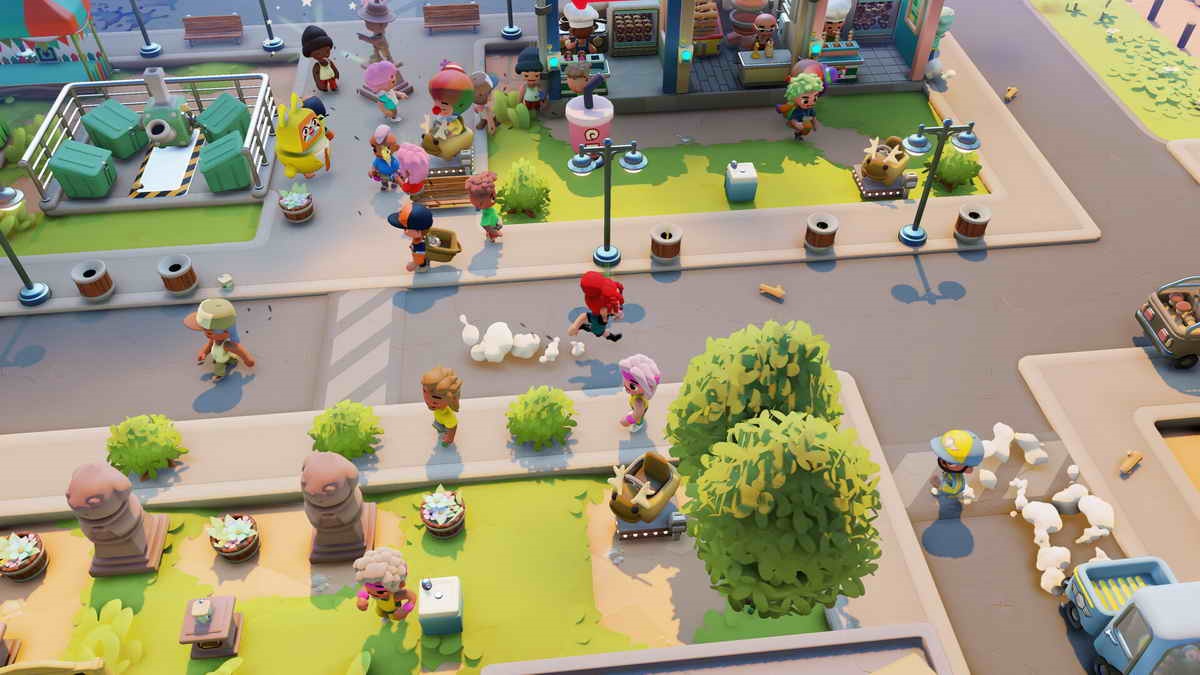
Imagine stepping into a town where you’re not just the mayor – you’re also the builder, decorator, farmer, delivery driver, and occasional chaos manager. That’s the charm of Go-Go Town!, a vibrant and whimsical town-building sim from the team at Prideful Sloth. With its mix of cozy life-sim vibes and light automation mechanics, the game invites players to shape their own urban utopia – solo or with friends.
As Go-Go Town! continues to evolve through Early Access, we caught up with co-founders Cheryl Vance and Joel Styles to talk about their inspirations, the challenges of building a world you can literally reshape, and how community feedback has helped guide the development process so far.
What were the key inspirations behind Go-Go Town! in terms of gameplay, art style, and town-building mechanics?
Cheryl: We have an interesting mix of inspirations for Go-Go Town! as this project has had input from every member of the team. Some of the inspirations that have shaped Go-Go Town! are games such as Theme Park and Final Fantasy Crystal Chronicles: My Life as a King. Outside of games, LEGO and the Busytown book series have been influential to development.
Town-building sims are a popular genre. In your view, what makes Go-Go Town! stand out from other titles like Animal Crossing or Stardew Valley?
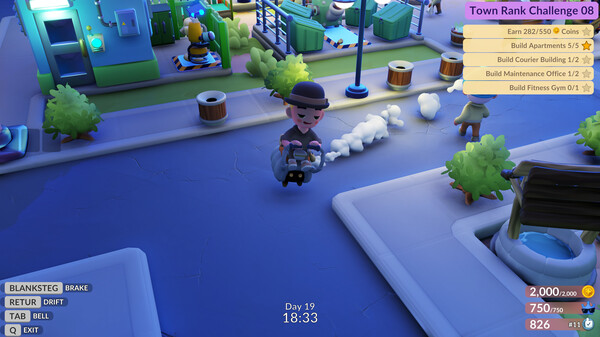
Cheryl: We really want to focus on the more ‘tycoon’ and lite automation gameplay aspects, as well as give Go-Go Town! a modern setting and ‘vibe’. In Go-Go Town! we keep everything as visible as possible. If you want to, you can follow the entire lifecycle of an item in a game as well as watch the entire supply chain play out.
We also use the lens of Go-Go Town! being a ‘play set’ so we have looked to the book series Busytown and LEGO FABULAND as guideposts for how make the town and game world more engaging, playful, and unique.
The ability to terraform and shape the environment is a unique feature. What challenges did the team face in implementing terraforming mechanics, and how do you think it enhances the player experience?
Joel: Terraforming allows each player to shape their town into their own unique vision – it’s a means of personal expression, but also super important for the more strategic minded tycoon player.
Allowing a malleable world comes with a huge array of knock-on challenges. These range from impacting gameplay (such as AI dynamically responding to player changes, or rules around things such as adding water under a vehicle, or the griefing potential in co-op), to art/visual challenges (every set of surfaces is a matrix of art that must work alongside every other set of surfaces without producing gaps or odd intersections).
The remaining challenge is generally in balancing these factors between form vs function – we must supply the tools and content for players to express themselves and craft their dream town, but also balance these options against their functionality: roads that allow vehicle pathing or footpaths and pedestrian crossings that NPC’s will prioritise; sand that can act as a desert or beach visual or supply the functionality of a sand trap on a race course; ‘man-made’ areas that are prone to maintenance costs such as becoming dirty or developing pot-holes vs ‘wilderness’ types that are much more resilient… there’s a lot of considerations that go into every set!
Co-op multiplayer is a big part of the game’s appeal. Can you tell us more about how the multiplayer experience was designed and the ways it enhances the core gameplay?
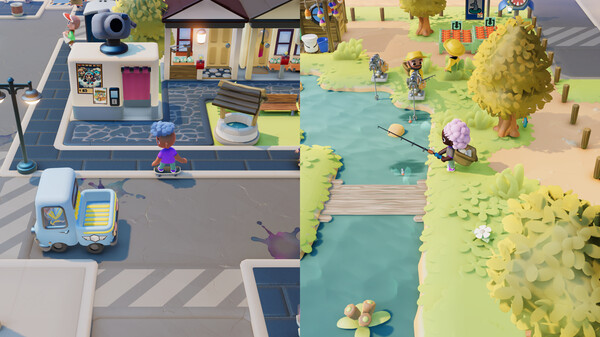
Cheryl: From day one co-op has always been planned into the DNA of the game. We identified early on that players would each take on their own ‘roles’ within the game, thus (for local co-op) it needed to be split screen.
We see quite often one player is doing all the work around town (you are seen!) and other players have run off, found vehicles or tools, and are causing chaos all around the town.
We have also looked at how the game functions as ‘roles’ and ensure that any role an NPC can fill, a player can fill. If one player wants to spend their day fishing, and the other wants to run a shop and cook or craft items to sell to the tourists, they can do it!
We know that online co-op is a highly anticipated feature for our players, so we’re working to get this into players hands as soon as possible!
The balance between automation and manual tasks is an interesting aspect of the game. How did you decide which elements of town management should be automated, and which ones should remain in the player’s hands?
Cheryl: One of our core design pillars is allowing players and NPCs the ability to do the same things in the game. This allows players choice, and freedom in the game, and allows for them to define what their role as mayor is.
You can automate everything, drive around checking on your workers in your go kart, and just show up for the ribbon cutting ceremony of the new building (taking all of the credit, of course).

Maybe being a lumberjack is more your vibe. That’s a valid option. You do not need to hire anyone in that role and you can be there, chain saw in hand, harvesting trees,turning them into planks, and contributing to the town’s success. Or maybe being shopkeeper is more your thing. You can run the shop, crafting items, setting them up for sale, and watch as the tourism dollars flow in.
Since launching in Early Access, how has player feedback influenced the development of Go-Go Town!?
Cheryl: We have been running playtests on Go-Go Town! since July 2023 and have been extremely blessed in having feedback very early on in development.
One of the biggest areas of feedback early on was the game’s tutorial flow. There was a lot of feedback there, and we rewrote the entire thing based on player feedback. Also having that early feedback has set expectations for what player feedback would be when we entered Early Access.

During the Early Access launch we saw a distinct trend in feedback. It was feedback we were aware of, but the difference in scale between our playtest and Early Access were sizeable, and was not in line with what our expectations were based on our roadmap. So, we put it to the community as a vote. Did you want us to stick to our roadmap, or did you want us to shuffle around the order of priority of our roadmap?
The community voted on shuffling around priorities, and our first Major Update was all about working with the community on the features they wanted. The Build and Bustle update bundled up the feedback we received, included some of the features we wanted to include, and came together into a sizeable update that gives players a lot more space, but more importantly control over their play space, and really gives a sense that the town you are building is truly your creation now.
As you continue to develop the game, what are some of the major features or pieces of content players can look forward to in future updates?
Cheryl: There is a lot more we want to do with Go-Go Town! In our office we have a whole wall that is dedicated to ideas, features, and long-term scope for the game.
Outside of the current roadmap and requested features (consoles, online co-op) one of our long-term focuses will be on how to build upon, and expand, play time. We have ideas around new zones, different town maps, and finding ways within these to give players new gameplay experiences within these zones and maps.
Another area we want to expand upon is looking at ways to work with other developers to bring in easter eggs, unique content, or even full crossovers to the game. We have some things in the works here and are always keen to speak with other developers about this.
 Press Play Media