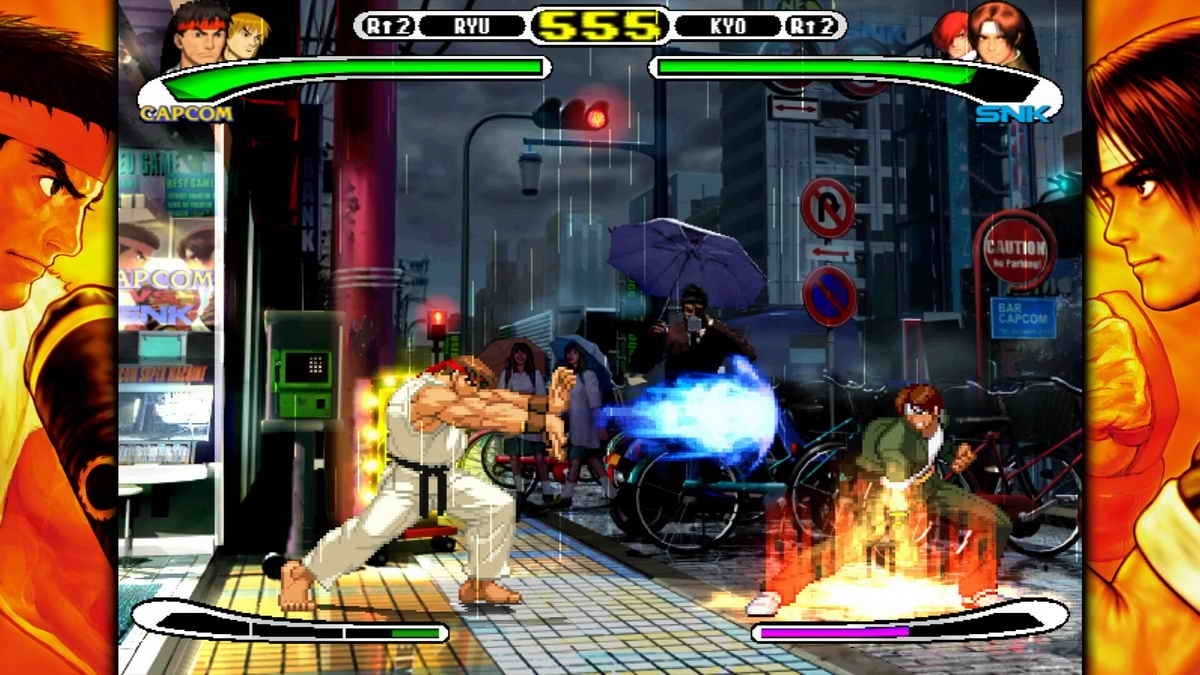
Capcom’s second compilation of retro brawlers, Capcom Fighting Collection 2, arrives on PlayStation 5 as a follow-up to their first nostalgic round-up, this time diving deeper into the 3D era and a few crossover gems of the early 2000s. With eight games in total, the collection brings together fan favourites like Capcom vs. SNK 2, Power Stone, and Street Fighter Alpha 3 UPPER, all bolstered by a suite of modern conveniences aimed at improving accessibility and online play. It’s a package that speaks directly to the fans who’ve kept these titles alive through tournaments and emulators, but it’s not without its minor missteps.
One of the key draws of this collection is the diversity in its lineup. While the first Capcom Fighting Collection focused more on 2D sprite-based fighters, this sequel branches into 3D with the Power Stone games and Project Justice, offering a dynamic range of gameplay styles. Capcom vs. SNK 2, often seen as a pinnacle of crossover fighters, remains a highlight thanks to its intricate “groove” system and large roster. On the flip side, Capcom Fighting Evolution, the most recent title in the lineup, feels like a missed opportunity even in retrospective – its awkward balance and recycled assets don’t hold up well.

Gameplay-wise, the collection benefits greatly from features like save states, adjustable difficulty, training modes, and one-button special moves. These help newcomers find their footing in what can be very technical fighting systems. The collection also comes with a robust online mode that uses rollback netcode for smoother matches – a necessity for any modern fighter and something that works well in practice. However, the collection lacks cross-platform multiplayer and ranked ladders are only loosely implemented, which could have extended its competitive appeal even further.
Controls translate well across the different games, especially when revisiting the fast-paced aerial combos of Street Fighter Alpha 3 UPPER or the more chaotic arena brawls of Power Stone 2. The original mechanics are preserved faithfully, and the option to remap buttons allows for a tailored experience. Still, some of the 3D titles, originally designed with Dreamcast hardware in mind, don’t feel as fluid on a modern controller – not due to technical issues, but because their design hasn’t aged quite as gracefully – a common issue with early 3D titles.

Visually, the package straddles the line between preserving the authentic look of arcade classics and providing minor enhancements. Filters and display settings allow you to customise the presentation, though there’s no widescreen support for most games. That said, the visuals remain vibrant and true to the era, and the inclusion of an art gallery with over 700 pieces adds tremendous value for fans of Capcom history. The soundtrack feature is another treat, giving players access to more than 300 original tracks – a nostalgic dive that adds to the collection’s archival appeal.
While Capcom Fighting Collection 2 might not feature as many universally acclaimed hits as its predecessor, it does a commendable job at preserving and presenting a specific slice of fighting game history. The inclusion of Project Justice and the Power Stone games helps distinguish it from other compilations, though omissions like Rival Schools are felt. It’s a package made with fans in mind, and while it lacks some of the competitive edge or polish of newer releases, it delivers where it matters – in faithful emulation, enhanced accessibility, and a strong sense of nostalgia.
Score: 8.1/10
 Press Play Media