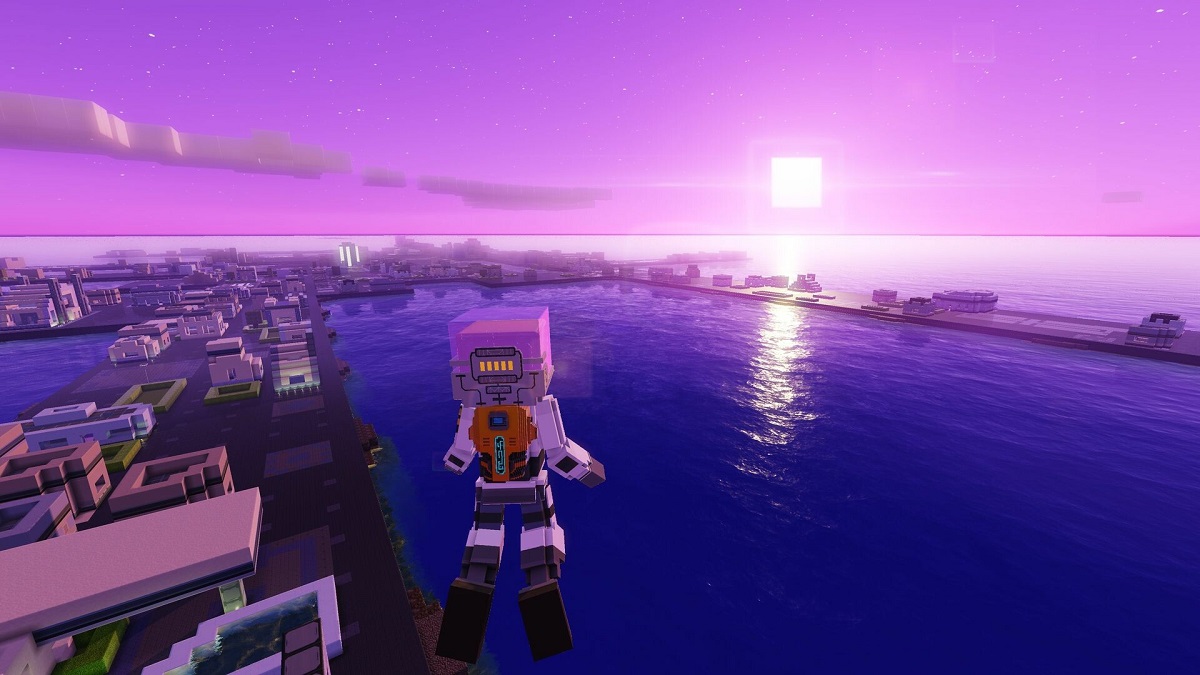
Cubic Odyssey is a game brimming with ambition – one that invites players to traverse a procedurally generated universe, mine its depths, shape its terrain, and defend it from a cosmic plague. On the surface, it seems like a mix of sci-fi sandbox and survival, blending spacefaring exploration with a voxel-based aesthetic and full crafting systems. On the PlayStation 5 version we played, however, this dream feels uneven. While there’s a solid foundation beneath its cubic surface, the execution wavers between moments of genuine discovery and long stretches that are grind-heavy.
Set in a galaxy teeming with planets and lifeforms, the game delivers a massive universe to explore. Whether gliding through the skies in something akin to a hovercraft, descending into ancient alien ruins, or hopping between star systems, there’s no shortage of scale here. Each celestial body hides its own challenges and intrigue, from mutated wildlife to remnants of a forgotten civilization. Unfortunately, the narrative scaffolding supporting this grand journey – the Red Darkness corruption and your quest to cleanse it – lacks the weight or delivery needed to make the story feel urgent or emotionally engaging. That’s not uncommon in this genre and other games have absolutely none of it, but it’s sad to see this one fall just short of the mark.
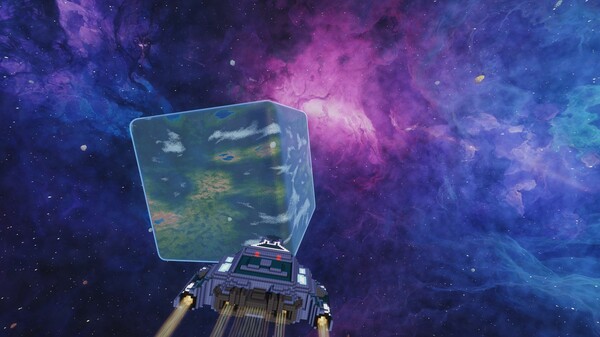
The survival mechanics are extensive, offering players a vast array of resources to mine, tools to forge, and structures to build. The range of customization is commendable, especially when it comes to vehicle creation, which allows for everything from personal speeders to hulking interstellar warships. Yet, the learning curve and pacing can be off-putting. The game leans heavily into its progression systems, sometimes to its detriment. Unlocking key gameplay features like fast travel or better gear can feel unnecessarily drawn out, which drags down momentum in the early and mid-game without a strong story to support you.
Combat, which should serve as an adrenaline-pumping counterpoint to resource gathering, also slightly misses the mark. Encounters with corrupted creatures or hostile pirates are more functional than exciting, and the AI behavior rarely poses a meaningful threat. That said, the cooperative elements provide much-needed energy to these battles. Taking down larger threats or coordinating orbital laser strikes with friends injects fun and spectacle that’s somewhat lacking in solo play.
Visually, Cubic Odyssey offers a striking blend of minimalist voxels and atmospheric effects, doing just enough to set it apart from the likes of Minecraft. The day-night cycles and environmental lighting go a long way in making each planet feel alive despite their blocky composition. And while some locations can blur into visual sameness, others – particularly corrupted zones glowing ominously red – stand out with a distinct identity. The audio design, however, is relatively forgettable. Musical themes and environmental sounds serve their purpose, but don’t leave a lasting impression.
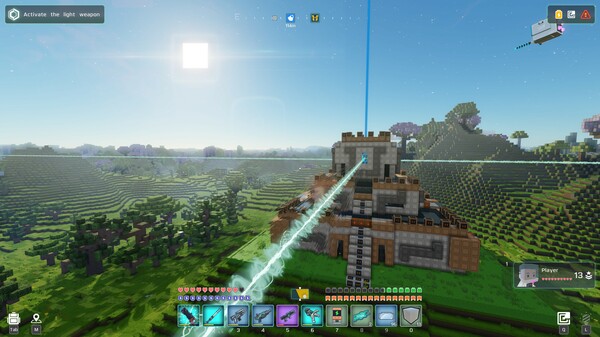
Controls on the PlayStation 5 are responsive, with intuitive shortcuts for switching tools or navigating menus. Movement across different vehicles – on land or in space – feels natural, and there’s enough haptic feedback to provide a tactile edge during exploration and combat. Still, some interface elements, particularly the crafting menus, can be clunky and overwhelming at times, especially in the absence of detailed tutorials early on.
Despite its rough patches, there’s a sense of wonder buried within Cubic Odyssey’s expansive universe. The ability to stumble upon NPC cities, uncover lost tech, or warp into uncharted star systems speaks to a kind of player-driven storytelling that’s hard to replicate. When the systems align and the grind doesn’t get in the way, it’s easy to lose hours to its potential. But just as often, the game reminds you that this potential is gated behind resource demands and progression locks that drain the sense of immediacy and freedom.
Cubic Odyssey ultimately delivers a sandbox teeming with ideas, some of which are genuinely compelling. For fans of games like Minecraft or No Man’s Sky, it may offer a familiar yet novel experience – particularly when enjoyed in co-op. But for those seeking tight pacing or a polished narrative thread, it risks feeling more like an impressive framework than a fully realized adventure. With some refinement, this could become something special. For now, it remains a sprawling, ambitious, but uneven galactic detour.
Score: 7.2/10
 Press Play Media