
After an Early Access stint on PC, Zombie Cure Lab has shuffled its way onto PlayStation 5, bringing its unusual blend of base-building, resource management, and zombie rehabilitation with it. Developed by Thera Bytes and published by Aerosoft, the game attempts to refresh the well-worn zombie survival genre with a more hopeful premise: instead of mowing down the undead, you’re trying to cure them – turning former flesh-eaters into loyal worker hybrids called humbies. It’s an inventive concept that immediately sets the tone for something different, though the execution on console isn’t always as smooth as the premise.
Set in a post-apocalyptic future where zombification has overrun the globe, your role is that of a pioneering scientist managing a research facility deep in the woods. With a serum that can reverse the infection partially, your objective is to gradually expand your lab, capture zombies, cure them, and grow your operations. The idea of healing rather than killing your enemies brings a unique moral slant to the genre, but it’s also central to the gameplay loop, which mixes city-building mechanics with real-time strategy and occasional tower defense elements. That mix, however, doesn’t always feel fully cohesive, and the pacing and balance can waver depending on your setup and playstyle.
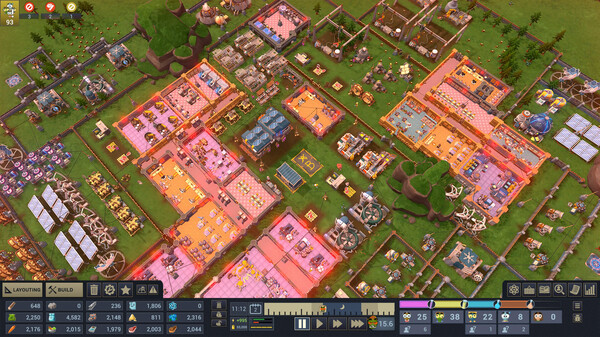
Gameplay revolves around establishing a sustainable, defensible base while managing your workers across both human scientists and your growing workforce of humbies. Each night, zombie waves descend on your lab, adding urgency and tension. During the day, you’ll be assigning tasks, managing production chains, researching tech upgrades, and expanding your base. At its best, there’s a satisfying rhythm to juggling these overlapping systems – particularly when you unlock new tech and begin automating tasks. But the game’s complexity can become overwhelming due to a less-than-intuitive UI and sometimes clunky menus that weren’t well optimized for a controller-based interface.
The lab-building side of the experience is generally engaging, especially early on as you carve out zones, establish supply chains, and experiment with different room layouts. Over 200 research upgrades offer plenty of progression potential, with gradually more complex technologies encouraging thoughtful base design. However, progression can also feel grindy at times, and the lack of polish in some areas – including AI pathfinding and certain building mechanics – occasionally causes frustration. For instance, workers will sometimes stand around confused, or ignore tasks that are clearly assigned, which can bring your carefully balanced economy grinding to a halt.
Where Zombie Cure Lab suffers the most on PS5 is in its performance and interface. While the game ran relatively smoothly on PC, the console version has numerous issues, from frame rate dips during heavy activity to bugs that can disrupt play sessions. The control scheme also struggles to keep up with the complexity of the systems in place – navigating menus and selecting units can feel sluggish and unintuitive, making basic interactions more cumbersome than they should be. Given the precision the game often demands, this becomes a recurring irritant that undermines its strategic appeal.

Visually, the game adopts a cartoonish, bright aesthetic that contrasts sharply with its grim premise, but this works in its favor. The stylized art direction adds charm, and the animations – particularly when it comes to humbie behavior – help inject some personality into your growing workforce. However, environments can feel visually repetitive over time, and with the isometric perspective, it’s sometimes difficult to get the camera positioned just right. The audio design is serviceable, with ambient sounds and light musical cues, though nothing particularly stands out in terms of immersion or atmosphere.
There’s a clever core to Zombie Cure Lab that makes it worth a look for fans of sim-heavy base builders. Its peaceful twist on the zombie genre, large tech tree, and multi-layered gameplay loop all promise something deeper than your standard survival game. But while the ideas are strong, the PS5 version is in need of additional polish. With clumsy controls, performance hiccups, and some systems that don’t quite gel, the current experience doesn’t live up to its potential. As it stands, this is a game that might eventually blossom with post-launch support – but for now, it’s a title best approached with patience, or perhaps on a different platform.
Score: 6.4/10
 Press Play Media