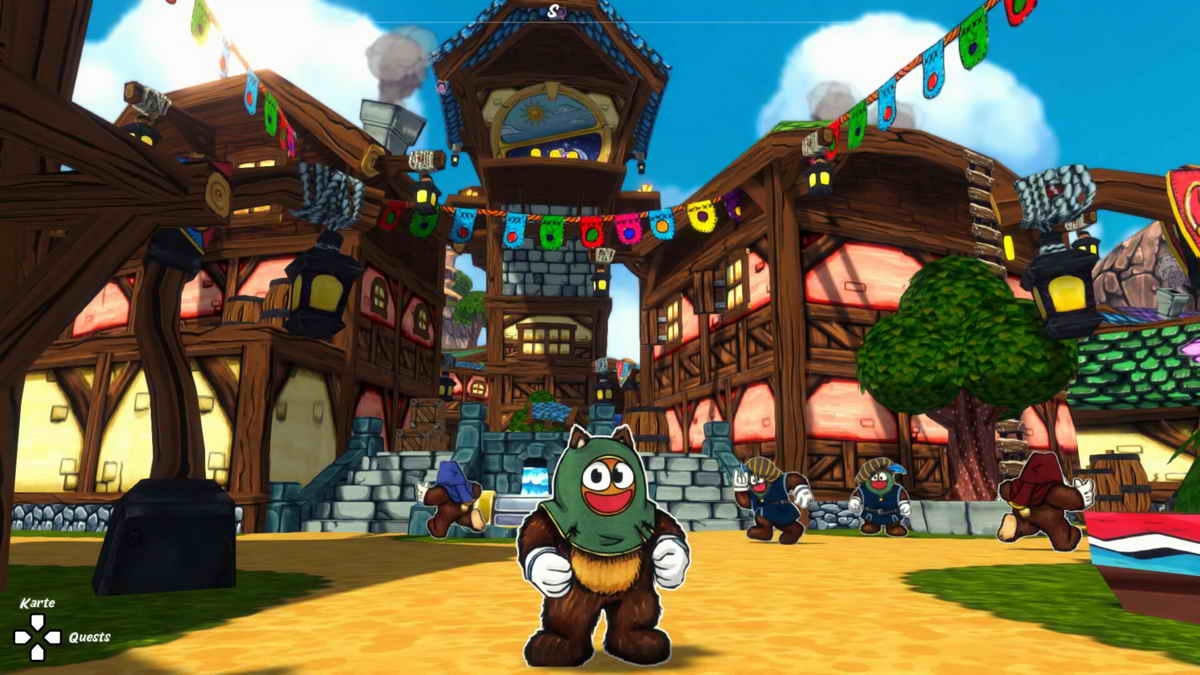
At a glance, Ruffy and the Riverside may look like another lighthearted 3D platformer in the mold of classic mascot adventures with a striking visual style, but it only takes a few minutes with its reality-bending SWAP mechanic to realize that Zockrates Laboratories has come up with something far more inventive. Built around the idea that you can literally copy and paste textures from one object to another – turning lava into ice or waterfalls into climbable vines – the game doesn’t just invite creativity, it demands it. Played on a PlayStation 5, the experience is very imaginative, and fun despite a few rough edges.
Ruffy’s journey to stop the villainous Groll from destroying the World Core is a playful, often irreverent narrative wrapped in colorful dialogue and populated with oddball characters like a sentient turtle and a sarcastic bee. While it’s not the most tightly written of adventures, the game’s whimsical tone keeps things enjoyable, especially for younger players and those with a soft spot for classic cartoon antics. The story mostly functions as a vehicle for exploration and experimentation rather than dramatic storytelling, but it’s serviceable in keeping you moving through the diverse regions of Riverside.
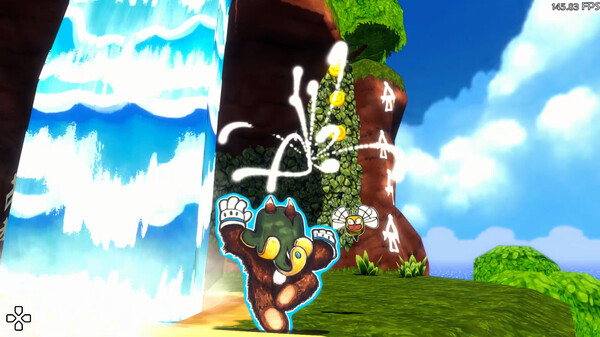
The standout here is undoubtedly the SWAP mechanic, which transforms what could have been a typical collect-a-thon into something far more dynamic. You can swap textures from object to object, which opens up puzzle and platforming opportunities in unexpected ways. It feels refreshing to solve traversal challenges by thinking in terms of elemental manipulation, rather than just double-jumping or looking for a switch. The game also weaves this mechanic into 2D sections, offering bite-sized puzzles that test your understanding of how the system works in more constrained spaces.
That being said, the game’s open-world structure sometimes works against it. While there’s a lot to do across the seven regions – including quirky side quests, rail-sliding, and dreamstone hunts – the world doesn’t always feel cohesive or purposeful. The collectathon-style design can feel scattershot, especially when objectives aren’t clearly communicated or when rewards don’t meaningfully impact gameplay. Despite its clever mechanics, some missions fall into repetitive fetch quest patterns, which contrast with the originality of the core SWAP system.
Combat is included, but it’s one of the weaker links in the gameplay loop. Enemy encounters often feel like an afterthought, lacking the mechanical precision or depth needed to stand alongside the more creative puzzle segments. The controls themselves are responsive enough for platforming, but don’t lend the kind of finesse or feedback you’d want in action-oriented moments. It’s clear the developers focused more on the transformative elements than tight melee design, which is both understandable and slightly disappointing for action-oriented players.
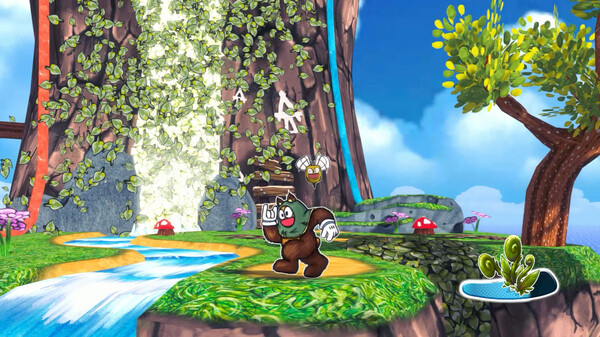
Visually, Ruffy and the Riverside is charming if a bit rough around the edges. Its art direction leans into a handcrafted look, especially when players are given tools to design and apply their own textures – a fun feature that adds personalization and replayability. The environments are colorful and playful, but not especially detailed, with occasional texture popping and uneven visual polish. On PS5, the game holds up well in terms of performance, with decent loading times and a stable frame rate, though it’s clear the visual foundation was laid with more modest hardware in mind.
Audio design follows a similar pattern: cheerful and appropriate, but not particularly standout. The soundtrack reinforces the magical tone without overstaying its welcome, and the expressive animations and character text keep the energy light and breezy. Still, some additional variety in audio cues or environmental soundscapes would have gone a long way in grounding the whimsical atmosphere even more.
In the end, Ruffy and the Riverside is a heartfelt experiment – an indie game that puts its originality front and center. The SWAP mechanic is genuinely clever and opens the door to some memorable puzzle-solving moments, especially when layered with platforming and exploration. But that same ambition sometimes stretches the game’s structure and systems beyond their limits, resulting in inconsistent pacing and underdeveloped combat. If you can embrace the rougher edges, there’s real magic and tons of charm to be found here – and for those craving creativity over polish, this is an offbeat gem worth diving into.
Score: 7.7/10
 Press Play Media