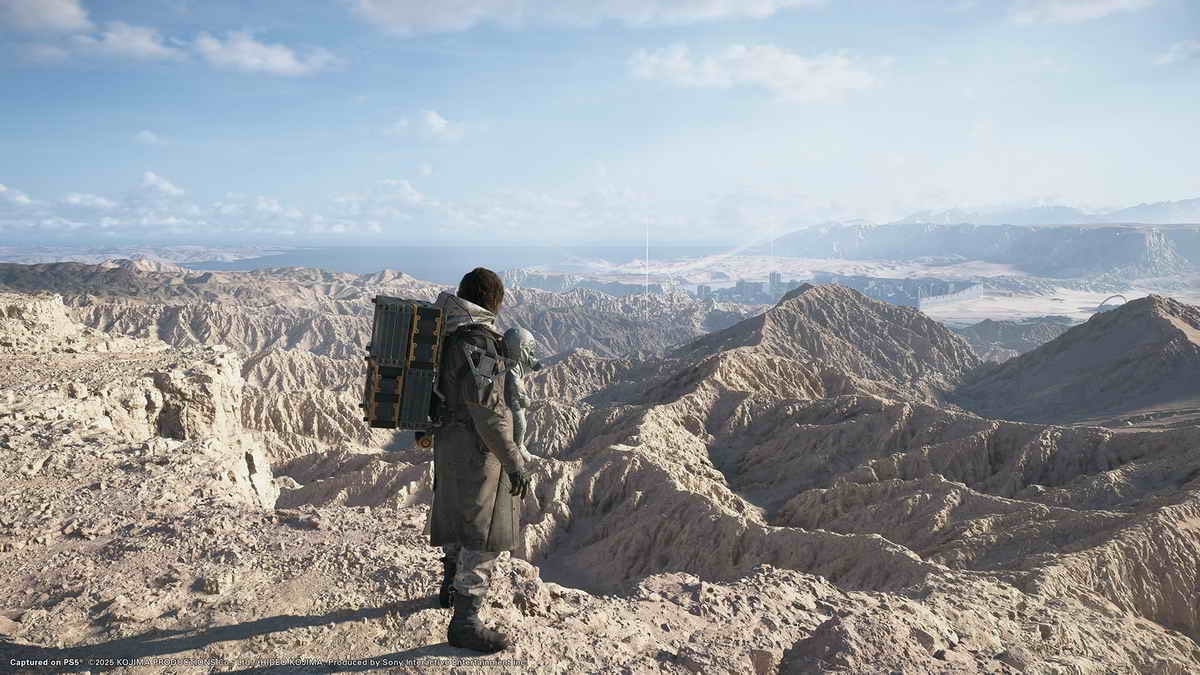
Kojima Productions’ return to the desolate but emotionally resonant world of Death Stranding comes with On the Beach, an ambitious sequel that doubles down on its themes of isolation, connection, and fragile human bonds. Picking up eleven months after the events of the first game, players once again take control of Sam Bridges – this time leading a journey across fractured Australia to expand the Chiral Network and stave off extinction. It’s a narrative that pushes forward both the story and the mechanics the series has come to be known for, delivering an evolved sequel that mostly shines even as it sometimes buries players beneath its own weight.
From the first steps off the beach, On the Beach oozes atmosphere. Vast environments are seamlessly stitched together – plains, deserts, forests, mountains – and each region feels distinct thanks to a living world that shifts with weather, day-night cycles, and the dreaded Timefall. These elements don’t just dress the scenery; they actively shape your journey, demanding preparation and adaptation to keep Sam upright and alive. Hazards like forest fires, sandstorms, and earthquakes inject genuine risk into traversal, turning simple point-A-to-B treks into calculated, often tense expeditions.
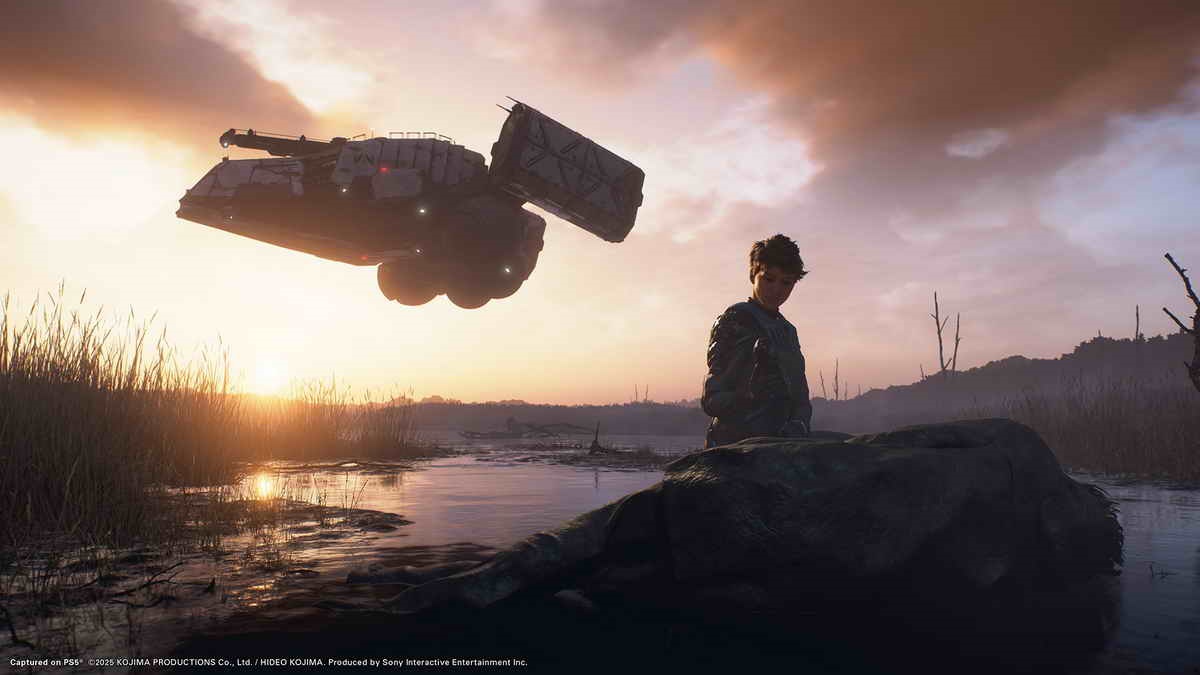
Mechanically, On the Beach refines the exploration-centric gameplay of its predecessor, layering in flexibility and depth. Stealth and combat remain situational, with the option to avoid conflict or engage directly against BTs and mechanized foes using a variety of weapons – both old and new. APAS upgrades enhance stealth or firepower, giving players more ways to approach danger. Where the game really shines, however, is in its traversal tools and vehicle mechanics. Riding motorcycles, boats, or even gliding devices introduces speed and momentum that make crossing terrain deeply satisfying, though some traditional players may find these moments edging closer to “fun rides” than classic delivery-focused challenges.
Yet beneath the slick presentation and powerful moments, On the Beach sometimes struggles with its pacing. It’s undeniably cinematic, but lengthy dialogue sequences and sprawling environmental storytelling sections can interrupt the flow of gameplay – especially when the story takes precedence over delivery tasks. The sense of connection, both mechanical and emotional, is intact, yet it’s occasionally undercut by a narrative that demands quiet reflection where flow-based players may want more pace and momentum.
Where the sequel truly delivers is in its broader message: reconnection isn’t just a plot device – it’s a lived experience here. The social strand system returns more robust than ever, meaning your infrastructure work visibly affects other players in real time. That shared world feeling, plus the expanded set of tools and traversal options, fosters a deeper sense of collective effort and achievement – an emotional payoff that lands remarkably well amid the solitude.
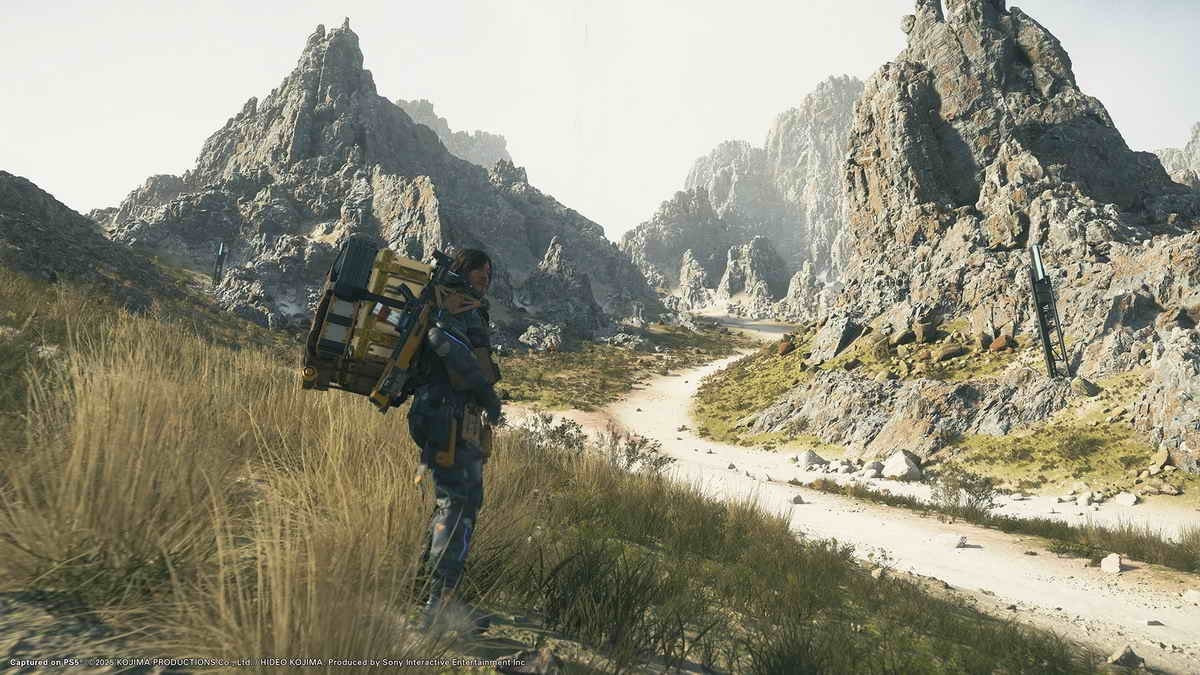
Visually and aurally, On the Beach is a technical wonder. The environments are richly textured – scorched earth giving way to desolate beaches and craggy mountain passes – while the soundscape, from roaring fires to ominous chills, reinforces the sense of a world on the edge. Voice performances, including the return of Sam’s familiar tone, remain strong, though some supporting character dialogue occasionally dips into overly expository territory.
Ultimately, Death Stranding 2: On the Beach is a bold sequel that honors its predecessor’s obsession with reconnection while pushing gameplay into new, satisfying directions. It dares to tread a path that blends exploration, gear, and story, and for the most part, it succeeds. Its pacing stumbles from time to time, and not all story beats stick the landing equally – but the core journey, both physical and emotional, is one well worth taking. The horizon is bleak, but in building bridges – across land and between people – this sequel proves that even in the “beach,” life can manage to find a way.
Score: 8.8/10
 Press Play Media