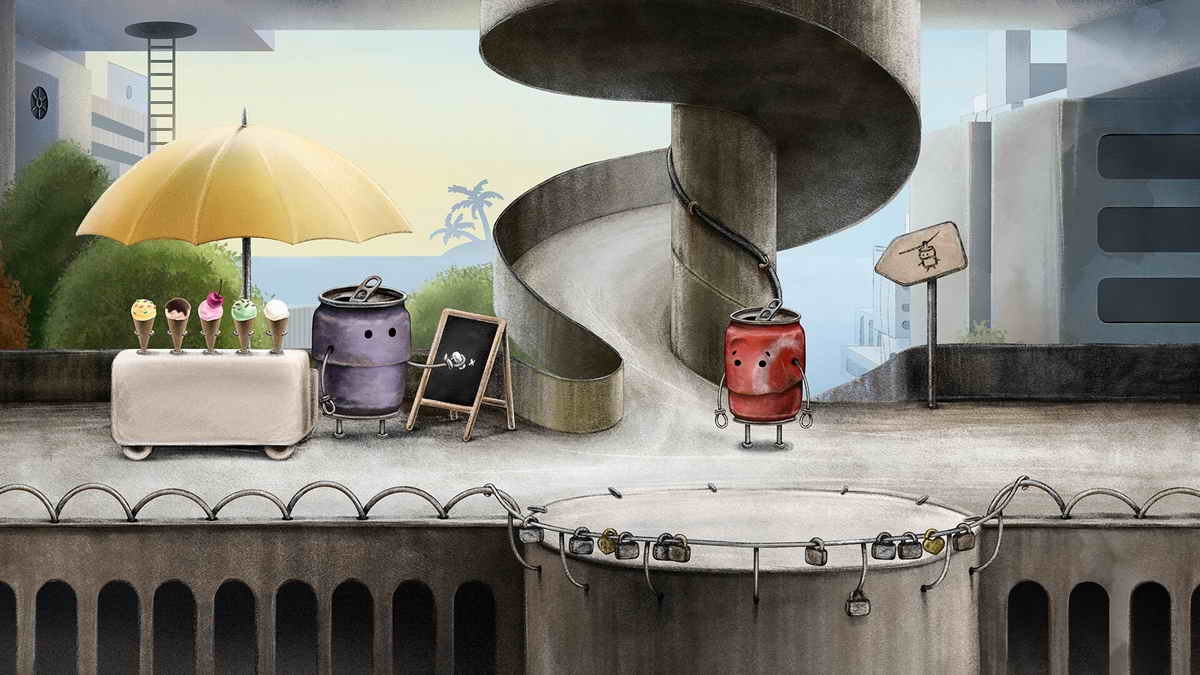
After charming players with the quiet whimsy of its original release, Boxville 2 returns to the world of sentient tin cans with another silent but expressive journey through a handmade world. Developed by Triomatica Games, the sequel builds on the first game’s wordless storytelling and tactile puzzle design, delivering a short but heartfelt adventure that’s more about atmosphere and artistry than challenge or spectacle.
Once again, you step into the boots of a little red can, this time tasked with fixing a disaster you actually helped cause. After a fireworks mishap gone wrong, chaos erupts in the metal metropolis of Boxville, leaving one of your closest friends missing. The game’s premise is simple, but it’s told with such earnestness and creative visual cues that it doesn’t need dialogue to pull you into its narrative. Using expressive animations, thought bubbles, and small environmental details, Boxville 2 creates a world that feels lived-in despite its recycled setting, evoking memories of games like Machinarium.
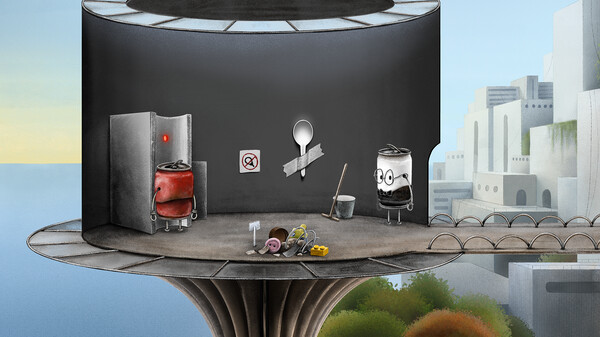
Pacing and puzzle design remain core to the experience, though this time around, the game seems to have taken a gentler approach. Most of the environmental puzzles are intuitive and integrated seamlessly into the environments, which helps with immersion. However, returning fans might notice that the overall difficulty has been toned down a bit compared to the original. Some of the more abstract logic leaps are gone, replaced by more straightforward item combinations and mechanical tasks. While this makes the game more accessible – especially for younger players or genre newcomers – it may also leave puzzle veterans wanting a bit more bite as they breeze through the adventure.
The world of Boxville remains one the game’s biggest draws, brought to life through its hand-drawn visuals and charming animation work. Every screen is like a page from a picture book: richly detailed, full of subtle motion, and unified by a warm color palette that plays nicely with the game’s tone. Whether you’re rummaging through abandoned factories or exploring hidden corners of the city, the environments tell their own stories through design alone. There’s a real pleasure in simply watching the red can react to the world – scrambling up ledges, peering around corners, or sighing in defeat when a solution doesn’t quite land.
The lack of spoken dialogue or text isn’t a limitation, but rather a strength that helps focus attention on the music and sound design. Every action, no matter how small, is punctuated by a satisfying noise, and each area is accompanied by a scene-specific soundtrack that reinforces the mood. From melancholy piano tracks to brighter, whimsical melodies, the music supports the emotional tone without ever becoming intrusive.
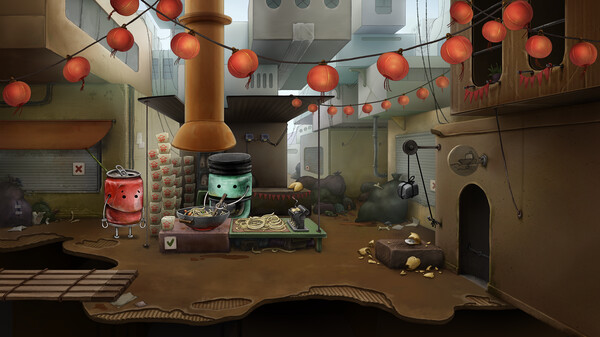
Still, not every element works equally well. The controls, while mostly intuitive, can feel slightly sluggish on a controller compared to playing with a mouse – something that’s noticeable during more timing-sensitive interactions. The interface can also occasionally feel too minimalist, offering little feedback when an item doesn’t combine or work as expected. These are minor frustrations, but they occasionally interrupt what’s otherwise a smooth-flowing experience.
Length is another factor to consider. Like its predecessor, Boxville 2 is a relatively brief experience, wrapping up in just a few hours. While the story is complete and satisfying, some players may wish there was a bit more world to explore, especially given how lush and inviting the art direction is. That said, it’s a testament to the worldbuilding that you’re left wanting more rather than less).
Boxville 2 is ultimately a thoughtful, quiet game – one that trades spectacle for sincerity and challenges for charm. It’s a lovingly crafted experience where every can, crate, and crack in the pavement tells a story. Fans of slow-paced, narrative-driven puzzle games will find a lot to appreciate here, even if the ride ends a little too soon.
Score: 8.0/10
 Press Play Media