
Wildgate, the debut title from Moonshot Games, arrives on PlayStation 5 under the Dreamhaven banner with a bold premise: chaotic space piracy fused with emergent PvPvE gameplay. Set in the procedurally generated expanse known as “The Reach,” Wildgate tasks players with maintaining their ship, fending off rival prospectors, and chasing after the enigmatic Artifact to make it through the titular portal – or die trying. It’s a game built around dynamic encounters, but how well it lands depends on how much you’re willing to embrace unpredictability and frequent chaos amidst a wide range of mechanics to master.
The game’s standout feature is its blend of spaceship management and first-person shooter mechanics. Players select from various Prospectors, each with distinct tools and abilities that cater to different roles—whether that’s piloting, hacking, or outright combat. These characters bring a light hero-shooter flair to the game, adding diversity and tactical options to each crew setup. Exploration involves resource scavenging, repairing or sabotaging ships, and surviving hostile encounters in deep space, with every match offering unique objectives and hazards thanks to the procedural design. That unpredictability is central to Wildgate’s identity, but it also introduces friction for players looking for more structured experiences.
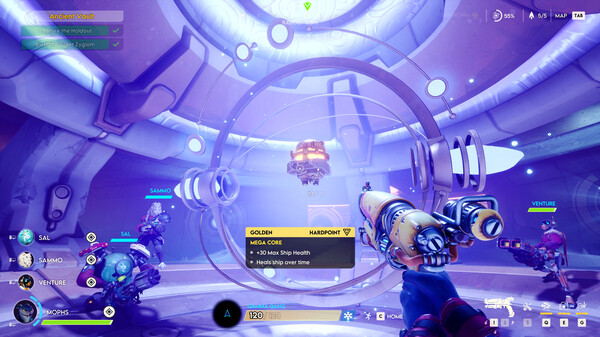
Gameplay is often intense and unpredictable, with chaotic firefights breaking out over precious resources or control of the Artifact. Combat itself feels solid, especially during on-foot encounters, and the zero-G moments can both disorient and immerse. However, the transition between ship and FPS mechanics isn’t always smooth – there’s an occasional lack of clarity about what your team should be doing at any given time. That learning curve, paired with matchmaking quirks and the absence of strong onboarding, may frustrate newcomers.
Visually, Wildgate makes a strong first impression. Its nebula-drenched backdrops, derelict alien structures, and luminous storms paint a compelling space opera aesthetic. The game uses vibrant lighting and sleek ship design to create a memorable world, even if the environments lack a bit of interactivity and start to feel familiar after a dozen runs. The visual identity is bolstered by strong audio design – humming ship engines, intercom chatter, and musical swells during combat all contribute to the sense of tension and immersion.

Controls on PS5 are mostly responsive, whether managing ship systems or engaging in FPS combat. Still, juggling roles within a team can be tricky without good coordination, especially since the UI doesn’t always convey vital information efficiently. Some players may feel overwhelmed when the pressure ramps up, especially during late-match Artifact hunts or multi-crew dogfights. On the other hand, those playing with friends will likely find a much smoother and more entertaining experience, as the game clearly prioritizes squad synergy and improvisation.
Wildgate doesn’t offer a traditional narrative, but its emergent storytelling fills the void. The tension of surviving a last-second assault, or pulling off a daring heist before slipping through the portal, leads to memorable moments. That said, the game’s reliance on repeated structure – loot, sabotage, extract or survive – can feel thin over time without deeper progression or meta-goals to anchor long-term engagement.
Ultimately, Wildgate is an ambitious multiplayer experience that thrives on unpredictability and team-based improvisation. While it sometimes stumbles in onboarding, pacing, and progression depth, its blend of FPS mechanics and spacefaring sabotage feels fresh. For those willing to embrace its chaos and gather a regular crew, there’s a distinct thrill to what Moonshot Games has created.
Score: 7.6/10
 Press Play Media
One thought on “Wildgate review (PS5)”