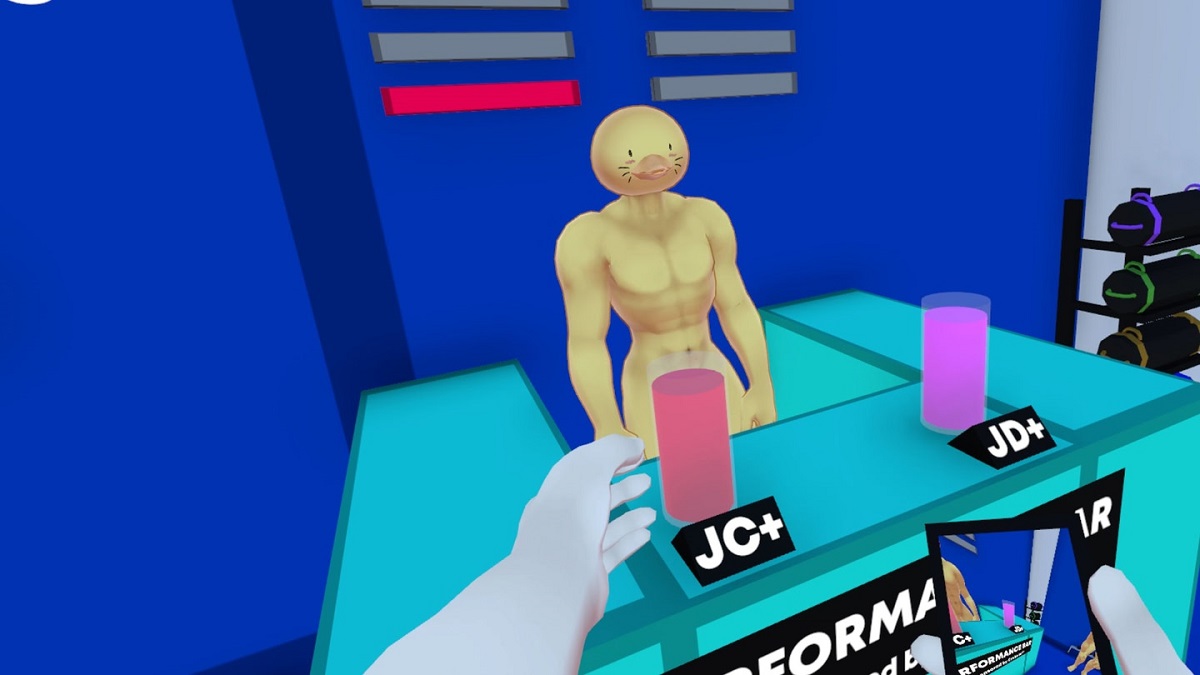
Virtual reality continues to carve out its own quirky corners, and this latest batch of Meta Quest releases shows just how varied that landscape can be. From a satirical climb where a jacked-up rabbit muscles through influencer culture, to a high-octane arcade racer-shooter hybrid, to a candy-colored puzzle game that quite literally lands in your living room, these games highlight the range of tones and ideas VR can deliver. Whether you’re after comedy, chaos, or casual comfort, there’s something here that leans into the strengths of immersive play while still experimenting with what works best in a headset.
Jacked Up review (Quest)
On Meta Quest, Jacked Up embraces its chaotic premise with surprising commitment, throwing players into the role of a muscle-bound rabbit trying to scale a tower of absurdity. Developer Field of Vision has leaned into over-the-top humor here, blending platforming challenges with the satirical energy of a livestream. The game constantly reminds you that you’re being watched, with phone notifications and distractions pulling you out of the climb, making the experience feel more like a comedy skit than a straight action game.
Gameplay is built around vertical progression, with players bouncing from one precarious platform to another while dodging spinning obstacles and enduring strange challenges from Bro Labs. These range from ankle weights that limit mobility to goofy dares that obscure your vision. At its best, the unpredictability adds tension and laughs in equal measure, but it can also feel frustrating when the controls don’t respond as cleanly as expected. Some times the jumping mechanics can feel a bit floaty, which undercuts the precision needed for higher runs.
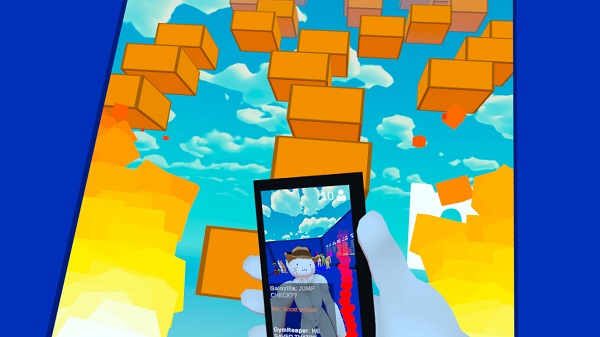
The humor in Jacked Up is undeniably its strongest draw. Ripped animal trainers, protein shake gags, and motivational nonsense keep the tone light, even when you’re failing repeatedly. The constant stream of chat reactions and “sponsors” chiming in reinforces the parody of influencer culture, and for many, this framing makes retrying more entertaining than it otherwise might have been. However, those less amused by meme-driven comedy might find the repetition tiresome, especially since progression depends on replaying the same tower with gradually tougher modifiers.
Visually, the game adopts a colorful, cartoonish style that suits the outlandish premise. The exaggerated animations and gym-themed set pieces are fun to look at, and the shredded animal designs make each checkpoint feel distinct. Audio complements the aesthetic with high-energy sound effects and a tongue-in-cheek announcer vibe, though the soundtrack itself can become repetitive over long sessions. Still, both visuals and audio play into the satirical nature of the experience rather than aiming for polish or realism.
In short, Jacked Up thrives on its absurdity. It offers a silly, challenging, and often frustrating climb where the spectacle is as important as the gameplay itself. The humor and presentation will appeal to those looking for something lighthearted and meme-fueled, but players hoping for finely tuned platforming may find the mechanics a little rough around the edges. It’s a game that doesn’t take itself seriously, and when it works, that’s exactly where its charm lies.
Echo Wars – Road Rage review (Quest)
Ivanovich Games has built a reputation for delivering fast, arcade-style VR experiences, and Echo Wars – Road Rage fits right in with that tradition. On Meta Quest, it’s a game that wastes no time throwing you into the action: one hand on the wheel, the other on your weapon, as enemies and debris flood the screen. It’s a premise that feels both familiar and fresh – a mash-up of racing and shooting that leans into old-school spectacle rather than layered storytelling.
The control scheme is the star of the show. Driving with one hand while firing with the other takes some getting used to, but once it clicks it creates a thrilling sense of chaos. The anti-rotation system deserves credit too, reducing motion sickness even during hectic moments. That said, the handling of the buggy can feel a little inconsistent, sometimes making precision dodges more frustrating than they should be. While the game offers different ways to steer, not all players will gel with the available options, and that can dull the edge of the otherwise exciting design.
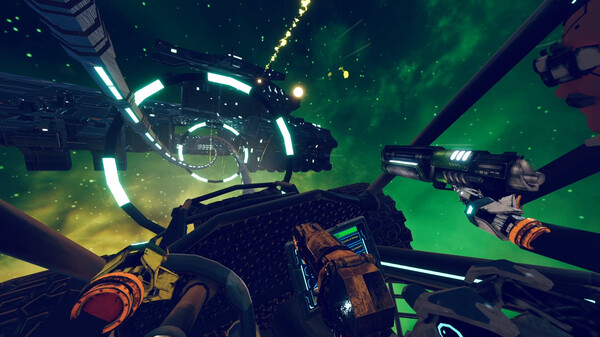
Visually, Echo Wars thrives on variety. Each stage introduces new environments and enemy types, from collapsing cities to volcanic tunnels and kaiju-sized bosses that tower over your vehicle. That sense of scale is particularly effective in VR, where the sheer size of these enemies feels impressive. The level design, however, can feel uneven – some stages pack in the adrenaline with destruction and spectacle, while others drag with slower pacing or less inspired objectives. It’s a balance between arcade energy and repetition that not everyone will find equally engaging.
The presentation is rounded out by a soundtrack from Ricardo Fermín that matches the game’s high-energy style. Explosions and weapon effects are satisfying, and the sheer amount of destruction makes it easy to lose yourself in the moment. As an arcade-style VR title, Echo Wars – Road Rage doesn’t try to be more than it is – a straightforward blast of action designed for short bursts or score-chasing marathons. When it works, it’s some of the most fun Ivanovich has delivered in VR yet, even if its rough edges remind you this isn’t quite the leap to “AAA” VR some might be hoping for. For a glimpse at that, you might want to consider the PCVR version that we also tried out – it’s possibly the developer’s most visually impressive title yet on PC.
Jolly Match 3 AR review (Quest)
Jolly Match 3 AR takes one of the most familiar puzzle formats in gaming and gives it a mixed reality twist, bringing colorful match-3 boards right into your living room. The result is a casual but surprisingly engaging VR experience that feels both instantly familiar and refreshingly different. Instead of swiping a touchscreen, you’re pointing, grabbing, and zooming with hand tracking, which adds a layer of tactile satisfaction that traditional versions can’t match.
What makes it stand out is how smoothly it adapts to your own space. The ability to resize and reposition the board makes it easy to fit into any play area, and the game runs stable enough that it doesn’t feel like a gimmick. The hand tracking is particularly well-implemented, with gestures like pinching to move or zooming in with your fists working reliably – though the first few minutes can be a bit confusing until you adjust. Once it clicks, the controls feel natural and support a laid-back pace that’s perfect for quick sessions.
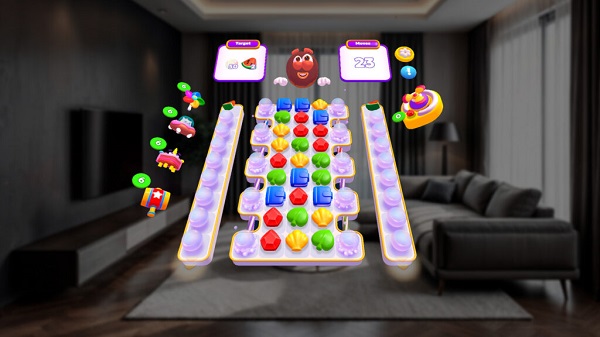
The match-3 gameplay itself isn’t reinventing the wheel, but it’s dressed up nicely with boosters, challenges, and the ability to build small themed islands as you progress. This gives a sense of reward beyond simply clearing boards, even if some players might find the progression grind a little familiar compared to mobile puzzle games. Still, being able to zoom in on miniature 3D cities and interact with them in your space adds a novelty that keeps it from feeling too repetitive.
Visually, the bright candy-colored tiles and playful animations work well in AR, popping much more vividly than they do on a phone screen. The whimsical art style carries over into the decorative islands, giving you a reason to keep unlocking new areas. Audio-wise, it’s pleasant but low-key – designed more to relax than excite, which fits the overall vibe. If you’re looking for a hardcore VR game this isn’t it, but as a light and inventive way to enjoy a classic puzzle formula, Jolly Match 3 AR is one of the more charming examples of mixed reality design to date.
 Press Play Media