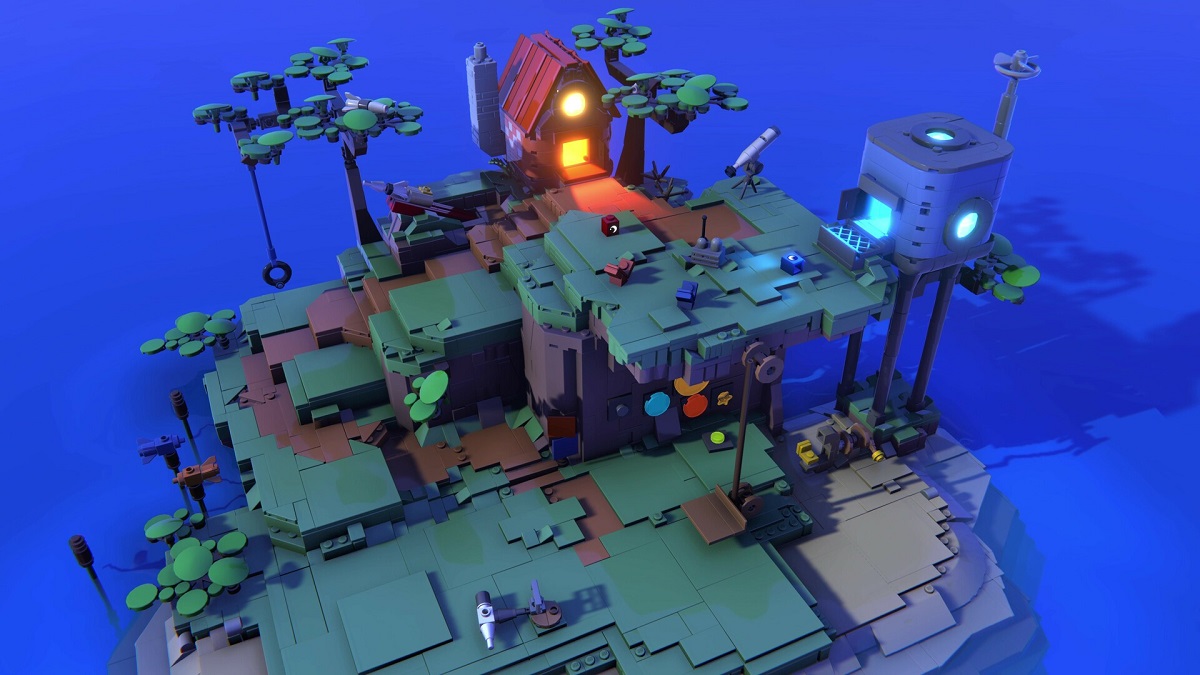
LEGO Voyagers is a gentle co-op adventure that trades blockbuster action for quiet reflection and cooperation. Developed by Light Brick Studio and published by Annapurna Interactive, it invites two players (or one controlling both characters) into a poetic journey across brick-built worlds. The goal is simple yet evocative: rescue an abandoned spaceship, explore environments, and discover beauty in the way LEGO bricks snap, tumble, and click. The absence of text or dialogue nudges players to pay attention to visuals, sounds, and shared moments, which is both its greatest strength and, occasionally, its limitation.
The narrative is nonverbal but clear in its emotional intent. Two friends (represented as LEGO bricks) traverse surreal landscape – from overgrown gardens to ghostly ruins – guided by environmental cues and subtle interactions. There’s a charm to this silence: the game trusts you to piece things together from what you see and do, rather than what you’re told. But because it’s wordless and minimalist, moments that aim for emotional weight sometimes land lighter than they might have with more storytelling juice. Players who want strong character arcs may find the connections less sharp than the visuals that frame them, and the overall feel is different from what most LEGO games offer, so that might take some getting used to.
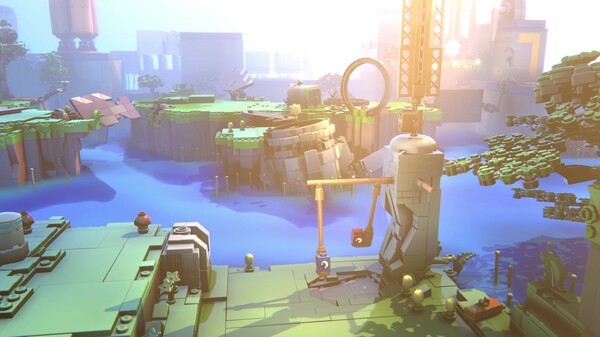
Mechanically, Voyagers relies largely on co-operation, puzzle solving, and spatial traversal. Tasks often require both bricks: pushing blocks, building temporary platforms, or interacting with the environment in tandem. This works very well when playing with a partner, especially in local co-op where communication flows naturally. However, puzzle variety is limited. Many puzzles follow similar structures, and for players who like challenge or complexity, the game might feel underwhelming. That said, simplicity seems intentional rather than accidental – it’s about mood and play rather than mastery and running into a wall every now and then.
Controls on PS5 are intuitive where they need to be: moving, jumping, switching between bricks, even giving small cues to your partner is handled smoothly. There’s a lightness to movement that matches the game’s tone. On the downside, some traversal segments feel a little floaty, and without precise timing, small jumps or platforming sections can be frustrating. Also, the Friend’s Pass system is a big plus – being able to invite a friend who doesn’t own the game to play the full co-op experience adds to its accessibility.

Visually and audibly, Voyagers stands out. Hand-painted or stylized LEGO environments feel vibrant and imaginative, with each region offering distinct art direction. Lighting, camera framing, and animation combine to give many scenes real visual poetry. The soundtrack is subtle but effective, pairing well with visual moments to create mood rather than overpowering. Where it loses some ground is in the brevity of these moments – some areas look lovely but feel too short, leaving players wanting more curiosity and awe than they get.
Overall, LEGO Voyagers is a lovely, modest adventure that is best enjoyed with a friend. Its strength lies in atmosphere, cooperation, and the tiny moments of connection it cultivates between players. It isn’t a lengthy game, and those expecting deep puzzles, branching narrative, or tense challenges might find it light. Still, for what it sets out to be – a reflective co-op experience about friendship, building, and discovery – it mostly succeeds. If you’re in the mood to slow down, enjoy craftsmanship, and share time rather than speed, this game delivers a satisfying journey.
Score: 7.1/10
 Press Play Media