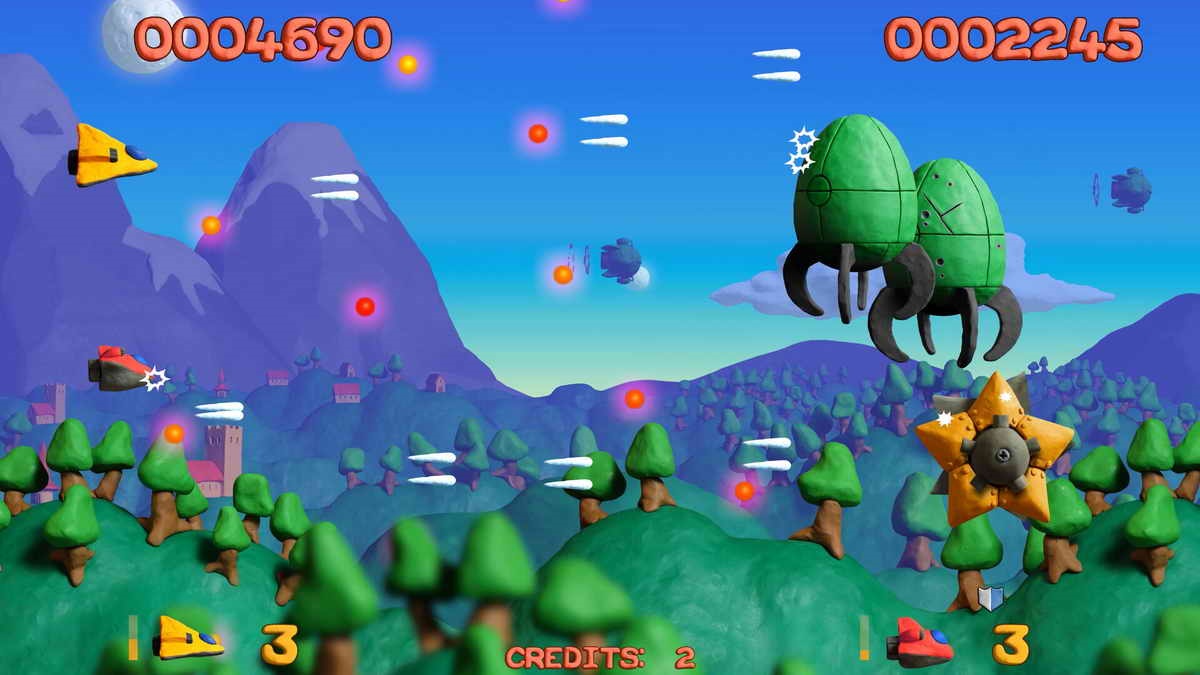
Two decades after its quirky debut, Platypus has returned in the form of Platypus Reclayed on PlayStation 5, and it’s a comeback that embraces both nostalgia and modernization. Developed by Claymatic Games under the guidance of original creator Anthony Flack, this isn’t a quick remaster – it’s a full reimagining that keeps the core charm intact while polishing many elements for today’s players. The premise remains endearingly simple: Colossatropolis wants to expand into neighboring Mungola, and the only thing standing in their way is your trusty F-27 fighter, the “Platypus.” It’s hardly a complex narrative, but the tongue-in-cheek setup fits the playful tone of the game perfectly.
Gameplay-wise, Platypus Reclayed stays true to its side-scrolling shoot ’em up roots, offering fast-paced stages full of enemies, projectiles, and power-ups. It’s instantly accessible, with simple pick-up-and-play mechanics that make it suitable for short bursts as much as longer sessions. At the same time, it offers enough challenge on higher difficulties to keep genre veterans engaged. The weapon variety is stronger this time, with new additions helping to break up the repetition that occasionally plagued the original. That said, the game still leans on a classic arcade loop, so players looking for deep progression systems or a more modern twist may find the experience a little thin.

Controls are responsive and tight, ensuring that dodging enemy fire or weaving through chaotic on-screen patterns feels fair and rewarding. On PlayStation 5, input lag is practically nonexistent, and the game runs smoothly even during its busiest moments. Two-player local co-op adds a layer of fun, amplifying the chaos in a way that feels natural rather than overwhelming. Still, the lack of online play feels like a missed opportunity in a time when co-op gaming often stretches beyond the couch.
Of course, the visuals remain the real star. Platypus has always been defined by its claymation aesthetic, and Reclayed doubles down on it with new high-resolution assets that were painstakingly crafted and photographed in 4K. The clay models give the world a tactile, handmade feel that sets it apart from other shmups, and the added detail brings a vibrancy the original couldn’t achieve. Backgrounds, enemy ships, and even explosions look delightfully chunky and colorful, creating a unique visual identity that’s both nostalgic and fresh. Some players may find the charm wears off after extended play, but there’s no denying that the style remains one of the game’s strongest hooks.
Audio is equally distinctive. The original soundtrack, with its quirky remixes of retro game tunes, makes a return alongside new mixes that keep the spirit intact while expanding the range. The upbeat, often whimsical soundscape pairs beautifully with the clay visuals, adding to the playful energy of the game. Effects are crisp and satisfying, though after long sessions, some tracks may feel repetitive given their looping nature. Still, for many players, this soundtrack will be part of what keeps them coming back.
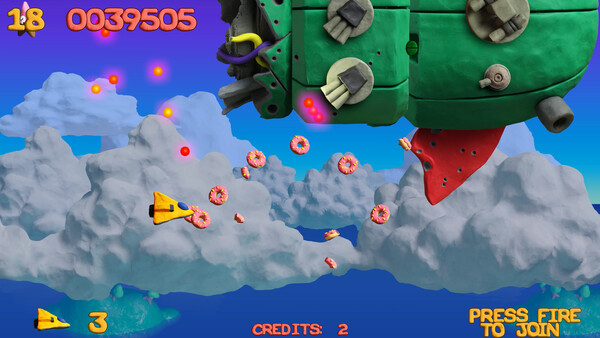
If there’s a notable drawback, it’s that Platypus Reclayed doesn’t push far beyond the nostalgic template it’s reviving. While the updates make it more accessible and visually striking, it’s still essentially an arcade-style experience built for short runs rather than deep campaigns. For some, that simplicity is exactly the point; for others, it may limit replay value once the novelty of the claymation wears off. That being said, the game’s lighthearted presentation and approachable gameplay make it easy to recommend for casual players, families, and shmup enthusiasts alike.
In the end, Platypus Reclayed is a lovingly rebuilt homage to a cult classic that embraces its roots while adding enough polish to make it feel at home on modern hardware. It won’t convert players who never cared for old-school shooters, but for those who appreciate arcade action wrapped in an utterly unique aesthetic, this is as charming a revival as you’re likely to find. Nostalgic, accessible, and proudly handmade, it proves that sometimes the simplest formulas are the ones worth reclaying.
Score: 7.8/10
 Press Play Media