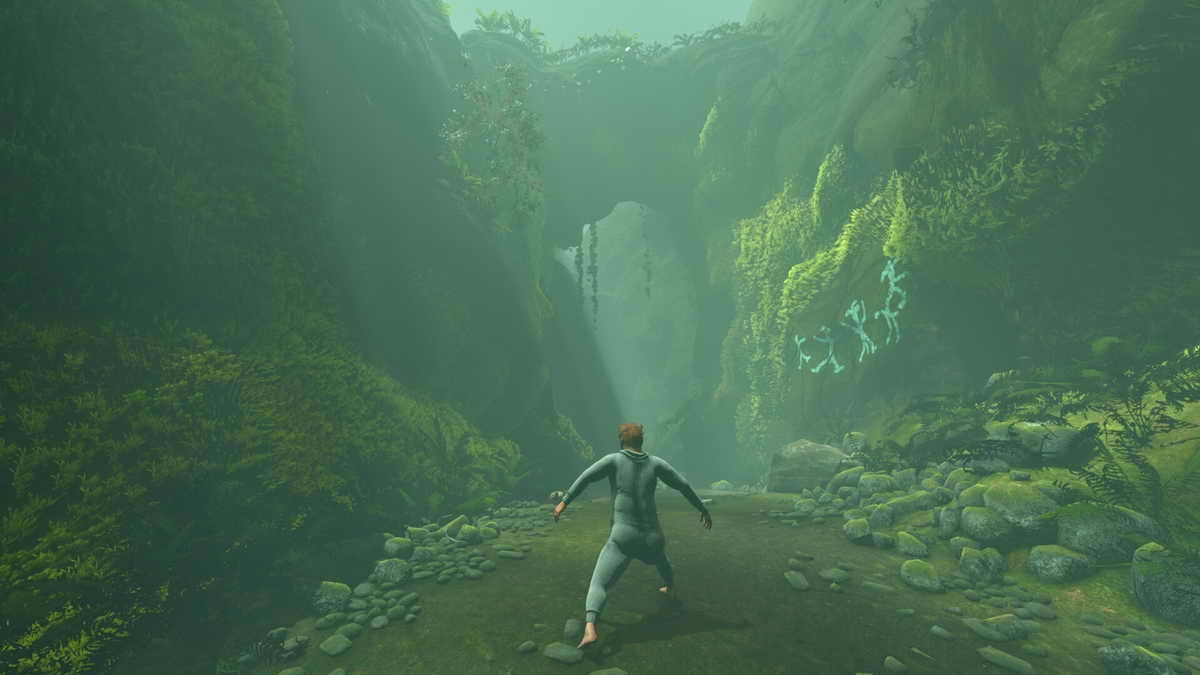
When Devolver Digital unveiled Baby Steps, a collaboration between Gabe Cuzzillo, Maxi Boch, and Bennett Foddy, it was clear this would not be another straightforward walking simulator. On PlayStation 5, players take control of Nate, a slacker whose greatest achievement is figuring out how to put one foot in front of the other. The premise is intentionally ridiculous, but that absurdity is also what gives the game its charm. Much like Getting Over It, the goal isn’t simply to reach the end, but to embrace the awkward struggle along the way.
The narrative backing all of this is deliberately light, mostly serving as a comedic framework for Nate’s stumbles. His sarcastic banter and the game’s quirky touches – like non-collectible hats and the onesie system – keep the tone irreverent. While this humor adds levity to the endless falling, it also doesn’t evolve much beyond its running joke. Those hoping for emotional depth may find the satire overstays its welcome, though others will appreciate how it keeps frustration from boiling over.
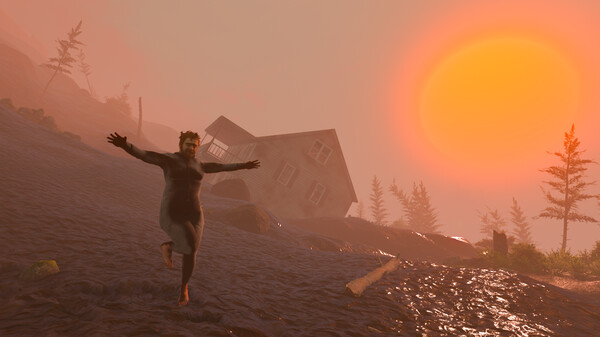
Gameplay is where Baby Steps earns its identity. Each footstep is manually controlled, with physics dictating balance, weight, and momentum. This means every rock, slope, or branch becomes a potential disaster. The sense of reward when you finally master a sequence is undeniable, but the cost is repetition – long falls often undo minutes of careful progress. For players with patience, this difficulty makes the rare successes exhilarating. For others, it can feel more like punishment than challenge, a design choice that will polarize audiences.
Controls, naturally, are the key to everything. On the DualSense, inputs are responsive enough to convey the intended clumsiness, though the learning curve is steep. The game is engineered to make you fail often, and that intentional awkwardness is both its selling point and its barrier to accessibility. Some will find themselves laughing at Nate’s pratfalls, while others will tire quickly of being reminded how fragile progress can be.

The presentation reinforces the oddity of Nate’s journey. Misty hills and offbeat wildlife lend the landscapes a peculiar beauty, though the visuals won’t impress those looking for technical spectacle. Instead, it’s the audio design that steals the show. The soundtrack dynamically builds as you move forward, transforming even the smallest victories into moments of triumph. Comedic sound effects and exaggerated voice work highlight the absurdist tone, making the world feel alive despite its minimalist aesthetic.
Ultimately, Baby Steps is a game that thrives on its contradictions. It’s silly but punishing, minimal yet memorable, frustrating yet funny. Whether it clicks depends almost entirely on the player’s willingness to endure repeated failure in the name of clumsy progress. For fans of Foddy’s earlier work, it’s a natural successor with a sharper sense of humor. For everyone else, it may prove to be more exhausting than entertaining. Either way, Baby Steps delivers exactly what it promises: the most literal walking simulator you’ll ever play.
Score: 7.3/10
 Press Play Media
One thought on “Baby Steps review (PS5)”