
On PC and Nintendo Switch, Hades II cements itself as both a worthy successor and a bold evolution of Supergiant Games’ breakout roguelike. Where the first game was already praised for its clever fusion of fast-paced action and mythological storytelling, the sequel expands its scope, both narratively and mechanically, while retaining the sharp design and polish that made Hades a phenomenon. The result is a game that feels instantly familiar yet constantly surprising, with new layers of depth that invite repeat runs without ever slipping into repetition.
The shift in perspective is one of the game’s most striking qualities. Playing as Melinoë, Princess of the Underworld, introduces a different tone and energy than Zagreus’ defiant escape attempts. Her quest to take on Chronos, the Titan of Time, leans into themes of witchcraft and ritual, weaving new Olympian deities and occult imagery into the storytelling. The writing once again shines, with every character interaction adding context and personality, whether through banter with old allies or tense exchanges with enigmatic newcomers. Even when progression slows, these narrative beats keep players invested in the larger journey.

Gameplay-wise, Hades II builds on the already stellar combat foundation of the original by adding witchcraft-inspired mechanics that expand strategy without overwhelming players. New tools like the Altar of Ashes and familiars provide fresh ways to customize runs, while weapons retain their distinct feel but gain added versatility through dark sorcery upgrades. Experimentation feels richer than before, making every attempt at a new build genuinely exciting. The roguelike structure still means failure is inevitable, but progression feels fair and satisfying, with permanent upgrades providing a strong sense of growth.
The pacing, however, is not without flaws. Early runs can feel longer and more demanding than necessary, occasionally testing patience before the flow of upgrades begins to smooth things out. Yet once those systems open up, the combat loop becomes almost endlessly replayable, driven by the sheer variety of builds and encounters. It’s a balance that encourages both quick experimental runs and long-form mastery, something very few roguelikes manage to achieve.
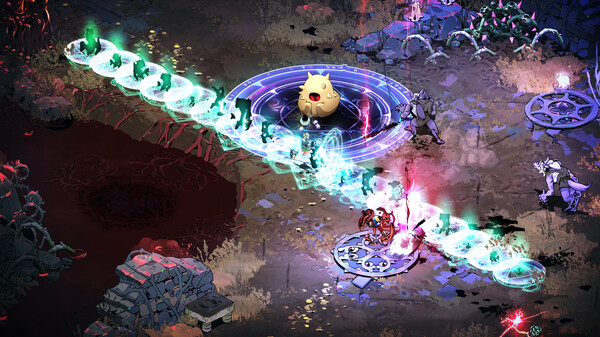
Visually, Hades II is as sumptuous as fans might expect from Supergiant. The hand-painted backdrops are more ambitious, with surreal depictions of mythic realms that burst with atmosphere. Character animations feel smoother and sharper, enhancing both readability in battle and emotional nuance in story sequences. Accompanied by Darren Korb’s new soundtrack, which is equal parts haunting and propulsive, the game crafts an audiovisual identity that matches its mythic scale. On Switch, the experience is slightly less crisp, but the portability makes up for the occasional dip in performance.
Taken as a whole, Hades II is both a refinement and a bold step forward. Its mix of expanded lore, strategic combat systems, and lush audiovisual design makes it not just a worthy sequel, but arguably the new benchmark for the genre. While its slower early hours and high difficulty might deter some players, its long-term rewards are undeniable. For fans of the original and newcomers alike, this is Supergiant at its most confident – crafting a roguelike that manages to feel eternal without ever feeling repetitive.
Score: 9.3/10
 Press Play Media
One thought on “Hades II review (PC/Switch)”