This week’s DLC roundup showcases three expansions that take players into new corners of familiar worlds, each with its own distinct flavor and challenges. Escape Simulator: Spy lets puzzle-solvers slip into the shadowy life of espionage, blending codebreaking, gadgets, and cinematic set-pieces for both solo and co-op play. Walkabout Minigolf: Forgotten Fairyland trades sunny greens for a mossy, half-forgotten storybook amusement park, pairing whimsical course design with tactile, VR-friendly physics on Quest. Meanwhile, Funko Fusion: Deluxe Edition piles on fan-favorite characters and themed worlds, delivering playful, nostalgia-heavy set-pieces while expanding the core mechanics in accessible, if not deeply strategic, ways. Across these three releases, developers balance atmosphere, new mechanics, and platform considerations to varying degrees, offering a range of experiences that extend their base games in thoughtful, if sometimes uneven, directions.
Escape Simulator: Spy review (PC)
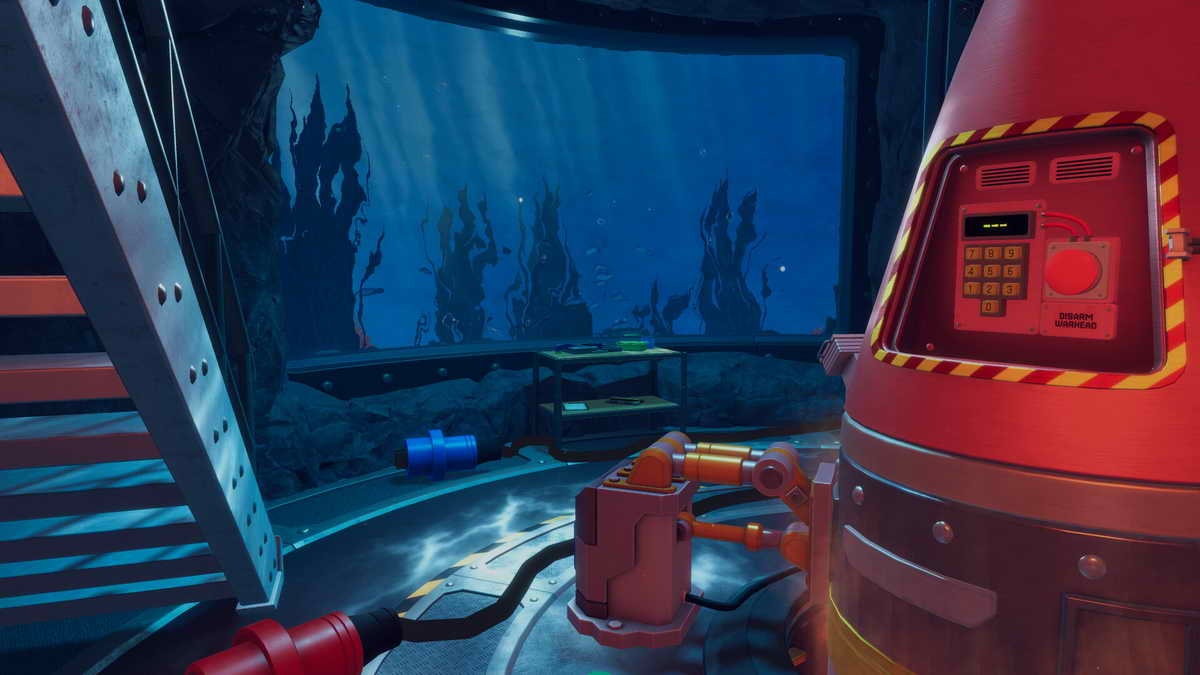
If you’ve ever fantasized about slipping into the shadowy world of espionage, the Spy DLC for Escape Simulator arrives with all the trimmings: codebreaking, hidden gadgets, high-stakes infiltration – and four fresh rooms from Pine Studio that strive to evoke the golden era of spy cinema. Working solo or in co-op, you’ll move from Agency HQ through the Quartermaster’s Workshop, mingle on the Villain’s Yacht, and ultimately descend beneath the waves to thwart a rocket launch. The ambience is rich, and the promise is bold. But as often with expansions, the execution walks a fine line between inspired and overreaching.
Visually and aurally, the DLC mostly delivers. The new props, environments, and themed outfits help you feel like a secret agent rather than just a puzzle solver, and a sleek cinematic soundtrack underlines tense moments without ever overwhelming the experience. The graphical fidelity aligns well with the base game’s standards, and in quieter moments – poring over codes or fiddling with mechanisms – the presentation enhances immersion. That said, the levels sometimes lean too heavily into gadget aesthetics without fully capitalizing on them. A puzzle involving electronic logic or components might show off its hardware, but without always giving the player satisfying feedback on why things work (or don’t), that elegance can feel superficial.

Puzzle design is where Spy DLC both shines and stumbles. On the plus side, many rooms push your reasoning and spatial awareness in ways that hold up even for seasoned Escape Simulator players. The Underwater Rocket Base, in particular, throws you into layered challenges that reward careful observation. But the journey isn’t without friction – meaning a look at the built-in hint system when a puzzle seems to make little sense. Players expecting a smooth, cinematic spy thrill may wince when some puzzles force trial and error more than elegant insight.
Overall, Escape Simulator: Spy DLC is a solid expansion that leans heavily into the fantasy of espionage, with moments of real brilliance and moments of uneven pacing. At its best, it feels like stepping into a miniature spy thriller; at its worst, it reminds you that you’re still solving puzzles. For the price tag and existing fan base, it’s likely worth a look – just don’t expect every room to land a cinematic mic drop.
Walkabout Minigolf – Forgotten Fairyland review (Quest)
Mighty Coconut’s Forgotten Fairyland DLC takes Walkabout’s cozy, pick-up-and-play miniature golf and drags it into a delightfully decayed storybook setting, trading the franchise’s usual sunny greens for a mossy, half-forgotten amusement park that still hums with mischief. The premise works: there’s a clear sense of place and a hint of narrative mystery that knits the course together, turning each hole into a small moment of discovery rather than a standalone puzzle. That atmosphere is the DLC’s strongest card, and the designers lean into it with quirky set-pieces and a few well-timed surprises.
Gameplay remains faithful to Walkabout’s tight, tactile fundamentals: putt physics feel predictable and satisfying on Quest, and the course design rewards creative shots and patient reads. Some holes introduce clever environmental interactions that refresh the core loop without overcomplicating it, although a couple of layouts can feel a touch fiddly in cramped spaces when playing on Quest hardware. The balance between fair challenge and occasional frustration mostly holds up, but players who expect a uniform difficulty curve may find a few spikes that demand repeat plays to master.
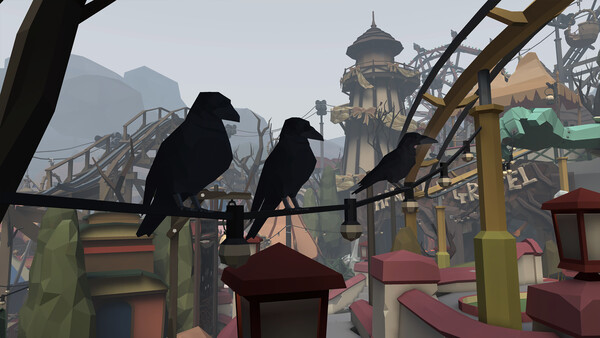
Controls on Quest are solid overall, with the familiar swing-and-aim flow translating well to headset play; grabbing, lining up, and releasing the ball rarely trips over tracking quirks. That said, the occasional tight framing and narrow corridors of the park expose the Quest’s tracking and comfort limits more than Walkabout’s more open courses do, so mobility and play area matter more here than in some prior maps. Audio and visual presentation sell the theme admirably: eerie music cues, creaking set dressing, and well-crafted ambient FX build tension and personality, while the art direction balances nostalgia and rot in a way that’s charmingly uncanny – texture detail and draw distance are respectable for Quest but not without the platform’s usual compromises.
Forgotten Fairyland is a compact, characterful expansion that will please players who come for atmosphere and clever hole design, and it generally preserves the series’ approachable mechanics on Quest. It’s not without rough edges – occasional difficulty spikes, confined geometry that tests headset tracking, and the visual concessions required by mobile VR – but for the price and the short runtime it offers a memorable detour into a spooky, whimsical corner of Walkabout’s world, and one that ties well into the upcoming spooky season.
Funko Fusion – Deluxe Edition review (PS5)
Funko Fusion Deluxe Edition leans into the game’s popcorn-branding with an expanded roster and a handful of new worlds that promise bigger crossover showpieces, and for the most part it delivers that carnival of cameos in the way fans expect: playful, colourful, and heavy on nostalgia. The Deluxe Edition lets you hop between franchise-flavoured floors, reliving iconic beats through Funko’s chibi lens. This remains the strongest selling point, with memorable set-pieces and a hub structure that rewards exploration, collectibles, and replay. That sense of fan-first design makes the DLC collection immediately appealing, though the narrative thread still feels light, mostly serving as connective tissue for the cameos rather than a compelling story in its own right.
Mechanically the game keeps to the accessible third-person action roots we dove into during our review: swapping characters, using unique weapons, and solving light environmental puzzles is satisfying at a surface level, and the Deluxe’s new additions give players fresh toys to experiment with. Combat, however, continues to lean simple, and while the extra characters spice up variety they don’t fundamentally deepen the core systems; encounters still often resolve into straightforward button combos rather than layered fights that reward strategy. Puzzle design benefits from thematic touches that cleverly use franchise motifs, but those puzzles rarely demand real brainwork, which keeps things breezy but sometimes shallow for players seeking a meatier challenge.

On PS5 the controls still feel responsive and clear, with camera and input tuning that make traversal and combat mostly unproblematic, though a few platforming moments and tighter encounters can expose occasional awkwardness in character movement. The Deluxe Edition’s content features more of the Funko Pop! aesthetic, which translates beautifully with detailed, affectionate recreations of licensed locales and characters. The soundtrack and sound design do a solid job of evoking familiar tones from the sourced properties, but the lack of consistent voice work and the occasional audio repetition keep the presentation from reaching true immersion. Technical polish has improved since launch, yet some legacy issues and a handful of bugs still surface, preventing this DLC from feeling entirely seamless.
The Deluxe Edition is a generous buffet for collectors and casual players who want more characters and more themed levels to romp through, and it mostly preserves the charm and accessibility that define Funko Fusion. It isn’t a systems-level overhaul – combat depth and puzzle complexity remain modest, and minor technical hiccups persist – but for those who enjoy light, fandom-forward adventures with plenty of Easter eggs and character-swapping fun, this expansion offers good value and extended playtime, although it’s not a “complete edition” either as some DLCs aren’t included in the bundle.
 Press Play Media