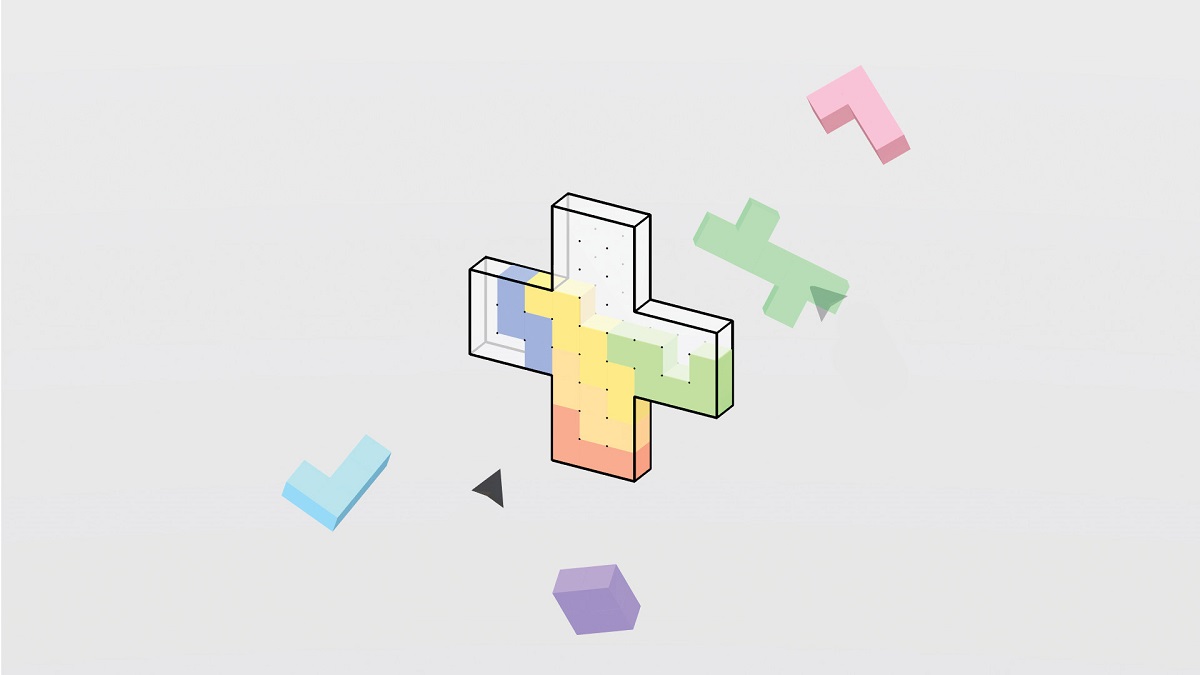
At first glance, Cubism seems almost disarmingly simple. Floating before you in virtual space is a wireframe shape, waiting to be filled with colorful blocks. Yet as soon as you start solving puzzles, its true nature reveals itself – this is a game that delights in testing your spatial reasoning, asking you to think in three dimensions and see beyond the obvious. Developed by Thomas Van Bouwel and published by Vanbo, the Quest version refines that premise into something both elegant and absorbing.
The gameplay thrives on clarity and precision. You pick up and rotate individual blocks, trying to slot them into the floating frame until every space is filled. The first puzzles introduce the concept gently, but as the challenges progress the configurations become wonderfully intricate. What starts as a calm exercise quickly grows into a true mental workout, rewarding persistence and spatial awareness. There’s a natural rhythm to how Cubism escalates its difficulty, avoiding frustration even as it pushes your problem-solving instincts to their limits.
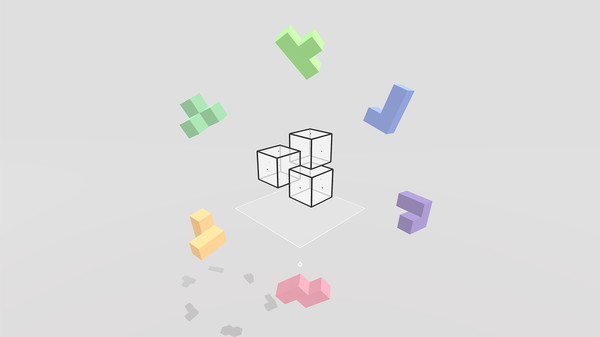
Control-wise, Cubism feels at home in VR. It supports both standing and seated play, and interactions feel responsive and deliberate. You can freely walk around the shapes, rotate them, and examine potential fits from every angle. The implementation of hand tracking adds another layer of immersion, letting you literally manipulate the puzzles with your fingers, though precision can occasionally be finicky in this mode. The experience mostly remains smooth and intuitive though, with performance on Quest being impressively stable – even when dealing with more complex geometry.
A recent 5th Anniversary Update reinforces just how much care continues to go into the game. Beyond technical improvements and enhanced rendering, the update adds more language support, refinements to mixed reality integration, and minor adjustments that improve usability. It’s a thoughtful boost that makes Cubism even more accessible, while showing ongoing commitment from the developer to polish and longevity.
Visually, Cubism embodies minimalism done right. The clean wireframe outlines and softly colored blocks form a striking contrast against the neutral backgrounds, emphasizing focus without distraction. The aesthetic is calm and functional, yet pleasingly modern – a space designed for contemplation. Complementing that visual restraint is a gentle piano soundtrack that builds a soothing rhythm as you work through each level, fading to silence when you complete a puzzle. It creates a meditative atmosphere that makes even difficult challenges feel serene rather than stressful.

While there’s no story or characters to speak of, the game doesn’t need them. Cubism functions as a pure puzzle experience, one that invites you into flow rather than narrative. Its structure – two campaigns totaling around ninety puzzles – offers plenty of content, but once those are completed, replay value is limited. Without randomized levels or extra modes, you may find little reason to revisit it beyond showing it to friends or re-experiencing your favorite puzzles. Still, the journey to completion is immensely satisfying, and the gradual mastery of its mechanics provides its own sense of progression.
In the end, Cubism stands as one of VR’s most thoughtfully designed puzzle games – accessible to newcomers, yet mentally stimulating enough for seasoned players. Its elegant simplicity, excellent controls, and calming aesthetic make it ideal for short bursts of play or long sessions of quiet concentration. While the absence of deeper replay systems or story might limit its long-term pull, its craftsmanship and clarity ensure it remains a benchmark for minimalist design in VR puzzling.
Score: 8.2/10
 Press Play Media