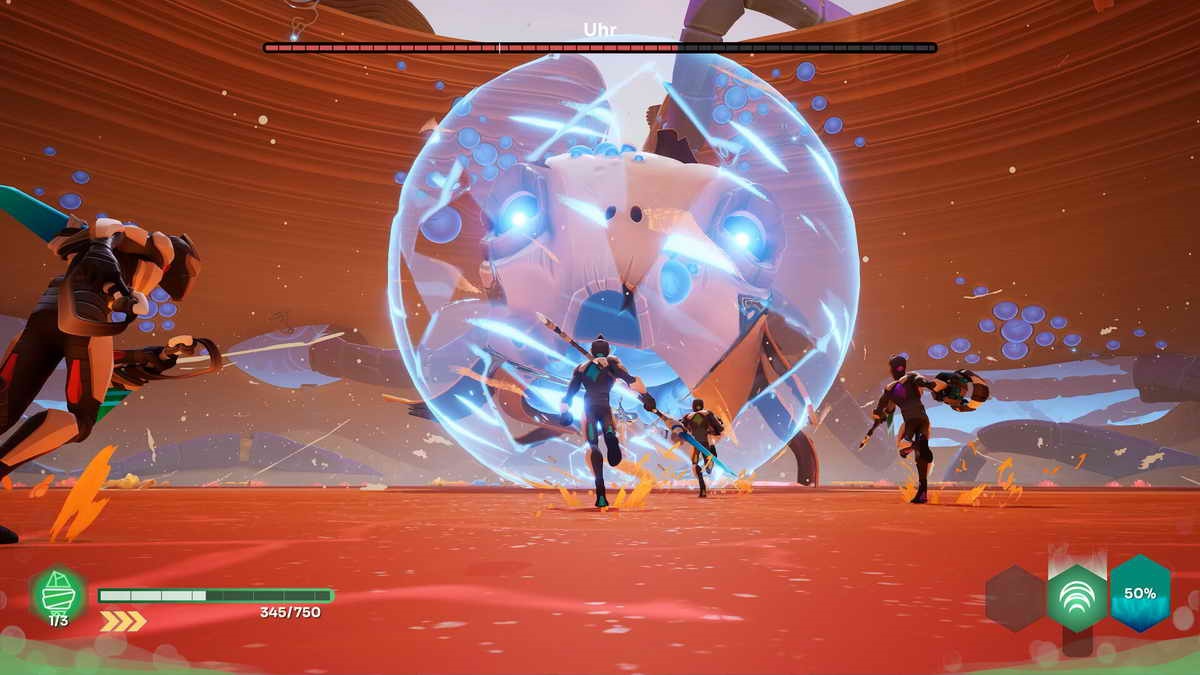
From the moment you drop into the shattered world of Godbreakers, you’re propelled into one of those high-velocity action loops that doesn’t wait for quiet moments. The premise is simple but potent: humanity has been cast aside by artificial intelligence in its quest for perfection, planets are being consumed, and you – rebuilt by ancient forces – become the last sentient weapon. The story doesn’t linger on philosophical digressions, but it doesn’t need to: it provides urgency, a sense of scale, and a suitably dramatic backdrop for the mayhem to come.
Gameplay is where Godbreakers stands out. Its combat is brimming with kinetic energy – dashes, strikes, mid-combo cancels, and the showpiece mechanic of absorbing an enemy’s power right out of its weakened body. That ability to turn foes’ strengths into your own is clever, and gives the action a satisfying twist beyond the usual hack-and-slash fare. The dodge-cancel system makes every move feel responsive and ensures the flow rarely freezes up – perfect for those moments when you’re juggling multiple threats and need to leap, parry, and retaliate in one fluid motion.
Yet the system isn’t flawless: the “steal the enemy power” window can sometimes feel under-used, or the cooldown after that spectacular moment can draw the heat out just when the combat was building. The meta-progression loop – with unlockable archetypes, weapons, modifiers and cosmetic upgrades – works well enough to keep you coming back, but it doesn’t reinvent the roguelite genre in the way some of its peers have. The excitement here lies in execution more than novelty.
The controls on PS5 are tight. Movement and camera feel natural, the button-mapping is intuitive (dash, attack, special inputs all fall easily to hand) and even when bosses or mobs pile on you, the DualSense handles the rush well. It’s worth noting that occasional visual chaos – including bright special effects and bursts of explosions – can make the action a little hard to parse in co-op sessions, though that’s more a symptom of the game’s ambition than a fundamental fault.
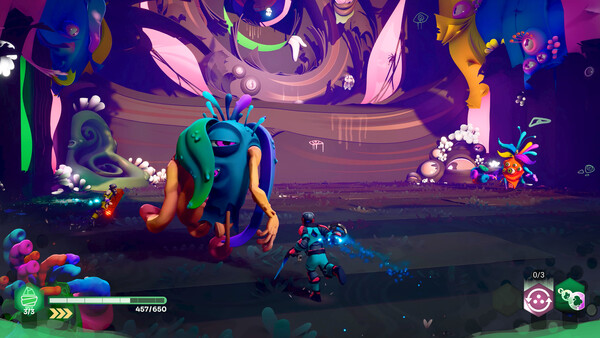
Visually and aurally, the game pulls its weight. The art direction is bold, with expansive alien biomes, surreal hazard-filled arenas and bosses that shift between phases in design and ferocity. The soundscape complements it: metallic impacts, energy surges, voice lines when powers activate – all of it contributes to the sense of high stakes. On the downside, while the six biomes are distinct, the room-by-room progression and some recurring enemy types occasionally inject a sense of familiarity; you’ll recognise layouts after several runs, which slightly reduces the “fresh” feeling of later attempts.

When playing with friends, Godbreakers comes alive: the synergy of builds, the timing of power-steals, and the shared destruction of bosses all amplify the fun. And though solo play remains very enjoyable, the full “chaos and coordination” flavour is best savoured in co-op mode. Still, some encounters feel less punishing than they might have been: for players seeking razor-hard roguelite brutality, this leans a little towards accessible rather than merciless.
In the end, Godbreakers delivers a compelling blend of speed, style and spectacle. It may not catch you by surprise with radically new systems, but what it does, it does with swagger and polish. It presents a world on fire, gives you the tools to wade into the blaze, and rewards you for learning its rhythm and build synergies. If you’re looking for a co-op action run that thrives on momentum, teamwork and flashy finishers, this is one worth locking into. If you’re more drawn to deeply narrative experiences or endlessly unpredictable roguelite structures, know that Godbreakers leans into the action side of things first.
Score: 7.4/10
 Press Play Media