
We stepped into Dora: Rainforest Rescue expecting a tidy, comforting adventure for very young players, and for the most part that’s exactly what Artax Games and Outright Games deliver. The plot is pleasantly simple – Swiper and a misfired Super-Duper Duplicator have scattered magical leaves and sprouted mischievous clones – and the story’s lightness is a feature, not a flaw: it keeps goals clear and gives children an immediate reason to explore without any real peril or distress. Parents will recognise the gentle callbacks to the show while newcomers can jump straight into the world without prior knowledge. At times the narrative feels a touch formulaic and underwhelming for grown-up tastes, but the charm lands with the intended audience, who will laugh at Swiper’s antics and enjoy the silly encounters with the Grumpy Old Troll.
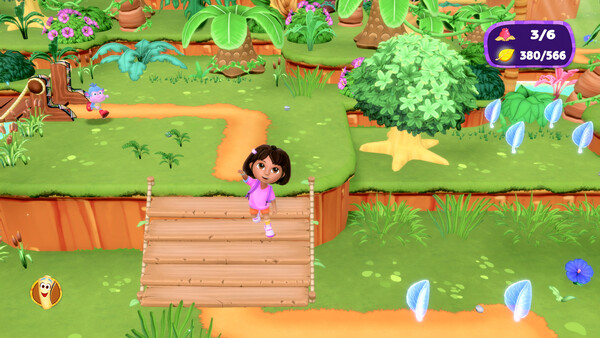
Mechanically the game tilts decisively toward accessibility. Movement, jumping, and simple interactions form the core loop, with two tiers of collectibles – Magic Leaves that guide progression and rarer Alebrije pods tucked into secret routes – encouraging exploration without ever becoming punitive. Co-op is handled thoughtfully: local split-screen lets an adult or older sibling meaningfully share the stage with a younger player rather than play a passive sidekick, and unlockable skills invite a gentle return to earlier areas. That said, the gameplay’s forgiving nature is also its limit; platforming and minigames rarely surprise, and moments that demand somewhat precise timing (moving platforms, for example) can feel fiddly compared with the otherwise forgiving control scheme. The result is a polished, safe playground for preschoolers that older players may finish without feeling challenged.
On presentation the game is bright, buoyant, and unmistakably aimed at small hands and family rooms: bold colours, smooth animation, and character performances that emphasise instruction and encouragement. Spanish vocabulary and character translations are woven into the dialogue naturally, which gives the title a pleasant bilingual flavour without ever feeling preachy, and Map’s visual-first tutorials reduce reliance on reading ability. It’s worth noting the package is not “next-gen” showpiece material – texture pop-ins and occasional camera quirks crop up – and the constant play-by-play narration can grate for some adults even as it reassures younger players. Still, the audio and visual design largely support the game’s goals: clear, cheerful, and safe entertainment for early readers.
Those design decisions aren’t accidental – they’re deliberate choices from the team and partners. Besides checking out the game, we also interviewed Outright Games’ producer Guillermo Abajo Díaz to get a clear look at how the studio balanced authenticity, accessibility, and simple fun.
Dora the Explorer is such a beloved children’s brand. How did you approach translating that world into a fully interactive platforming experience with Rainforest Rescue?
The key was understanding what made Dora special in the first place. That interactive, participatory nature where she’d ask questions and wait for kids to respond. In the original show, children were encouraged to shout at the screen, and we wanted to capture that same sense of agency in gameplay.
We approached it by thinking of the game as an extension of Dora’s adventures rather than just an adaptation. The platforming mechanics became natural expressions of exploration and problem solving, which are core to Dora’s DNA.
We created five distinct locations for players to explore: Nutty Forest, Tricky Trappy Forest, Green Hills, Musical Forest, and the Land of the Alebrijes. Each area has its own personality and challenges, giving players that sense of adventure and discovery. We also incorporated elements that longtime fans will recognise, like the classic “Swiper no swiping!” moments, while introducing new mechanics like unlockable skills that encourage players to revisit previous levels and explore different paths.
The game is fully based on the new 3D Dora TV series, from the voiceovers and visuals right down to references from episodes, though no previous knowledge of the show is needed to understand or enjoy the game beyond knowing the characters.
How closely did you work with Nickelodeon or Paramount during the development process, especially in maintaining the authenticity of Dora and her friends?
We worked very closely with Paramount Consumer Products throughout the entire development process. This was crucial because we weren’t just making a game, we were handling a 25 year legacy that means so much to families around the world. Paramount was involved from the earliest concept stages, reviewing everything from character animations to voice direction.
They were particularly invested in making sure characters like Boots, Map, and Backpack felt true to their TV counterparts while functioning naturally in an interactive context. We also had access to the new CG-animated series assets and worked to maintain visual consistency with that updated look, which helped bridge the classic Dora that parents remember with the version their children are discovering today.
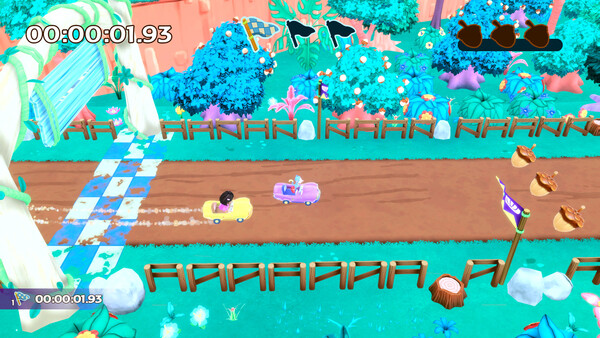
How did you balance making the controls and challenges accessible for very young players while keeping it engaging for older siblings or parents in co-op mode?
In co-op mode, players can team up as Dora and Boots. Both characters can solve puzzles, collect magical leaves, and help each other navigate the world. We designed it so both players have meaningful contributions, neither feels like they’re just along for the ride.
The difficulty scales naturally as players progress. Early levels introduce simple actions, like hopping over small gaps, and later evolve into more dynamic challenges, such as timing jumps between moving platforms. We also built in plenty of guidance to make sure players never feel stuck or lost, and most importantly, there’s no fail state. This keeps the experience positive, letting players of all ages enjoy the game at their own pace without frustration.
To encourage exploration, there are two types of collectibles. Magical leaves serve as gentle guides through each level, while Alebrije pods are rare finds, hidden in secret areas or serving as milestones as players progress through levels. As players unlock new skills through the main story, they can return to earlier levels and discover new routes and secrets. It’s a system that rewards curiosity, whether you’re a young player just starting out or a parent exploring alongside them.
Developing for younger audiences comes with unique design responsibilities. How did you test or fine-tune the game to ensure it’s approachable, educational, and fun for children?
We drew inspiration from some standout titles in the genre, such as My Little Pony: A Maretime Bay Adventure for its approachable platforming and The Legend of Zelda: Link’s Awakening for its intuitive puzzle design – then adapted those ideas to suit a younger audience.
Map plays a crucial role in guiding players through the adventure. He’s the main voice in the tutorials, explaining mechanics through short sequences that rely on visuals rather than text. This approach helps younger players who are still developing reading skills, while still ensuring they understand how to play. If anyone gets stuck, Map steps in with gentle follow-up tips to keep them moving forward.
We also focused on balancing education with entertainment. Learning moments are integrated as puzzles, with plenty of platforming in between to keep the pace lively and engaging. A great example is the Grumpy Old Troll, who appears in each level to challenge players with simple, age-appropriate riddles. There are no penalties for wrong answers, kids can simply try again until they succeed, reinforcing that sense of encouragement and discovery.
Spanish language elements are woven naturally into the experience. Characters like Tico and Ale the Alebrije frequently speak in Spanish, and Dora translates their dialogue in real time. It’s never forced, it just feels like an authentic part of the world and the way these characters interact.
Bringing those developer comments back to the game itself, the choices are consistent with what we experienced: a title built around encouragement, simple puzzles, and cooperative exploration rather than mechanical rigor. If you’re buying for a preschooler or an early reader, Rainforest Rescue is hard to fault – it’s safe, cheerful, and thoughtfully structured to reward curiosity while avoiding frustration. If you’re an older player chasing depth or a cutting-edge visual showcase, you’ll likely find it short on surprises. Overall, the game succeeds at its aim: a warm, bilingual-flavoured romp that parents can happily hand to small children and enjoy playing together.
 Press Play Media