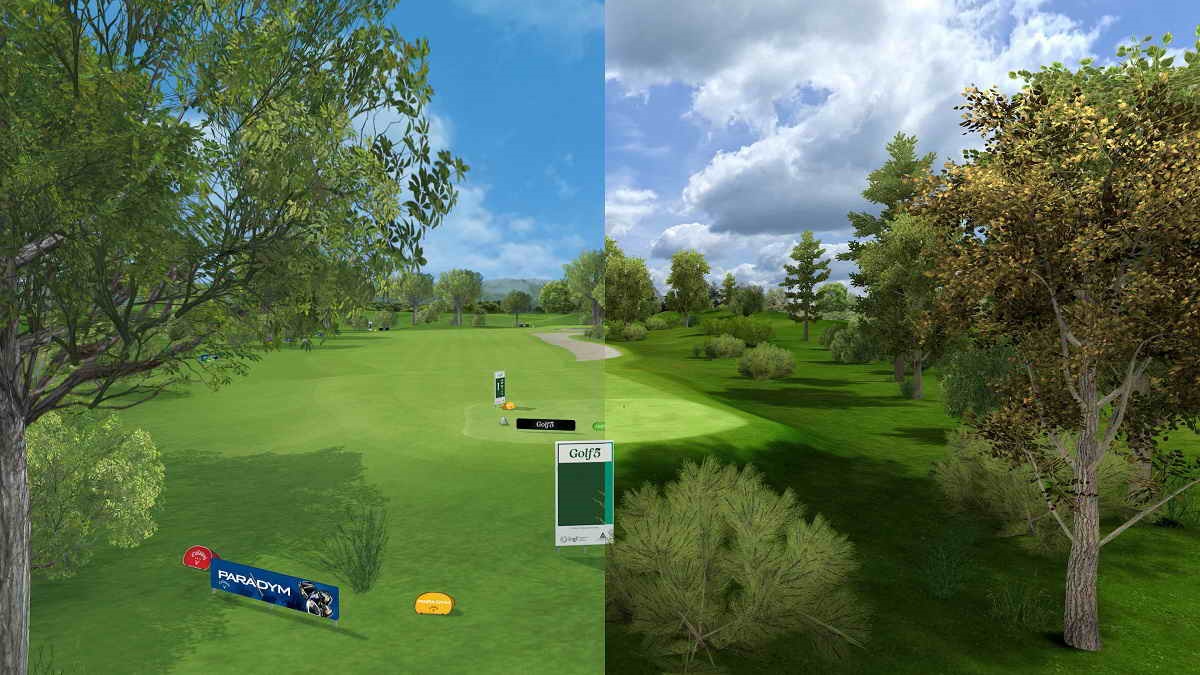
From elemental showdowns to mindful swings and even playful balloon battles, this latest trio of VR titles highlights just how varied the medium has become on the Meta Quest platform. Golf 5: Playoff Edition refines the art of virtual golf with tournament structure and true-to-life swing fidelity, while Elements Divided channels the spirit of a physical fantasy spectacle, turning elemental combat into a tactile dance of power and motion. On the lighter end of the spectrum, Balloon Duel: The Keepy-Uppy Game captures pure, mixed-reality whimsy by transforming everyday spaces into cheerful playgrounds of reflex and rhythm. Together they offer a snapshot of VR’s expanding identity – one that can challenge precision, creativity, and simple joy all in the same breath.
Golf 5 gets a Playoff Edition (Quest)
Golf 5’s Playoff Edition arrives like a confident update: it keeps the original’s coaching-first DNA while wrapping tournament structure, extra polish, and quality-of-life additions around it. The Playoff improvements sharpen the feeling of playing for stakes rather than practice alone, and the tournament flow and added competitive modes give matches a purpose that was previously more implied than delivered.
Mechanically the game leans into precision. High-precision swing tracking gives rewarding feedback for players who want to improve an actual stroke, and the convincing ball flight and the way off-center hits translate into tangible, teachable errors is excellent – this is where the game excels. That fidelity also exposes inconsistencies: putting remains iffy by comparison, with putts sometimes feeling too sensitive or ball behavior feeling a little off.

The Playoff Edition does a good job of balancing practice and play. The driving range, putting green, and new tournament pacing are thoughtfully arranged so warm-ups and competitive sessions feel connected, and the added course selection in this update gives variety without sacrificing focus and quality. Still, the online scene can be patchy – matchmaking population and some UI friction leave room for improvement – so while the update makes competitive play more meaningful, you may still bump into empty lobbies unless you’re coordinating with friends.
On Quest the visuals and sound prioritise readability and performance over photorealism, which suits the game’s needs and usually keeps rounds smooth even on standalone hardware like the Quest. Audio does its job, giving the course atmosphere without overshadowing the swing cues. In short, Golf 5 Playoff Edition is a substantial step forward: it’s not flawless, but it’s the most earnest, improvement-focused VR golf package available on Quest right now and a compelling pick for anyone who wants a true-swing simulator with growing competitive bones.
Elements Divided review (Quest)
From the first moments in the arena, Elements Divided immerses the player in a physical, gesture-driven VR experience where bending fire, water, earth and air becomes not just a mechanic but almost like a physical performance. The premise holds up: each core element features distinct tactical feel, whether launching blazing projectiles as the fire-bender or sweeping across the map with air-powered mobility. The game’s promise of chaos and team-based clashes is delivered with energy, if not always in narrative depth.
In action the game mostly hits its mark. The gesture-based controls allow for some genuinely satisfying elemental combos – raising stone walls and summoning air shields before hurling yourself across the arena – and when the flow clicks the result is really engaging. The multiplayer format supports up to eight players and also offers co-op AI modes, giving options beyond pure PvP. However, the transition from initial tutorial to full action has a rough patch: the early movement and abilities feel sluggish and the controls can register inconsistently when under pressure. Or maybe we’re just not good enough…

Visually and aurally, Elements Divided is functional and engaging, though not cutting-edge. The elemental effects stand out sharply against the relatively simple environments, and arenas feel lively enough to support the motion-heavy combat. While the presentation doesn’t reach the fidelity of the most polished VR releases, it captures a clear, readable style that serves gameplay well. On the audio side, each strike and elemental burst lands with satisfying clarity, while the layered spatial sound helps make sense of the surrounding chaos. The soundtrack and voice work take a backseat to the action but do enough to sustain the game’s sense of intensity.
In sum, Elements Divided offers a compelling slice of VR combat with smart ideas and a great foundation in its gesture-based ownership of elements. Control hiccups and a somewhat limited progression / mode variety might temper its long-term punch, but for anyone with a Meta Quest headset seeking a multiplayer-centric, high-mobility VR brawler that emphasizes player movement and elemental flair, this title delivers strong value – especially given its modest price point and publisher pedigree.
Balloon Duel: The Keepy-Uppy Game review (Quest)
Balloon Duel: The Keepy-Uppy Game from Ivanovich Games takes a simple idea and wraps it in a layer of mixed reality charm that turns the most mundane of rooms into a playful battleground. Inspired by that childhood instinct to keep a balloon from touching the floor, it brings that carefree energy into VR and lets players experience it with a surprising sense of immersion. The premise might sound lightweight, but that’s part of its appeal – it’s easy to grasp, instantly nostalgic, and taps into the kind of spontaneous fun that’s often missing from more complex VR titles.

The gameplay is deliberately straightforward, focusing on quick reflexes and spatial awareness rather than complicated mechanics. Each match revolves around keeping a balloon aloft while your AI rivals – each with their own quirks and tempos – add a welcome layer of unpredictability. Fans, portals, and dynamic obstacles give every session a different rhythm, and the freedom to move naturally around your real environment thanks to MR implementation enhances the illusion that your living space has come alive. The controls feel intuitive, relying on simple gestures that fit the premise well, though they can sometimes falter when the balloon bounces into trickier corners or when tracking briefly loses sync.
Visually, Balloon Duel keeps things light and colorful, mixing real-world surroundings with whimsical overlays that evolve as you progress. There’s a real sense of wonder when your living room becomes a playground of floating objects and glowing accents, even if the novelty wears off after longer play sessions. Sound design matches the upbeat tone, with buoyant effects, airy music, and reactive audio cues that give each hit a bit more energy. While it’s a smaller experience that doesn’t pretend to be more than its premise, Balloon Duel succeeds by leaning into its simplicity. It’s an accessible, joyful reminder that VR doesn’t always need grand ambition to deliver something genuinely fun, and it has a lot more gameplay to it than the title might suggest.
 Press Play Media