
Emotion Spark Studio’s Rue Valley, published by Owlcat Games for PlayStation 5, is a brooding narrative RPG that places players in a 47-minute time loop within a small, enigmatic town. The game immediately immerses players in a sense of isolation and psychological tension, blending emotional storytelling with systems-driven gameplay. The loop structure gives the world a cyclical rhythm, where each repetition reinforces both the mystery of Rue Valley and the inner conflicts of its protagonist, Eugene Harrow.
The story revolves around unraveling the secrets of the town while navigating the shifting landscape of Eugene’s personality. Players can define him as introspective, anxious, dramatic, or instinctive, and these choices meaningfully shape dialogue, relationships, and the intentions unlocked throughout the loop. This personalization gives a strong sense of agency, as each playthrough can reveal subtle variations in narrative outcomes and character interactions. At the same time, certain personality paths can feel underutilized, and repeated reliance on mechanics like alcohol-induced sociability can reduce the variety of role-playing opportunities.
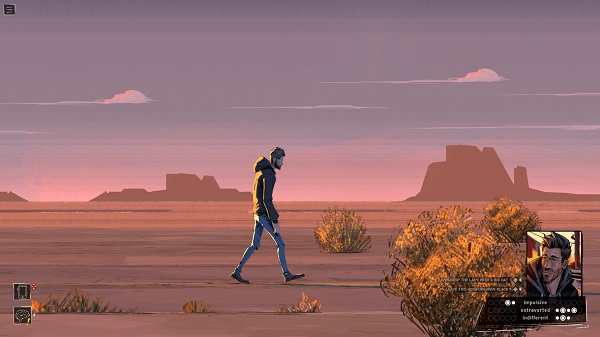
Gameplay blends exploration with conversation-based puzzles and intention management. The mental graph system allows the storage of memories and unlocking of new mindsets, giving the player tools to approach challenges in different ways. However, movement and controls on PS5 can occasionally feel stiff, particularly in confined areas or during time-sensitive sequences. The “detective vision” tool is a helpful addition, highlighting clues and interactable objects, though the pacing of some loops can feel slow, occasionally diminishing the urgency inherent to the time-loop premise.
Visually, the PS5 version stands out with its painterly, comic-inspired aesthetic. Environments are rich with detail, from dimly lit streets to the worn interiors of motels and shops, giving the town a lived-in, melancholic texture. Lighting is used effectively to create mood, whether through neon glows, long shadows, or fading sunsets. Character models convey personality well, though animation can be uneven in dialogue-heavy scenes, sometimes detracting from the sense of immersion.
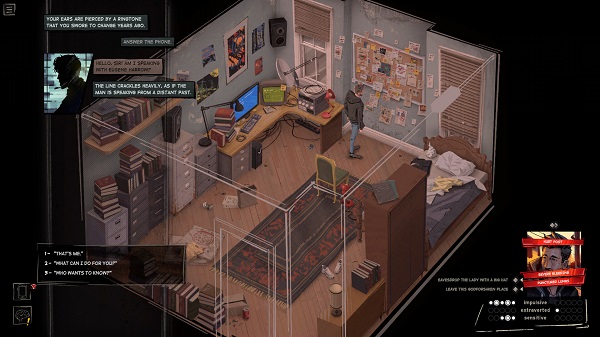
Audio design complements the visual atmosphere with a subtle, emotive score that underscores the game’s introspective tone. Dialogue writing is layered and nuanced, capturing the complexity of Eugene’s interactions with the town’s residents. Occasional inconsistencies in voice acting and delivery can pull attention away from key moments, and the narrative occasionally aims for profound revelations without fully achieving them. These issues, while minor, highlight the tension between ambition and execution in the story-driven design.
Technical limitations emerge in certain loops, with occasional loading interruptions that disrupt the flow. These moments are rare but noticeable, and they emphasize the delicate balance the game maintains between repetition and engagement. The cyclical structure rewards careful observation and experimentation, but it also demands patience, as repeated loops are necessary to fully uncover the town’s secrets and Eugene’s personal growth.
Ultimately, Rue Valley is an introspective and challenging narrative RPG that successfully intertwines story, character, and gameplay mechanics. The time-loop structure, memory graph, and personality-driven choices reinforce the central themes of reflection, resilience, and the search for meaning. While some repetition, pacing issues, and minor technical flaws temper the experience, the game’s ambition, artistic style, and emotional depth make it a compelling journey for players willing to engage with its cycles.
Score: 7.5/10
 Press Play Media