
The Berlin Apartment is an exercise in quiet reflection. On PS5, it places you in a small but emotionally rich space: an aging Berlin apartment being renovated by Malik, with his daughter Dilara by his side. As you explore, you pick up objects that serve not just as decoration, but as relics – each triggering stories of the apartment’s past inhabitants. These moments transform the game from simple walking and looking into a deeply human experience.
Time in the game feels elastic. The apartment itself does most of the storytelling: rooms change, eras shift, and with each discovery you’re transported to a different moment in Berlin’s history. Episodes span from the rise of Nazism through postwar struggle, the Cold War, and the fall of the Berlin Wall. In one sequence, a paper plane from the other side of the Wall becomes a bridge between characters; in another, you help a character pack their suitcase as they flee persecution. These episodes are not just historical vignettes – they feel personal. You’re not just observing; you inhabit those lives.
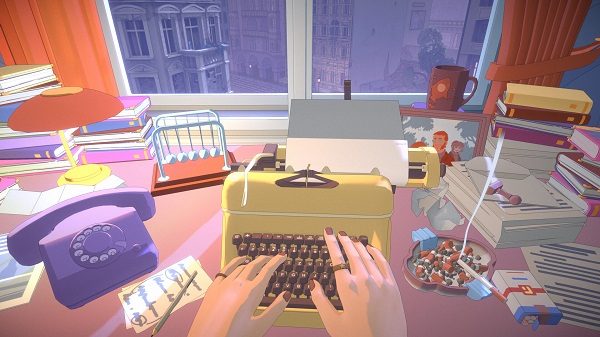
Mechanically, the game resists complexity. There are no difficult puzzles or branching choices. Instead, it offers small interactions – watering plants, folding paper airplanes, picking up letters – modest mechanics that shift subtly in each story. This simplicity might frustrate players seeking traditional game challenges, but it suits the game’s meditative rhythm. For someone in the right frame of mind, this could be deeply rewarding. The game’s pace is slow and reflective, emphasizing that the lack of game-y challenge is very much intentional.
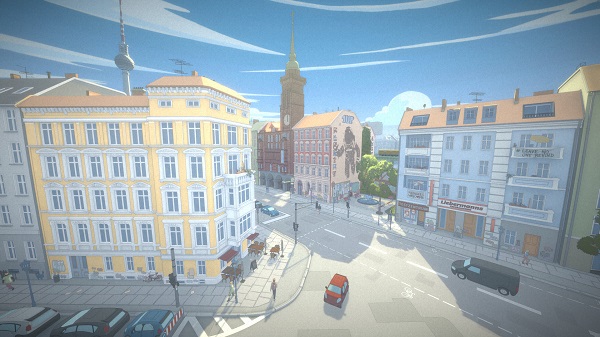
Visually, the game is striking. It embraces a stylized, almost comic-like presentation: warm lighting, soft textures, and interiors that feel like they were hand-designed around the personalities of the inhabitants. The apartment evolves with time: furniture, wall decorations, and layout shift naturally to reflect different eras. This design work reinforces the sense that the apartment is not just a backdrop, but a living, breathing character.
The audio design complements this visual warmth with restraint. There is no swelling orchestral score; instead, ambient hum, subtle piano, and natural room sounds dominate. Voice acting feels intimate and grounded: conversation rarely becomes grandiose, but rather remains soft and emotionally honest. Quiet pauses carry as much weight as words, and the game trusts the player to feel, not react.
However, The Berlin Apartment is not without its blemishes. Some episodes feel overstretched – parts of the narrative drag, particularly when the pacing relies more on reflection than action. The final chapter set in the present-day apartment, while meaningful, can feel rushed compared to the slower build-up of earlier stories. Also, the runtime is relatively short: a full playthrough takes only a few hours, and without major branching paths, replay value is mostly limited to collecting everything or chasing achievements.
Still, for players who appreciate narrative-driven experiences, who are drawn to atmosphere over spectacle, The Berlin Apartment offers a resonant, thoughtful journey. It asks for attention, patience, and an openness to quiet storytelling. In return, it delivers a layered portrait of human lives shaped by history – and a reminder that sometimes what lingers are not big events, but the small pieces people leave behind and the stories connected to them.
Score: 7.4/10
 Press Play Media