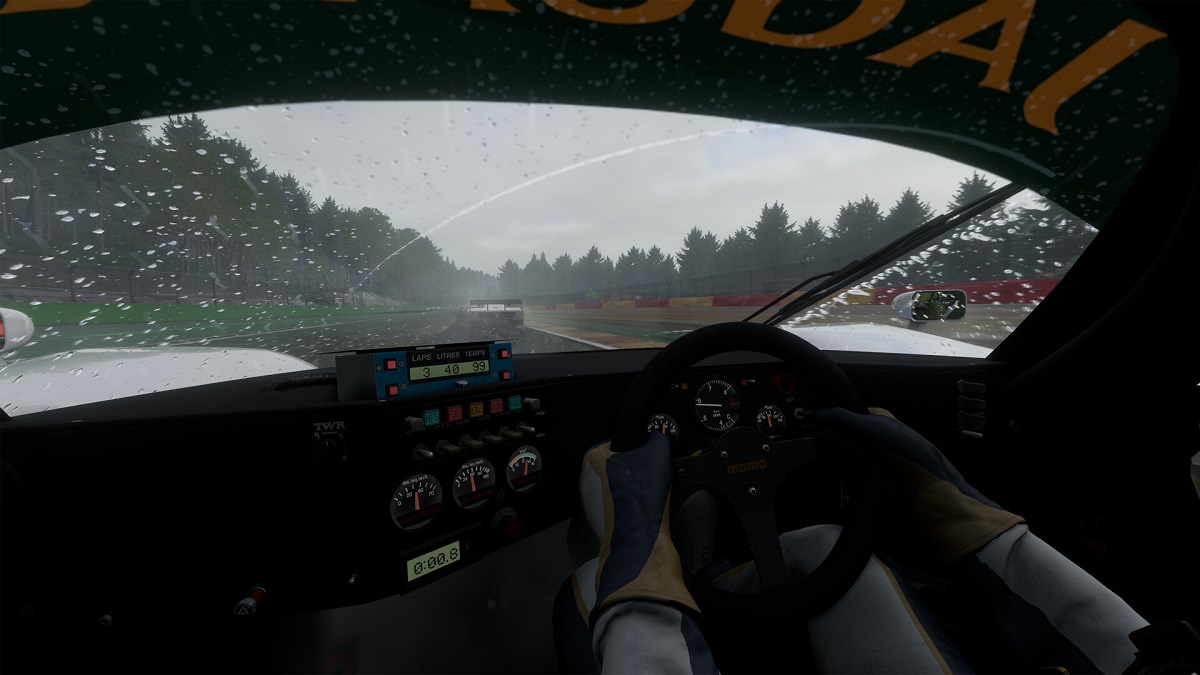
From the moment you drop into the cockpit in Project Motor Racing, it’s clear Straight4 Studios aimed for ambition: 70 licensed cars spanning several eras, multiple classes from Mazda MX-5 to modern LMDh hypercars, and a variety of famous circuits and weather, day/night cycles, and dynamic track conditions that promise serious sim-racing immersion. And in the right circumstances, the game delivers glimpses of that promise – a sense that this could become a truly substantial racing sim. But as it stands at launch on PS5, that potential frequently slips through your fingers.
In moments when it works – often with a wheel and when the cars behave – the driving can feel rewarding. Some cars, particularly in GT and “classic” categories, respond with satisfying weight, grip, and feedback; the force feedback (when properly configured) can transmit subtle details: the loss of traction, the bite of curbs, the way tires transition under load. In those stretches, you sense the pedigree behind the developers – a sense that time, precision, and consequences matter in every corner.
That ambition extends to the career mode too: rather than just stringing races together, you start with a budget, pick a base location and car, and manage sponsorships, entries, and repair costs – decisions that shape how far you go. The “authentic” career is punishing, yes, but also underlines the idea that racing is as much about strategy and consistency as it is about speed. For players who enjoy that kind of management lens, it adds a meaningful layer beyond raw lap times.

But for all the promise, Project Motor Racing too often stumbles – and sometimes spectacularly so. The most glaring flaw is inconsistency: handling can swing from smooth and engaging to unpredictable and mushy. On many default setups, cars are prone to oversteer, sudden snaps under braking, or vague behavior on corner exit – a far cry from the “polished driving sim” many expected. Especially on a pad, the steering often feels unresponsive or awkward; even with a wheel, without careful calibration, the game can feel frustrating instead of rewarding.
Underlying those handling issues a few technical problems. Performance dips occur, although a performance patch has already been released that helps remedy this – though reports on the PC version indicate that technical issues remain. The troubles don’t end at performance or physics. AI is a major weak point at least: most opponents stick to the ideal racing line regardless of your position, often fail to react sensibly in battles, and collisions with the AI quickly turn punitive thanks to a generous collision-damage and penalty system. In a title that tries to simulate real motorsport stakes, this undercuts both realism and fun. In classic career mode, a minor scrape can blow your budget and end your season – which feels harsh when the fault may lie more with inconsistent AI than player error.
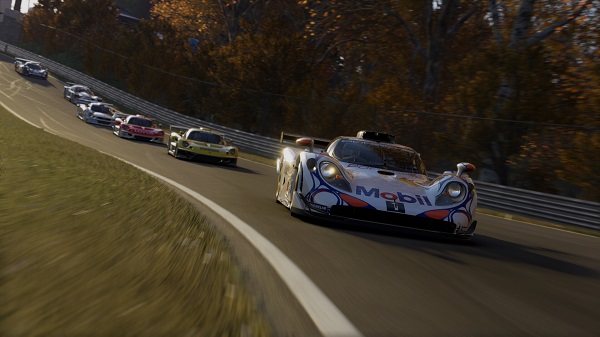
Visually and sonically, there are glimpses of quality – the car models are very well done; cockpit views, sound of engines and tires, and environmental effects like track rubber, weather transitions, even surface textures occasionally shine and evoke real motorsport immersion. But the world around them, looking at environments and tracks, sometimes feels lackluster or even dated, particularly compared to modern sim-racing benchmarks. The audio-visual package feels like a mixed bag: there are good moments, but not the consistent high-fidelity polish one expects in a “next-gen” console sim.
So what kind of game is Project Motor Racing on PS5 – and who is it really for? It’s a gamble. For sim-racing enthusiasts willing to tolerate rough edges, ready to invest time into setups, wheel calibration, and perhaps future patches, there’s a skeleton of something meaningful here: the driving physics (when they behave), the breadth of cars, the career structure, the idea of a “living” racing world with tracks, tuning, and financial stakes. But for those hoping for plug-and-play accessibility, stable AI battles, or polished “easy to enjoy” racing from the get-go – especially on a gamepad – the game’s flaws loom too large.
In the end, Project Motor Racing feels like a rough diamond: not polished enough to shine brightly from the start, but with enough raw facets to suggest that – with time, work, and goodwill – it could become a serious contender in the sim-racing space. As of right now, though, it remains an ambitious but flawed launch – a statement of intent more than a definitive success.
Score: 6.9/10
 Press Play Media