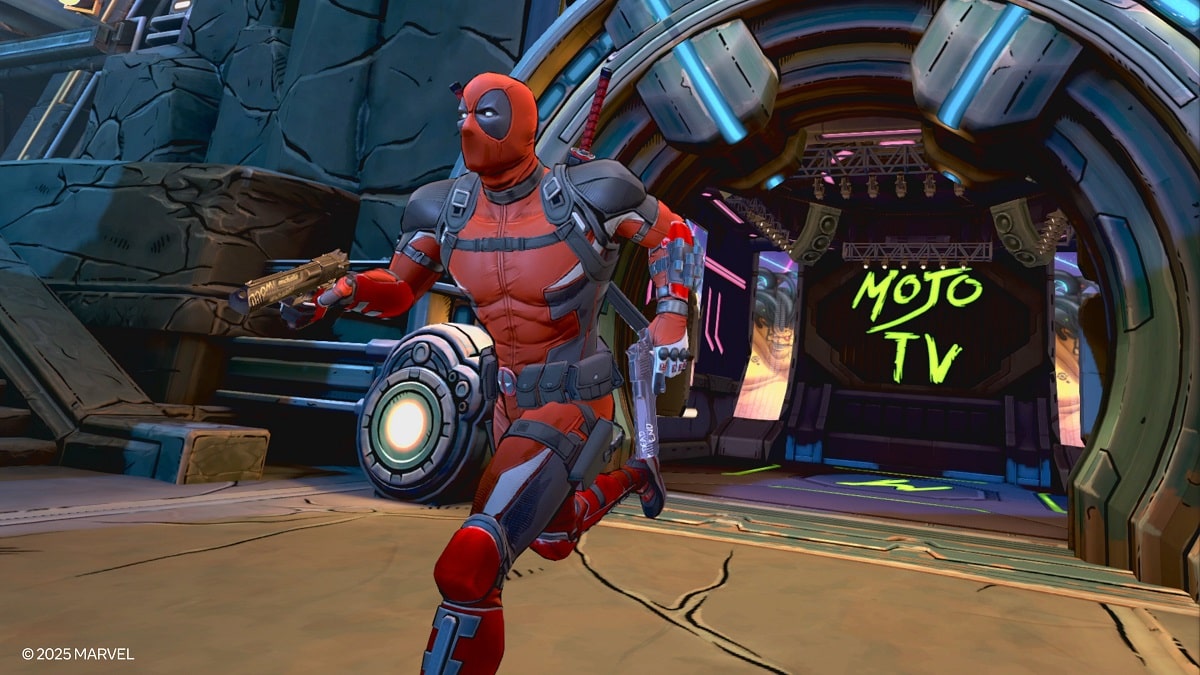
From the moment you strap on the headset, Marvel’s Deadpool VR announces itself as a full-on plunge into chaos, comedy and mayhem. The premise – your favourite Merc, Wade Wilson, signed up with the interdimensional producer Mojo for “lots of money,” only to discover he’s now trapped in a reality-show-style villain hunt – gives the game license to be outrageously silly, self-aware, and gleefully violent. The narrative isn’t high art, and the story beats are often predictable (Deadpool sometimes even mocks that fact) – but that’s part of the point. The game’s tone remains faithful to what fans expect: over-the-top humour, fourth-wall-breaking jabs, and enough pop-culture references to keep you chuckling (or cringing) through most levels.
Where Deadpool VR truly shines is in how it translates that tone into gameplay. The combat sandbox delivers a variety of weapons – dual pistols, swords/katanas, grenades, a grappling hook – and enough freedom that players can get creative with their kills. Toss a katana, dive-kick a foe midair, reach out, grab a dropped gun and shotgun the next wave – there’s a sense of kinetic chaos that often pays off in satisfying style if you’re comfortable with VR and motion controls. Add in special “Big Money Time” weapons, unlockable upgrades and some cheeky extras (costumes, collectibles, alternate Deadpool variants with different dialogue), and what might have been a shallow shoot ’em up becomes a playable celebration of the character’s violent absurdity.
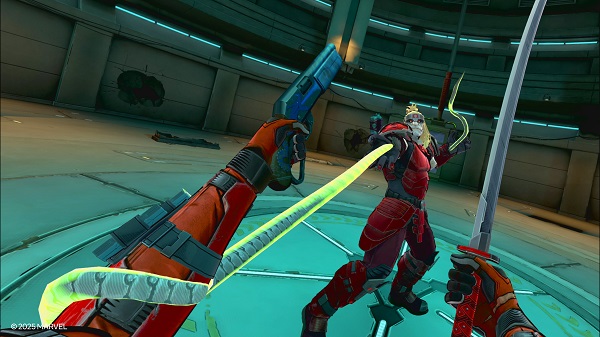
That said – and it’s a big caveat – the joy of the combat can be uneven. Outside of boss fights and major set-pieces, regular encounters sometimes feel repetitive: after a few dozen henchmen, the novelty of slicing or blasting through enemies dulls. Some levels tend toward corridor-crawls with waves of similar foes, and certain environments don’t feel especially inspired or varied. The game often leans on spectacle and mayhem rather than thoughtful design, and players who crave complexity, pacing or careful combat will likely find it wanting.
The technical presentation mostly supports the chaos – colours pop, gore lands with punch, weapons feel hefty enough, and the sound design plus voice-acting (with Neil Patrick Harris as Deadpool) largely hit the mark. The cast does a fine job of matching the manic energy expected from the Merc: snarky banter, unfiltered commentary, and sometimes genuinely funny lines that often break up the carnage and give the action room to breathe. That said, performance can stumble, especially when lots of enemies or explosions fill the screen, with occasional slowdowns or dropped polish during hectic sequences.

Part of the fun – and part of the caveat – comes down to how much you enjoy being entirely in the head (and humour) of Deadpool. If you relish his manic energy, constant wisecracks, grotesque violence and a total disregard for subtlety, then there’s a good chance you’ll adore Deadpool VR. But those who find Deadpool’s style grating – or who prefer their games with deeper plots, emotional or narrative weight, or more thoughtful pacing – may find the barrage of jokes and chaos exhausting.
In the end, Marvel’s Deadpool VR doesn’t attempt to reinvent VR, nor does it pretend to offer a sweeping, epic superhero tale. Instead, it embraces camp, carnage, and comedy. For fans of the character – or for anyone with a Meta Quest 3/3S craving a high-octane, irreverent VR action ride – it stands as one of the strongest superhero-themed VR experiences released for the Quest. For everyone else, it’s a wild, splashy distraction: sometimes brilliant, sometimes janky, but rarely dull.
Overall, it may not be “VR for everyone,” but if you’re already willing to strap on a headset and lean into the absurdity – you might just find yourself laughing with a katana in one hand and a pistol in the other, loving every second of it.
Score: 8.0/10
 Press Play Media